
Vandaag of morgen in huis

Kwaliteit gegarandeerd

Welkomstaanbiedingen ontgrendelen: GRATIS bezorging | Tot 80% korting | Gratis 30 dagen JoyPlus-proefperiode
Download de app
An air purifier can help filter dust particles, pollen, smoke particles and unpleasant odours from indoor air. However, not every model is suitable for every UK home. A compact air purifier for the bedroom needs different features from an air purifier for large rooms or a household with pets.
The biggest purchasing mistakes usually arise from three marketing pitfalls:
The CADR, measured in m³/h, indicates how much purified air an appliance can deliver per hour. A higher CADR is useful when you want to cover a larger room, open-plan living room or home office.
Use the stated room coverage as a guide, not a guarantee. A room with high ceilings, lots of furniture or an open connection to other rooms requires more capacity. A compact air purifier may be sufficient for a bedroom of around 15 to 20 m². For a living room, a model with a higher CADR, such as 450 or 550 m³/h, is more logical.
Also consider placement. Ideally, leave around 30 cm of clear space around the appliance and do not block the air inlet or outlet with curtains, furniture or clothing.
A HEPA air purifier generally uses a fine-particle filter for small airborne particles. This is often combined with:
A pre-filter that can be vacuumed or washed can be useful if you have pets. Always check the manual, though: not every HEPA or composite filter can be washed. An activated carbon filter is relevant for cooking smells, pets or smoke, but the amount of carbon and the replacement frequency also determine how practical it is for everyday use.
If you are looking for an air purifier for allergies, do not focus only on the term ‘allergy’. Check the filter type, CADR and availability of replacement filters. An air purifier does not replace ventilation, cleaning or advice from a healthcare professional.
For the bedroom, the stated noise level in sleep mode is important. According to the product specifications, models producing around 20 to 25 dB on their lowest setting are suitable for situations where minimal noise is preferred. Also check the maximum noise level; this may be above 45 or 50 dB.
An air purifier with a PM2.5 sensor can display the measured air quality and adjust the fan speed automatically. However, the sensor measures what is happening around the appliance, not necessarily the air quality throughout your home.
Also calculate the running costs. A 20-watt appliance running for 12 hours a day uses less electricity than a 60-watt model operating continuously at high speed. Add the price and lifespan of replacement filters to this calculation. A filter that, according to the product information, should be replaced every 6 to 12 months may become saturated more quickly in practice when exposed to smoke, lots of dust or multiple pets.

Why it suits this profile: A compact model for smaller rooms, with an automatic mode and a stated CADR of 250 m³/h. This makes it a straightforward choice for anyone buying an air purifier for the first time.
The product specifications state both the CADR and coverage of up to 65 m². The noise range is also provided: 20.5 to 49 dB(A), so you do not have to rely solely on the quietest setting.
PM2.5 sensor, automatic mode, sleep mode and a stated power rating of 21 W.
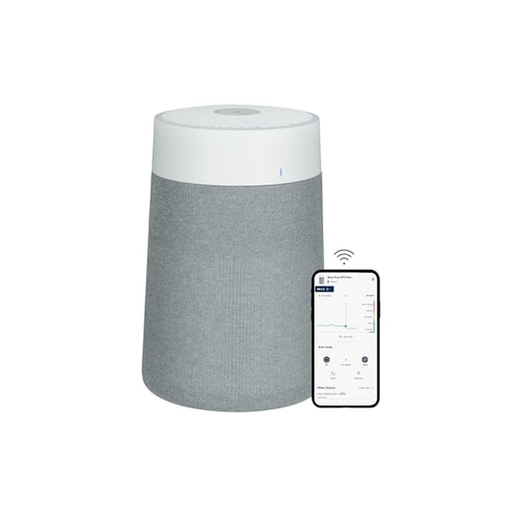
Why it suits this profile: This model combines a CADR of 212 m³/h with app control, automatic functions and a stated noise level of 19 to 48 dB.
The product specifications state both the low and high noise levels. This allows you to assess more realistically whether it is suitable for a bedroom or home office.
App for scheduling and air-quality information, night mode and stated coverage of up to 43 m².
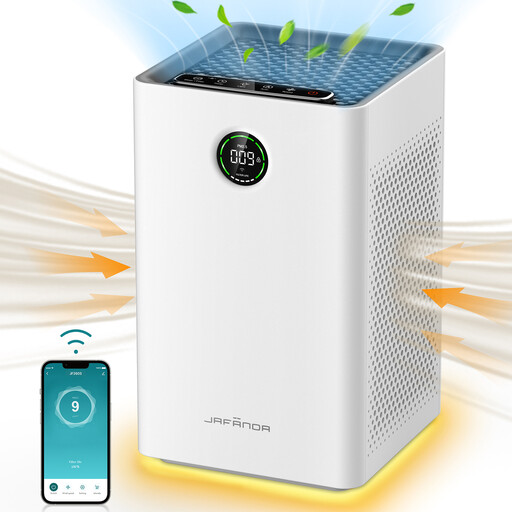
Why it suits this profile: For households looking for an air purifier for smoke and pollen, pets or larger living spaces. According to the product information, this model has a CADR of 260 m³/h, an H13 filter and an activated carbon layer.
The stated capacity is linked to different air changes per hour. This provides more context than a single large maximum room-size figure.
PM2.5 monitoring, app and voice control, activated carbon and a sleep mode from the stated 23 dB.
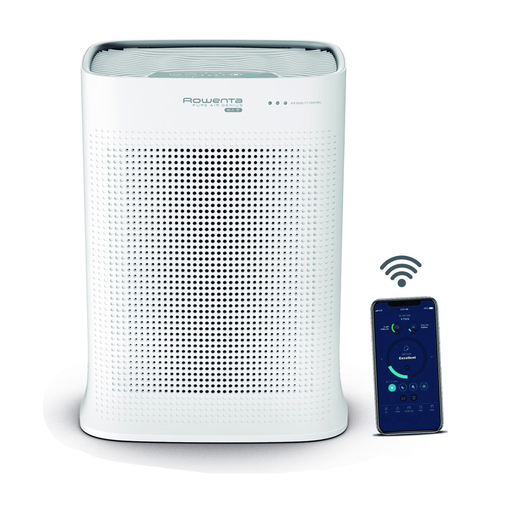
Why it suits this profile: The product specifications state coverage of up to 140 m², a 360° air inlet, five fan speeds and a four-stage filtration system.
Alongside the large stated coverage, the filter layers, automatic mode and noise level from 52 dB are also listed. This allows you to weigh up capacity and comfort together.
Pre-filter, activated carbon, HEPA and formaldehyde filter according to the product description, plus a filter-replacement indicator.
We have compiled a complete, up-to-date list of products that fully meet these strict selection criteria and the applicable European safety regulations.
Place the appliance on a stable, level surface in the room where you want to treat the air. Leave around 30 cm of clear space around the air inlet and outlet. Do not place an air purifier directly behind a sofa, underneath curtains or in a damp room such as the bathroom.
This depends on the model and how it is used. The product information for the models mentioned gives a guideline of approximately 6 to 12 months. Smoke, lots of dust, pollen and pets can cause a filter to become saturated sooner. Only clean the pre-filter if the manual allows it; HEPA and composite filters are generally not designed to be washed or reused.
Consumption depends on the power rating, fan speed and number of hours of use. A 20-watt model running for 12 hours a day uses less electricity than a 60-watt appliance operating continuously at high speed. So check both the rated power and the cost of replacement filters before making your choice.
