
Vandaag of morgen in huis

Kwaliteit gegarandeerd

Welkomstaanbiedingen ontgrendelen: GRATIS bezorging | Tot 80% korting | Gratis 30 dagen JoyPlus-proefperiode
Download de app
An air purifier can help filter dust, pollen, smoke particles and unpleasant odours from the air indoors. However, an expensive model isn’t automatically right for your home. A compact air purifier for a bedroom, for example, works differently from one designed for a large living room.
The most common buying mistakes usually come down to three misunderstandings:
Below, you’ll find the key points to consider when comparing air purifiers, followed by recommendations for different needs.
CADR, or Clean Air Delivery Rate, tells you how much filtered air an appliance can deliver per hour. A higher CADR is particularly relevant in larger rooms, in rooms with high ceilings or when you want to see results more quickly.
Be aware of the difference between a stated maximum room size and a room where several air changes per hour can be achieved. The Jafända JF260S, for example, lists a CADR of 260 m³/u. According to the product specifications, it’s suitable for around 22 m² at five air changes per hour, around 55 m² at two air changes, and a larger room at one air change per hour.
For an air purifier for large rooms, CADR is often a more useful point of comparison than a marketing claim such as ‘up to 1190 ft²’ on its own.
A practical filter combination usually consists of:
A HEPA air purifier won’t automatically deal with odours. If you’re concerned about smoke, cooking smells or pets, it’s best to choose an air purifier with a carbon filter. The amount of carbon varies by model; the Jafända JF260S, for example, is listed as having a 300-gram layer.
Also check the replacement costs and intervals. Depending on use, dust levels and indoor air quality, a filter may need replacing after around six to twelve months. A saturated filter can restrict airflow.
For an air purifier for the bedroom, the noise level on the low or sleep setting matters more than the maximum fan noise. A model producing 20 to 27 dB on its lowest setting may be suitable for overnight use, but check whether you can dim the display and lights too.
An air purifier with a PM2.5 sensor can show the measured fine-particle level and adjust the fan speed in automatic mode. The sensor doesn’t measure every possible pollutant and isn’t a substitute for ventilation, but it can make the appliance easier to use.
A smart air purifier, or one with an app, is especially useful if you want to set schedules, receive alerts and control it remotely. Check in advance which app you’ll need and whether voice control via Google Assistant or Alexa is supported.
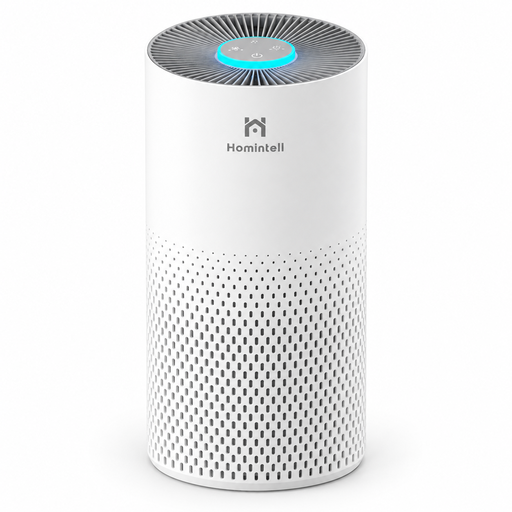
Why it suits this profile: According to the product specifications, this compact model is designed for smaller rooms of up to around 16–18 m². It has three speeds, a timer and touch controls.
Its stated CADR of 130 m³/u and recommended room size make it clearer which spaces this appliance is and isn’t designed for.
3-in-1 filter with HEPA and carbon, plus a 2/4/8-hour timer and sleep mode.
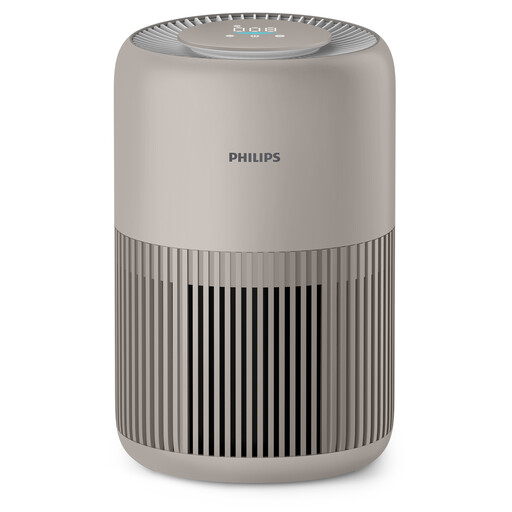
Why it suits this profile: This compact model combines a CADR of 250 m³/u with automatic control and a stated noise level from 20.5 dB(A).
The product specifications list the CADR, maximum room size and noise range, so you can compare its capacity with your room more easily.
Two-layer HEPA filtration, PM2.5 sensor, automatic mode and filter indicator.
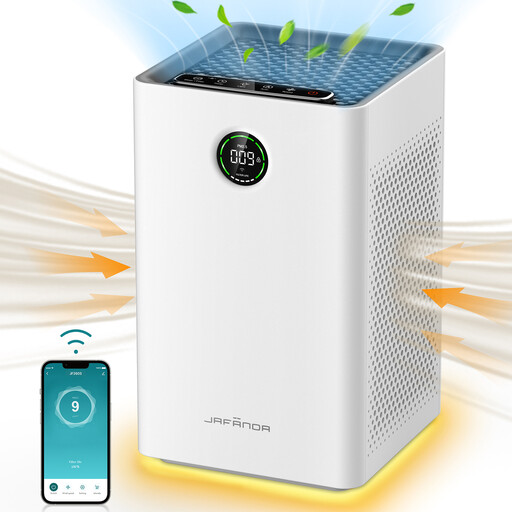
Why it suits this profile: With a stated CADR of 260 m³/u, five fan speeds and control via the app, Alexa and Google Assistant, this model is a good fit for larger living spaces and smart homes.
The product specifications show different air-change rates for different room sizes, rather than relying on just one generous marketing figure.
H13 HEPA with an activated carbon filter, PM2.5 monitoring and sleep mode from 23 dB, according to the product information.

Why it suits this profile: According to the product description, this appliance is designed for homes with pets. It offers app and voice control and is suitable for rooms of around 16 to 27 m².
The combination of a pre-filter, HEPA filter and activated carbon filter is more specific than a general claim about ‘fresh air’.
CADR of 230 m³/u, 360° filtration, PM2.5 sensor, child lock and a stated power consumption of 27 W.
We’ve put together a complete, up-to-date list of products that meet these strict selection criteria and the applicable European safety regulations.
Place the appliance on a level surface, leaving at least 30 cm of clear space around it if possible. Don’t put it behind a curtain, right next to a radiator or in a damp room such as the bathroom. In a living room with an open-plan kitchen, a carbon filter can help with odours, but you’ll still need to ventilate the room.
Clean the pre-filter regularly, following the instructions in the manual. Replace disposable filters according to the filter indicator or the recommended interval. An air purifier doesn’t remove moisture or replace mechanical ventilation. If you have allergies, vacuuming, washing your bedding and ventilating your home properly can still be part of your routine.
It can be, especially if you choose a quiet air purifier with a sleep mode, dimmable display and suitable CADR. Don’t place the appliance right next to your head, and check the noise level on the setting you plan to use.
It varies by model and use. Manufacturers often recommend replacing filters every six to twelve months. If you have pets, smoke indoors or have a lot of dust in your home, you may need to replace the filter sooner. Always follow the manual and check the filter indicator.
As well as electricity use, you’ll need to factor in replacement filters. Compare the stated power consumption, filter lifespan and price of genuine filters. An energy-efficient appliance with expensive filters isn’t always cheaper over its full lifespan.
