
Vandaag of morgen in huis

Kwaliteit gegarandeerd

Welkomstaanbiedingen ontgrendelen: GRATIS bezorging | Tot 80% korting | Gratis 30 dagen JoyPlus-proefperiode
Download de app
An air purifier can help filter airborne particles, dust and certain odours from the air in your home. However, not every model is right for every home. A small unit in a large living room may run constantly at high speed, while a powerful model in a bedroom could take up unnecessary space or make too much noise.
So don’t just look for terms such as “True HEPA”, “smart” or “for large rooms”. The right choice depends on the airflow rate, filtration system, noise level and replacement filter costs.
Manufacturers sometimes quote a large maximum coverage area, but that figure may be based on just one air change per hour. For a living room with pets, smoke or lots of pollen, a higher air change rate is more practical.
So focus on the CADR rating — Clean Air Delivery Rate — rather than just the number of square metres. For example, a model rated at 260 m³/h can be used differently from one rated at 117 m³/h, even if both are described as suitable for a particular room.
A HEPA filter is designed to capture fine particles, but it won’t automatically remove odours. If you’re looking for an air purifier for pollen and smoke, check whether it also has an activated carbon filter. This type of filter is designed to tackle odours and certain gaseous substances.
It’s also worth understanding the difference between a pre-filter, a HEPA filter and a carbon filter. A multi-layer system is practical because each filter has a different job. Claims such as “99.97% filtration” depend on the test method and conditions, so treat these figures as the brand’s product specifications, not a guarantee for every home.
Filters need replacing over time. According to product information, their lifespan can range from a few months to several years, depending on usage, air quality and filter composition. A cheap unit could end up costing more if replacement filters are hard to find.
Before buying, check:
For a bedroom or home office, a CADR of around 100 to 250 m³/h is often practical, depending on the room. A higher rating is useful for larger living rooms. When choosing an air purifier for large rooms, also check how the coverage area is calculated.
A unit with a 360° air intake can draw in air from several directions, but it still needs clear space around it. Don’t place an air purifier right against a wall, behind a curtain or under furniture.
A typical set-up consists of:
For an air purifier for allergies or pets, a good pre-filter and a HEPA filter are important. A carbon filter is a useful addition for cooking smells, smoke or pet odours.
A quiet air purifier for the bedroom should remain comfortable to use, especially on its low or sleep setting. Manufacturers sometimes quote a very low noise level, but this usually applies only to the lowest setting. If you plan to use the unit in a living room or open-plan kitchen, check its maximum noise level too.
An air purifier with a PM2.5 sensor can measure the concentration of fine particles and adjust the fan speed automatically. A smart air purifier with app or voice control is handy for setting schedules and controlling it remotely, but it won’t automatically increase the filter capacity.
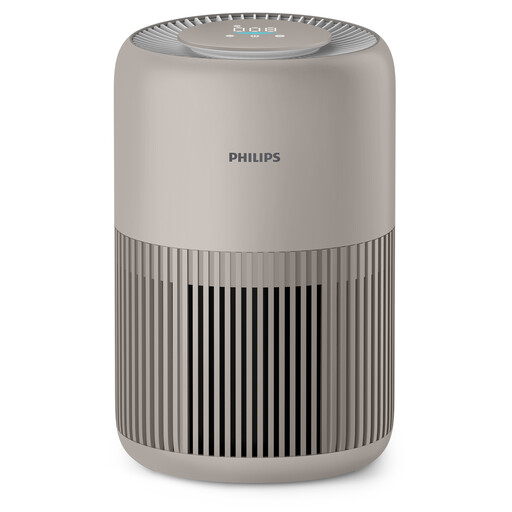
Why it suits this type of user: This compact model has a CADR of 250 m³/h, a sleep mode from 20.5 dB(A) and a stated coverage area of up to 65 m². That makes it a practical choice for a bedroom, home office or smaller living room.
The product specifications give both the CADR and noise range. This makes it easier to compare its capacity and suitability for night-time use than relying on a marketing term alone.
250 m³/h CADR, PM2.5 sensor, automatic mode and a stated minimum noise level of 20.5 dB(A).
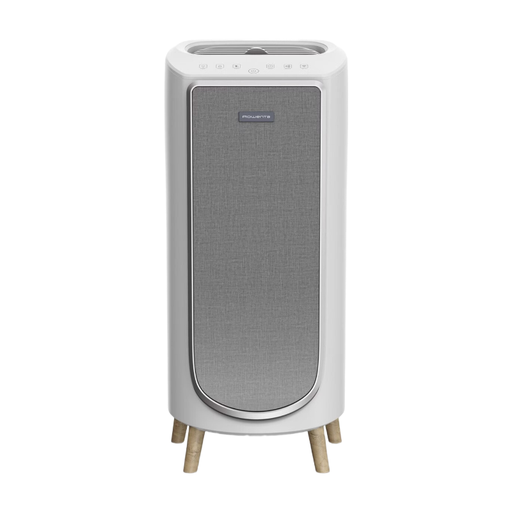
Why it suits this type of user: This model combines a CADR of 360 m³/h with Wi-Fi, app control, automatic detection and several modes. It’s a good fit for users who value control and monitoring.
Alongside its smart features, the product specifications list the CADR, filter type and noise level from 32 dB. This means you can compare more than just the app.
360 m³/h CADR, Wi-Fi and app control, automatic air quality detection and several operating modes.

Why it suits this type of user: This model is designed for homes with pets and rooms measuring 16 to 27 m². The app, voice control, PM2.5 sensor and child lock are handy for everyday use.
The combination of a pre-filter, HEPA filter and activated carbon is designed to tackle hair, fine particles and odours. Be sure to check filter availability before buying.
230 m³/h CADR, 360° filtration system, app and voice control, PM2.5 sensor and child lock.
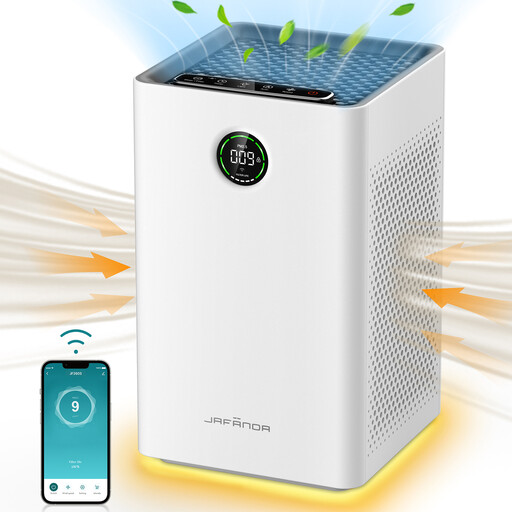
Why it suits this type of user: With a CADR of 260 m³/h and stated coverage figures for 238, 595 and 1190 ft², this model is suitable for different settings in a living room or open-plan workspace.
The model lists its airflow rate, several fan speeds and a PM2.5 sensor. This lets you adjust the setting to suit the room size and pollution level.
260 m³/h CADR, H13 HEPA filter, 300 grams of activated carbon, app control and sleep mode from 23 dB, according to the product information.
We’ve put together a complete, up-to-date list of products that meet these strict selection criteria and the applicable European safety regulations.
Place the unit on a stable, level surface with plenty of clear space around it. Keep the air inlet and outlet clear of curtains, furniture and walls. Ideally, use an air purifier in the room where you spend the most time. Close windows and doors when you want to limit pollen or smoke coming in from outdoors.
It depends on the model, how long you use it and the indoor air quality. Many compact models recommend replacing the filter every six to twelve months, while some systems specify a longer lifespan. Follow the filter indicator and check the filter regularly. A saturated filter can restrict airflow.
Energy costs depend on the wattage, fan speed and number of hours it runs. A 20 to 35-watt model will generally use less electricity than a more powerful 50 to 60-watt unit over the same number of hours. Remember to factor in the cost of replacement filters too. This will give you a more realistic idea of the total cost.
