
Vandaag of morgen in huis

Kwaliteit gegarandeerd

Welkomstaanbiedingen ontgrendelen: GRATIS bezorging | Tot 80% korting | Gratis 30 dagen JoyPlus-proefperiode
Download de app
An air purifier can help filter airborne particles, dust and certain odours from indoor air. However, an expensive model is not automatically suitable for your home. For example, a small air purifier in a large living room may run continuously at high speed, while a large appliance in a bedroom takes up unnecessary space.
The biggest purchasing mistakes usually result from three misconceptions:
Below, you’ll find out which specifications really matter and which air purifiers are suitable for different UK households.
CADR, or Clean Air Delivery Rate, indicates how much filtered air an appliance delivers per hour. A higher value is generally relevant for larger rooms or situations where you want to filter the air more quickly.
As a practical guide:
Also take ceiling height, open doors and the layout of your home into account. An open-plan living room with a kitchen requires more capacity than an enclosed room with the same floor area. The stated square metres are therefore a guide, not a guarantee of the same results in every home.
A HEPA air purifier often combines several filter layers:
According to product descriptions, various brands claim 99.97 per cent filtration for particles under specific test conditions. This percentage should not be confused with a guarantee of air quality throughout the entire room. Performance also depends on ventilation, positioning, fan speed and the condition of the filter.
Are you looking for an air purifier for pollen and dust, an air purifier for pet owners or an air purifier for smoke and odours? Don’t just look at the marketing name. Consider the combination of pre-filter, HEPA filter, activated carbon and CADR. An air purifier also does not replace ventilation and is not a treatment for allergies or asthma.
For a bedroom, a low noise level on the lowest setting is important. A quiet air purifier with sleep mode can dim the lighting and reduce the fan speed. However, check whether the manufacturer states the lowest or maximum noise level.
An air purifier with a PM2.5 sensor can display the measured particle level and adjust the fan speed automatically. The sensor does not measure everything: odours, humidity and all gaseous substances are not automatically shown in full.
Finally, look out for:

Why it suits this profile: According to the product specifications, this compact Philips model has a CADR of 250 m³/h, a PM2.5 sensor and a stated coverage area of up to 65 m². This makes it suitable for a bedroom, home office or medium-sized living space.
The stated CADR is clearly listed alongside the noise range of 20.5 to 49 dB(A). This shows that the quiet setting is not the same as the highest speed.
Two-layer HEPA filtration, automatic mode, app support and a stated filter replacement interval of around twelve months, depending on use.

Why it suits this profile: According to the product information, this model is designed for large rooms and has a CADR of more than 700 m³/h. App controls, automatic mode and night mode are ideal for households that want to automate many settings.
The information gives both the CADR and several room capacity indications. This allows you to compare the 154 m² claim with more intensive air changes in a smaller room.
HEPASilent filtration, air quality sensor, OdorFence filter according to the brand description, and control via app or voice assistant.
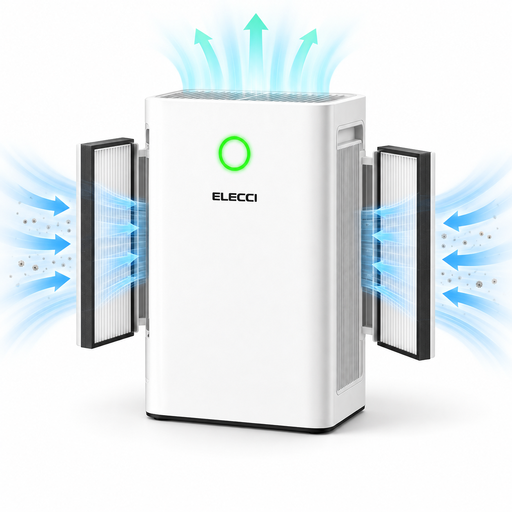
Why it suits this profile: With a stated CADR of 550 m³/h and a stated capacity of up to 120 m³, this model is aimed at larger living rooms, offices or more intensive daily use.
The product specification lists the CADR separately from the noise level. Bear in mind that it can reach up to 69 dB and use sleep mode when quiet operation is important.
Dual-HEPA filter according to the product description, washable pre-filter, air quality indicator, timer of up to eight hours and a stated sleep mode of 24 dB.
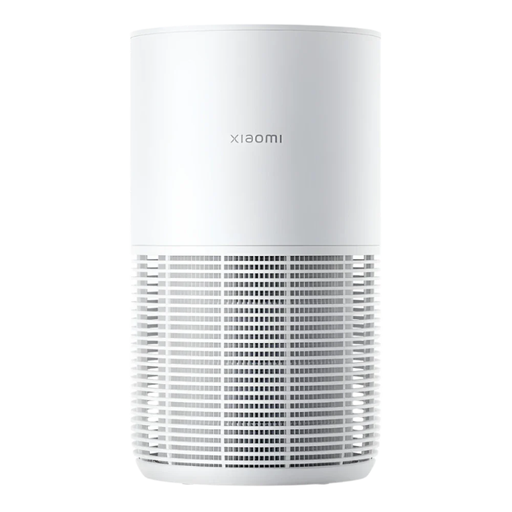
Why it suits this profile: The product specifications list a three-layer filter, a CADR of 230 m³/h, PM2.5 monitoring and control via the Xiaomi Home app. This suits homes with pets and everyday automatic operation.
The pre-filter layer is designed for larger particles such as hair, while the HEPA and activated carbon filters perform different filtering tasks. Make sure you check the filter status in good time.
App and voice control, child lock, 360° air intake, automatic adjustment and a stated coverage area of 16 to 27 m².
We’ve put together a complete, up-to-date list of products that fully meet these strict selection criteria and the applicable European safety regulations.
That depends on the room, ventilation and the issue you want to address. For a bedroom, choose a model with sleep mode, a low noise level on its lowest setting and dimmable lighting. Do not place the appliance directly next to curtains or against a wall; leave the clearance specified in the manual.
This varies according to the model and how it is used. The product specifications for the models mentioned state intervals of approximately six to twelve months. In a home with pets, a lot of dust or smoke, the filter may need replacing sooner. A saturated filter can restrict airflow. Follow the filter indicator and the manufacturer’s maintenance instructions.
Consumption depends on the motor power and the selected speed. A 20 to 35-watt model generally uses less electricity than a 60-watt appliance when both run for the same length of time. Turbo mode requires more energy than sleep mode. When buying, check the rated power and consider how long the appliance will run each day.
