
Vandaag of morgen in huis

Kwaliteit gegarandeerd

Welkomstaanbiedingen ontgrendelen: GRATIS bezorging | Tot 80% korting | Gratis 30 dagen JoyPlus-proefperiode
Download de app
An air purifier can help reduce airborne particles, dust and odours in your home. But an expensive appliance isn’t automatically right for your living room or bedroom. Manufacturers often highlight large coverage areas, high filtration percentages and quiet settings. These figures are only useful when you know the conditions they’re based on.
The most common buying mistakes are:
CADR stands for Clean Air Delivery Rate and is measured in m³/h. It tells you how much filtered air the appliance can move per hour. A higher CADR is generally important for a larger room or if you want the air to circulate more quickly.
Pay attention to how the manufacturer specifies room size, too. For example, a model may be suitable for 60 m² at one air change per hour, but for a smaller area if you want more frequent air changes. Always check the combination of CADR, recommended room size and number of air changes.
An air purifier with a HEPA filter is designed to capture fine airborne particles such as dust and pollen. H13, H12 and similar labels refer to a filter class, but manufacturers may also use their own testing methods. According to product information from various brands, figures such as 99,97% are measured under specific laboratory conditions. So don’t take them as a guarantee of air quality throughout an entire home.
An air purifier with a carbon filter is especially worth considering if odours, smoke or cooking smells are a concern. The amount of activated carbon varies considerably between appliances. A thin carbon layer will generally have a different capacity from a filter containing a larger amount of carbon.
If you’re looking for a quiet air purifier for a bedroom, the stated noise level in sleep mode matters more than the maximum level alone. For example, the Philips PureProtect Mini 900 Series lists 20,5 dB(A) on its lowest setting, while its maximum level is higher. The Blueair Blue Pure 511i Max lists 19 dB on its lowest setting and 48 dB on its highest.
An air purifier with a PM2.5 sensor can monitor the amount of fine particulate matter in the room and adjust the fan speed accordingly. Check whether the sensor measures PM2.5 only, or also temperature and humidity. An automatic mode is convenient, but it doesn’t replace ventilation or regular maintenance.
Finally, check the filter life. Some models give an estimate in months or operating hours. The actual lifespan depends on how you use the purifier, as well as smoke, pets and the amount of dust in your home.
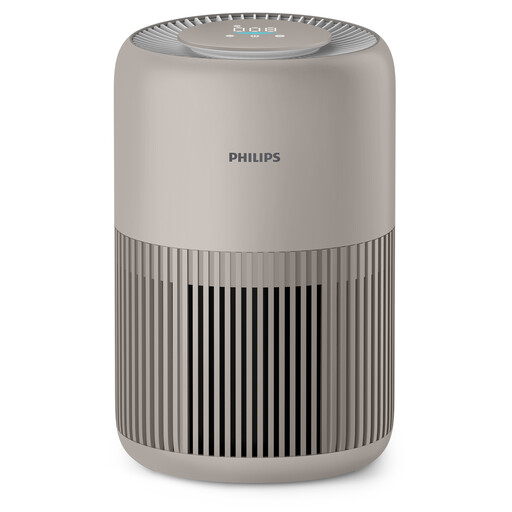
Why it suits this profile: This compact model has a CADR of 250 m³/h, an automatic mode and a stated coverage area of up to 65 m². That makes it suitable for a bedroom, home office or medium-sized living space.
The product information lists both the CADR and the recommended coverage area. That means you don’t have to rely solely on a general claim about filtration efficiency.
Two-layer HEPA filter, PM2.5 sensor, 20,5 dB(A) on the lowest setting and a stated filter life of typically around 12 months.
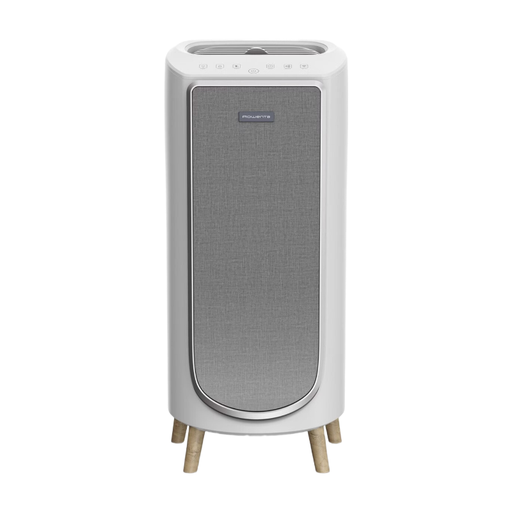
Why it suits this profile: A combination of HEPA, carbon and nanofilters, Wi-Fi control and a CADR of 360 m³/h makes this a good fit for users who want a range of settings and remote control.
According to the product information, the low noise level of 32 dB applies at minimum speed. This shows why it’s important to take the setting into account when comparing models.
CADR of 360 m³/h, automatic pollution detection, app control and four modes, including night, boost and quiet modes.
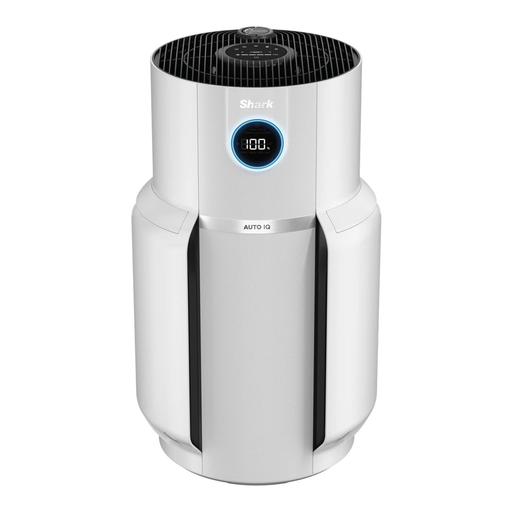
Why it suits this profile: For a larger living space or a household with pets, the stated coverage, automatic mode and four-stage filtration are practical features to consider.
The product information distinguishes between 130 m² at one air change per hour and 28 m² at 4,8 air changes per hour. This helps prevent you from overestimating the maximum coverage area.
Stated noise level of 45 dB, Auto IQ, an LED air quality display and a filter that, according to Shark, can last up to five years under the stated conditions of use.

Why it suits this profile: Designed for rooms of 16 to 27 m², this model combines a three-layer filter with app and voice control.
Its limited room-size rating makes it clear that this isn’t an air purifier for large rooms. That helps you avoid using a compact appliance in the wrong space.
CADR of 230 m³/h, PM2.5 sensor, 27 W power, child lock and tool-free filter replacement, according to the product description.
We’ve put together a complete, up-to-date list of products that meet these strict selection criteria and current European safety regulations.
According to manufacturers’ product information, HEPA filters are designed to capture fine airborne particles such as dust and pollen. Performance also depends on the CADR, the room, the placement and the maintenance. An air purifier isn’t a medical device and doesn’t replace professional advice.
It varies by model and use. Product information gives estimated lifespans of around six to twelve months, while Shark says the NeverChange filter can last up to five years. Smoke, pets and heavy dust levels can affect its lifespan. Always follow the filter indicator and the instructions.
Check the stated power consumption in watts, the number of operating hours and the cost of replacement filters. A 25 W appliance running for long periods every day may work out cheaper than a more powerful model used briefly on its highest setting. So compare not just the purchase price, but the total running costs too.
