
Vandaag of morgen in huis

Kwaliteit gegarandeerd

Welkomstaanbiedingen ontgrendelen: GRATIS bezorging | Tot 80% korting | Gratis 30 dagen JoyPlus-proefperiode
Download de app
An air purifier can help filter airborne particles, dust and some odours from an indoor space. However, it is not enough to look only at terms such as “HEPA”, “smart” or “for large rooms”. Performance also depends on air circulation, room size, filter maintenance and how often you use the appliance.
For households in the Netherlands, common reasons for buying an air purifier include pollen, fine particulate matter, household dust, smoke and odours. The points below will help you assess marketing claims more effectively.
A manufacturer may state a coverage area of, for example, 140 m², but that does not always mean the air in such a large living room will be refreshed quickly. You should therefore also check the CADR, or Clean Air Delivery Rate. This figure indicates how much filtered air the appliance moves per hour.
An air purifier with a high CADR may be more suitable for a living room, while a compact model with a lower CADR may make more sense for a bedroom or home office. Also check whether the stated room capacity is based on one, two or several air changes per hour.
A HEPA filter is designed for fine airborne particles, but a standard HEPA filter is not automatically a solution for odours or gases. For those, you need an activated carbon filter. A pre-filter also helps capture larger particles such as hair and dust.
Claims such as “removes 99.97%” are only meaningful when the test conditions, particle size and measurement period are clearly stated. According to Blueair’s own research, HEPASilent technology removes at least 99.97% of particles down to 0.1 microns in certain conditions. This is a brand claim and is not a guarantee of the same performance in every Dutch home.
A quiet air purifier can be pleasant at night, but the lowest noise level usually applies to the lowest fan speed. At the highest setting, the noise level is often noticeably higher. Always check the figures for both sleep mode and maximum speed.
Also pay attention to the light emitted by displays and sensors. For an air purifier for the bedroom, a dimming function, night mode and timer may sometimes be more important than a long list of smart features.
Use CADR as your first point of comparison:
A stated coverage area in square metres is therefore not a universal standard. An open-plan living room with a kitchen will generally require more capacity than an enclosed bedroom with the same floor area.
For a HEPA air purifier, check:
A filter that, according to the product information, needs replacing every six to twelve months involves recurring costs. An energy-efficient air purifier with a power consumption of 21 to 38 watts may work out more economically over extended use than a heavier-duty model using 50 to 60 watts, but the actual cost depends on how long you use it and on energy tariffs.
An air purifier with a PM2.5 sensor can show changes in fine particulate levels and automatically adjust the fan speed. This is useful when cooking, vacuuming or dealing with smoke indoors. However, a sensor does not measure every possible pollutant and is no substitute for proper ventilation.
A smart air purifier with an app often offers scheduling, filter alerts and remote control. Check in advance whether the app is compatible with your Wi-Fi network and whether the appliance can still be controlled without creating an account.

Why it suits this profile: This compact model has a CADR of 250 m³/h, a stated maximum coverage area of 65 m² and a low stated power consumption of 21 W. That makes it a straightforward choice for everyday use in a bedroom, home office or smaller living room.
The product information states both the CADR and a noise range of 20.5 to 49 dB(A). This makes it easier to compare capacity and overnight use than with a model that only carries a marketing label.
PM2.5 sensor, automatic mode, sleep mode and a filter indicator. According to the product information, the filter will generally need replacing after around twelve months.

Why it suits this profile: With a stated CADR of more than 700 m³/h and coverage of up to 154 m², this model is aimed at large living rooms and open-plan spaces. The app, night mode and automatic setting suit users who want to manage a wide range of settings.
Alongside the room capacity, the product description mentions CADR, automatic sensor readings and filter alerts. According to Blueair’s own research, it also focuses on odour filtration with OdorFence; check the full terms and conditions on the product page.
CADR above 700 m³/h, app control, Alexa and Google Home compatibility, and a stated filter replacement interval of approximately six to nine months.
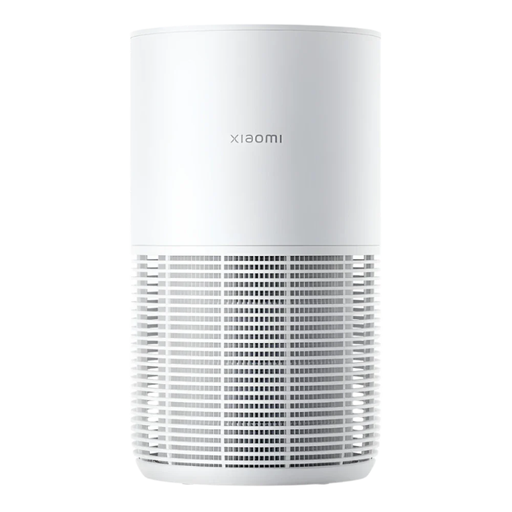
Why it suits this profile: This model is designed for homes with pets and rooms measuring 16 to 27 m². The combination of a pre-filter, HEPA filter and activated carbon is suited to tackling hair, dust and odours in a smaller living space.
The stated room size is clearly more limited than that of larger models. This reduces the risk of using a compact appliance in a room where its capacity is not suitable.
CADR of 230 m³/h, app and voice control, PM2.5 sensor, child lock and a stated power consumption of 27 W.
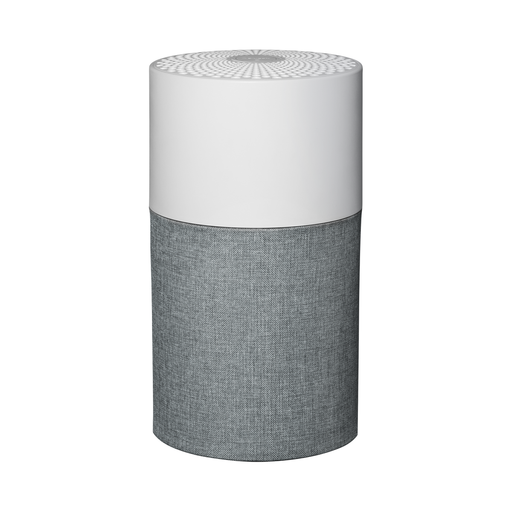
Why it suits this profile: The compact housing is designed for bedrooms, children’s rooms and offices. According to the product description, the noise level is around 24 dB on the low setting and the CADR is 117 m³/h.
The product information gives specific dimensions, CADR and noise levels rather than simply describing the appliance as “powerful” or “whisper-quiet”. Do bear in mind that the noise level is higher at the maximum setting.
HEPASilent filtration, three settings, night mode and a weight of 1.69 kg. According to Blueair’s own research, the model is certified under the AHAM Verified programme.
We have put together a complete, up-to-date list of products that fully meet these strict selection criteria and the applicable European safety regulations.
Place the appliance on a stable surface, usually with at least 30 cm of clear space around the air inlet and outlet. Do not put it behind a curtain, directly next to a heat source or in a damp room such as the bathroom. Close windows and doors when you want to filter the air in one room temporarily, but continue ventilating your home normally.
A higher setting can be useful temporarily when dealing with pollen or smoke. For continuous use in the bedroom, a lower setting with night mode is often more practical. Vacuum a washable pre-filter according to the instructions and replace disposable filters as soon as the indicator shows that they need changing. A dirty filter can restrict airflow.
An air purifier for allergies, an air purifier for pollen or an air purifier for pets should be viewed as a supplement to cleaning and ventilation. The appliance will not remove a source of damp, mould or smoke. If you have asthma or other health concerns, it is advisable to seek medical advice; an air purifier is not a medical device.
This depends on the room, the CADR and the air quality. For everyday use, automatic mode can adjust the fan speed. In a bedroom, many users choose a lower setting overnight. When doing so, check the energy consumption and recommended filter replacement interval.
The product information for the models mentioned gives intervals of approximately six to twelve months. Actual filter life varies depending on usage time, the amount of dust and smoke, and whether you have pets. A filter indicator is useful, but you should also check the airflow and the filter itself in accordance with the instructions.
Running costs consist of electricity and replacement filters. A 25 W appliance running continuously uses less energy than a 60 W model, but the selected fan speed also makes a difference. Before ordering, compare the rated power, expected filter life and price of compatible replacement filters.
