
Vandaag of morgen in huis

Kwaliteit gegarandeerd

Welkomstaanbiedingen ontgrendelen: GRATIS bezorging | Tot 80% korting | Gratis 30 dagen JoyPlus-proefperiode
Download de app
An air purifier can help filter dust, pollen, smoke particles and certain odours from indoor air. However, not every model is suitable for every British home. A small appliance in a large living room works differently from a quiet air purifier designed for the bedroom.
The biggest purchasing mistakes usually arise from three marketing claims:
A large room size without context
A stated room range may be based on just one air change per hour. For noticeably faster filtration, the CADR, or Clean Air Delivery Rate, is more important.
A filtration percentage without a clear testing method
According to a brand’s own tests, a filter may, for example, trap 99.97% of certain particles under specific conditions. This does not automatically mean that the entire room will be cleaned equally quickly or completely.
A low noise level that only applies to the lowest setting
A quiet air purifier for the bedroom may be peaceful in sleep mode but considerably noisier at its highest setting. Always check the full decibel range.
An air purifier is not a replacement for ventilation. Continue to ventilate regularly and tackle the source of smoke, damp, mould or strong odours.
The CADR in m³/hour indicates how much filtered air an appliance can move. A higher value is generally better suited to a larger living room or open-plan living space. Also check the stated floor area and the number of air changes on which this is based.
Examples from the range:
Measure the room first. In an open-plan living room with a kitchen, high ceilings, or lots of dust and pets, additional capacity is useful.
An air purifier with a HEPA filter is designed to capture fine airborne particles such as dust and pollen. A pre-filter catches larger particles, while an activated carbon filter is mainly used for odours and certain volatile substances.
Pay attention to these points:
A filter that lasts five years sounds appealing, but check exactly what is and is not covered by that claim. The Shark NeverChange Max product description states a filter lifespan of up to five years. The actual lifespan depends, among other things, on usage, dust levels and indoor air quality.
For a bedroom or nursery, the difference between 20.5 dB and 50 dB is clearly noticeable. Do not look only at the lowest figure; check the maximum noise level too.
An air purifier with an air quality sensor can automatically adjust the fan speed. A PM2.5 sensor measures fine particles but does not necessarily detect every odour or pollutant. An air purifier with an app offers additional features such as scheduling, notifications and remote control. Check that the Wi-Fi, voice assistants and app are compatible with your needs.
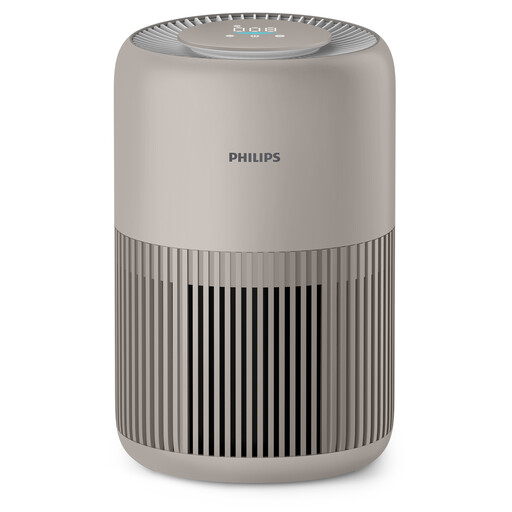
Why it suits this profile: This compact model combines automatic operation, a PM2.5 sensor and a relatively low stated power consumption of 21 W. This makes it accessible for a bedroom, home office or smaller living room.
The product information states both the CADR of 250 m³/hour and coverage of up to 65 m². However, check whether this coverage suits the desired number of air changes in your room.
CADR 250 m³/hour, sleep mode from 20.5 dB(A), automatic mode and filter alert.
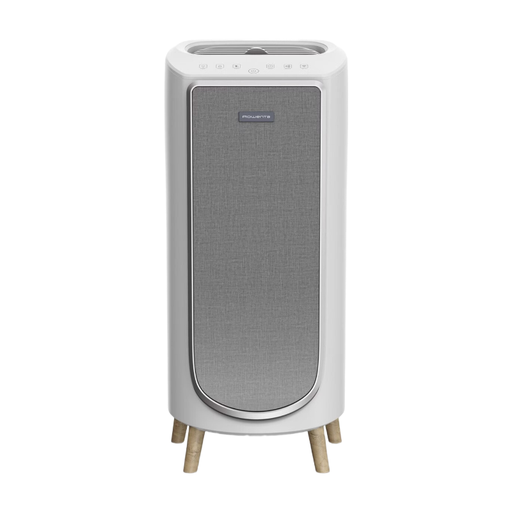
Why it suits this profile: This model is designed for larger living spaces and users who value control via Wi-Fi and an app.
The product details list several modes, a CADR of 360 m³/hour and a minimum noise level of 32 dB(A). The highest setting may be louder.
HEPA, carbon and nano filters, automatic pollution detection, app control and CADR 360 m³/hour.
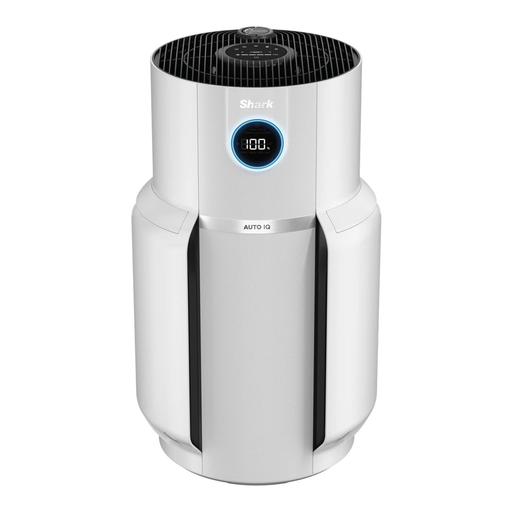
Why it suits this profile: A large home, pets or frequent daily use requires sufficient capacity and clear maintenance information.
The stated coverage is linked to different air-change rates: up to 130 m² at one air change per hour and 28 m² at 4.8 air changes per hour.
Four-stage filtration, Auto IQ, LED display, stated noise level of 45 dB and a filter that, according to the product information, lasts up to five years.

Why it suits this profile: The combination of a pre-filter, HEPA filter, activated carbon, app control and child lock is well suited to households with cats or dogs.
The product description explicitly mentions filter layers for hair, fine particles and odours. Coverage remains limited to 16–27 m², so measuring the room is important.
CADR 230 m³/hour, 360° filtration, PM2.5 sensor, Xiaomi Home app, voice control and child lock.
We have compiled a complete, up-to-date list of products that fully meet these strict selection criteria and the applicable European safety regulations.
Place an air purifier on a stable, level surface with approximately 30 cm of clear space around the air intake and outlet. Do not place the appliance behind a curtain, directly next to a radiator or in a damp bathroom. In a bedroom, a low setting can run continuously; in a living room, temporarily using a higher setting is useful after cooking or during a particularly dusty period.
Clean a washable pre-filter according to the instructions. Replace disposable filters based on the filter indicator or the recommended interval. Replacement filter costs form part of the total cost of ownership. Before buying, therefore, check that the correct filter is readily available.
According to the stated product specifications, a model with a HEPA filter can remove certain airborne particles, including pollen and dust. Performance depends on filter quality, CADR, operating time and positioning. An air purifier is not a medical device and does not replace professional advice.
This depends on the room and the desired number of air changes. For everyday use, an automatic or low setting can remain active continuously. Temporarily use a higher setting when the air is more polluted. Do not keep doors and windows closed unnecessarily when ventilation is needed.
Calculate energy consumption using: power in watts ÷ 1,000 × operating hours × electricity price per kWh. An appliance rated at 25 W running for 10 hours uses approximately 0.25 kWh. Add the cost of replacement filters to this. A more efficient model with affordable filters may therefore cost less to run than an appliance with a long but expensive filter cycle.
