
Vandaag of morgen in huis

Kwaliteit gegarandeerd

Welkomstaanbiedingen ontgrendelen: GRATIS bezorging | Tot 80% korting | Gratis 30 dagen JoyPlus-proefperiode
Download de app
An air purifier can help filter airborne particles such as dust, pollen and smoke particles from indoor air. However, it is not wise to rely solely on terms such as “smart”, “powerful” or “for large rooms”. The main differences between models lie in their filter construction, airflow, noise level and the cost of replacement filters.
There are three common purchasing pitfalls for Dutch households:
CADR, or Clean Air Delivery Rate, indicates how much filtered air a device can deliver per hour. A higher value is particularly relevant for larger sitting rooms, open-plan living spaces or rooms where a large volume of air needs to be refreshed quickly.
Compare the CADR with the room in which you will use the device:
The stated room size is not a guarantee of the same performance in every home. Ceiling height, doors, ventilation and the position of the device all affect how it works.
A HEPA air purifier uses a fine-particle filter for small airborne particles. A pre-filter traps larger particles such as hair and dust. An activated carbon filter is designed to address certain odours and gaseous substances.
When comparing models, look out for:
Brands may state specific percentages or removal claims. Treat these as information from the product description or, where applicable, according to the brand’s own research. An air purifier does not replace ventilation and is not a medical device.
For an air purifier for the bedroom, the noise level on the lowest or sleep setting is more important than the maximum noise level alone. For example, the Blueair Blue Pure 511i Max lists 19 dB at its lowest setting and a maximum of 48 dB. The Philips PureProtect Mini 900 Series lists 20.5 to 49 dB(A).
A smart air purifier can be useful if you want to switch it on or off remotely, set a schedule or check air quality through an app. However, check the following:

Why it suits this profile: This compact model has a CADR of 250 m³/h, a sleep setting from 20.5 dB(A) and stated coverage of up to 65 m². It is suitable for anyone who wants to get started without complicated settings.
The product description states both the CADR and the noise range. This makes it easier to compare the model than relying on a marketing term alone.
250 m³/h CADR, a 2-layer HEPA filter and low stated energy consumption of 21 W.
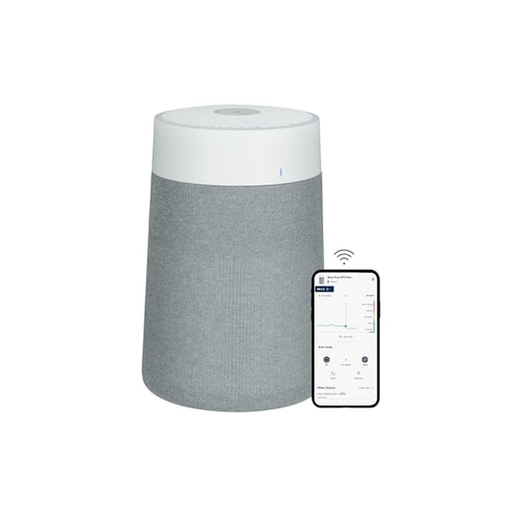
Why it suits this profile: The combination of HEPASilent filtration, a CADR of 212 m³/h and control through the Blueair app is ideal for users who value quiet operation and smart features.
The noise level is stated for both the lowest and highest settings. The app also alerts you when the filter needs replacing.
19 dB at the lowest setting, a Wi-Fi app with scheduling and stated filtration of particles down to 0.1 micron.
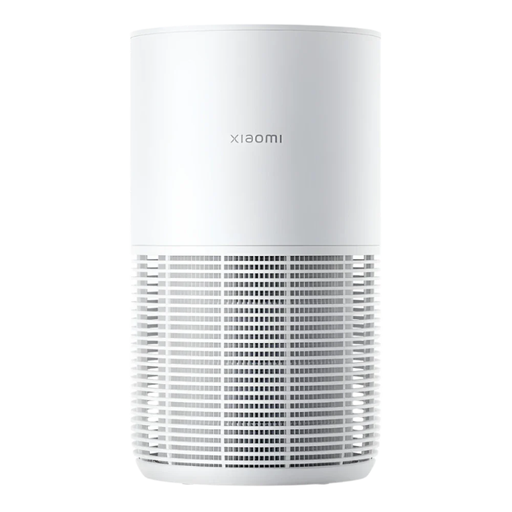
Why it suits this profile: The 360° filtration, pre-filter, HEPA layer and activated carbon are designed for households with pets. The Xiaomi Home app, voice control and child lock provide convenient operation.
The filter consists of three layers and the model has a stated CADR of 230 m³/h. However, check the availability of the specific Xiaomi filter.
230 m³/h CADR, activated carbon for odours and control through the app or voice commands.

Why it suits this profile: According to the product description, this model delivers a CADR of more than 700 m³/h and is designed for large spaces. The app, automatic mode and filter alert are useful for extended daily use.
The high CADR is better suited to a large room than a compact model. Check the dimensions, filter price and actual layout of the room in advance.
CADR of more than 700 m³/h, 7-stage filtration according to the product description and app control.
We have put together a complete, up-to-date list of products that fully meet these strict selection criteria and the applicable European safety regulations.
Do not place an air purifier directly behind a sofa, curtain or cupboard. Keep the air intake and outlet clear, and place the device on a stable, dry surface. In a bedroom, the night mode is often more useful than the maximum setting. In a sitting room with pets, regularly cleaning the pre-filter can help maintain airflow.
Also check the manual before cleaning a filter. Many HEPA and combination filters must not be washed. Replace the filter when the device indicates that it needs changing or according to the manufacturer’s schedule. A saturated filter can restrict airflow.
A model with a pre-filter and HEPA filter is designed to filter airborne dust particles and pollen. The device does not automatically remove dust that has already settled on furniture or floors. Regular cleaning and good ventilation are still necessary.
This varies depending on the model, usage time and air pollution levels. Product descriptions often state approximately nine to twelve months, but the filter alert or manual takes precedence. If you have smoke, a lot of dust or pets, the filter may need replacing sooner.
As well as electricity consumption, your main ongoing cost will be replacement filters. So compare the stated wattage, filter lifespan and price of a suitable original filter. A model with Wi-Fi or an app may offer extra convenience, but it is not essential for the filtration itself.
