
Vandaag of morgen in huis

Kwaliteit gegarandeerd

Welkomstaanbiedingen ontgrendelen: GRATIS bezorging | Tot 80% korting | Gratis 30 dagen JoyPlus-proefperiode
Download de app
An air purifier can help filter dust particles, pollen, smoke particles and pet odours from the air indoors. However, not every model is suitable for every room. A compact appliance may work well in a bedroom but move too little air in a spacious living room. And a low noise rating may apply only at the lowest fan speed.
The main pitfalls when buying an air purifier are:
CADR stands for Clean Air Delivery Rate and indicates how much filtered air an appliance moves per hour. A higher CADR is generally important for a larger room, or if you want the air to circulate more quickly.
Bear in mind that manufacturers do not always calculate maximum room capacity in the same way. So, as well as checking the number of square metres, look at the CADR. Here are some examples from product specifications:
These figures are not directly comparable with the actual air changes in your home. For example, an open-plan living room, high ceilings and an open kitchen call for more capacity than an enclosed bedroom.
An air purifier with a HEPA filter is designed primarily to capture small airborne particles, such as dust, pollen and pet dander. According to the specifications from various manufacturers, H13 or similar filters can capture up to 99.97% of certain particles. This is a manufacturer’s claim based on specific test conditions, not a guarantee of the same results in every home.
An air purifier with a carbon filter can also be useful for cooking smells, smoke and odours. Activated carbon traps certain odour-causing substances, but how well it works depends on factors including the amount of carbon and the fan speed.
A practical filter system often consists of:
Also check whether the filter is washable or replaceable. Do not wash a disposable filter unless the instructions explicitly say that you can.
For an air purifier for the bedroom, the noise level on the lowest or sleep setting is important. The Philips AC0921/14 is listed at 20.5 dB(A) on its quiet setting. The ROUNY AP-T1 has a maximum noise level of 25 dB on sleep mode. The Emerio AP-132324 is listed at 26 dB when running quietly.
Always compare the full range. An appliance that is quiet on its lowest setting may be considerably louder on its highest. Also check:
A sensor and app can be useful, but they do not automatically increase the filter capacity. A smart air purifier with an app is particularly useful if you want to check air quality remotely, set schedules or use voice control.
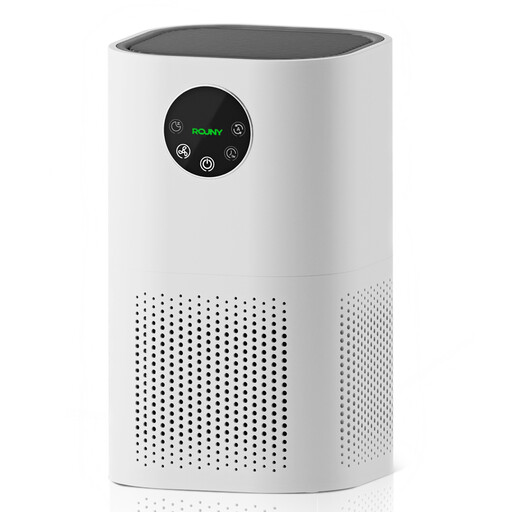
Why it suits this profile: This model is designed for bedrooms, offices and rooms measuring 20 to 50 m². Its four fan speeds and timer make it straightforward to use.
The product listing gives both a CADR of 150 m³/h and a room range of 20–50 m². This makes it easier to compare the capacity with the size of your room.
H13 HEPA filter, air quality indicator, sleep mode down to ≤25 dB, and timer settings for 2, 4 and 8 hours.
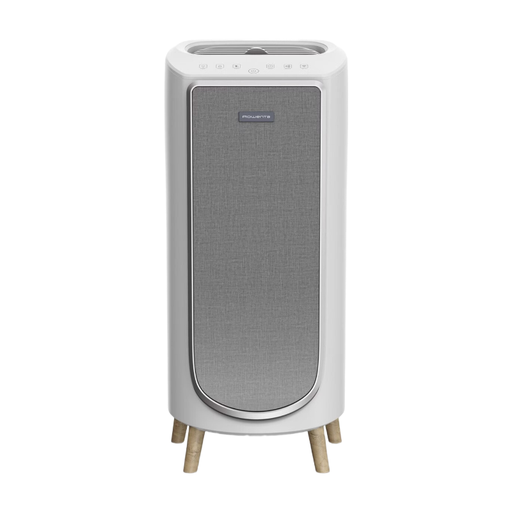
Why it suits this profile: The combination of multiple filters, automatic detection, Wi-Fi and a CADR of 360 m³/h makes it a good fit for anyone looking for plenty of settings.
The stated CADR and noise level of 32 dB at the lowest speed give you more specific points of comparison than a general claim about large rooms alone.
HEPA, carbon and nanofilter, according to the product information; four modes, Wi-Fi app and automatic pollution detection.

Why it suits this profile: This model is designed for homes with pets and rooms measuring 16 to 27 m². You can control it using the Xiaomi Home app or voice assistants.
The product information lists a pre-filter, HEPA filter and activated carbon layer separately. It also specifies a PM2.5 sensor and tool-free filter replacement.
CADR of 230 m³/h, three filter layers, child lock, app control and a stated power rating of 27 W.
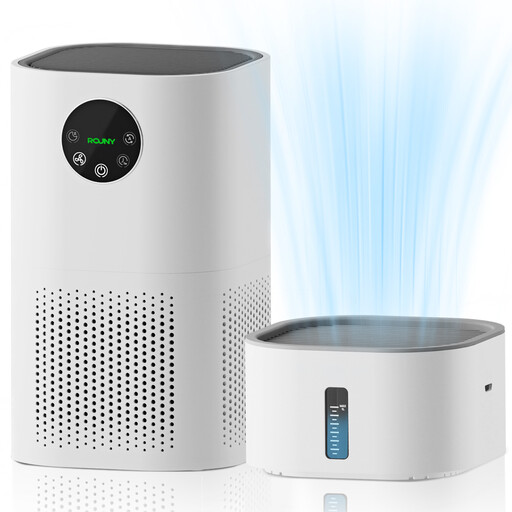
Why it suits this profile: If you want to control humidity as well as filter the air, this 2-in-1 appliance combines both functions in one unit.
The product specifications list an H13 filter, a CADR of 150 m³/h and a room range of 20–50 m² separately. This makes it clear that humidifying is not the same as purifying.
Two functions, sleep mode down to ≤25 dB, four fan speeds, air quality display and a timer for 2, 4 or 8 hours.
We’ve put together a complete, up-to-date list of products that meet these strict selection criteria and current European safety regulations.
Yes, as long as its capacity suits the room and it has a practical sleep mode. Check the noise level on the lowest setting, whether the lights can be dimmed and if there is a timer. Do not place the appliance right next to bedding or against a wall; it needs clear space around the air inlet and outlet.
It depends on the model, how long you use it and the air quality. Product information for various models suggests replacing the filter roughly every six to twelve months. Smoking, pets and a lot of dust can put more strain on the filter and mean it needs changing sooner. Follow the filter indicator and the manufacturer’s instructions.
Running costs include electricity and replacement filters. A 25 W appliance running continuously uses less power than a 60 W model over the same period, but the actual cost depends on the setting you use. Before buying, compare the power rating, filter price and recommended filter lifespan.
