
Vandaag of morgen in huis

Kwaliteit gegarandeerd

Welkomstaanbiedingen ontgrendelen: GRATIS bezorging | Tot 80% korting | Gratis 30 dagen JoyPlus-proefperiode
Download de app
An air purifier can help reduce airborne particles, dust and odours in your home. However, it is unwise to rely solely on terms such as “powerful purification”, “allergy filter” or “for large rooms”. The main differences between models are their airflow, filter system, noise level and the cost of replacement filters.
For households in the Netherlands, three pitfalls are particularly relevant:
CADR, or Clean Air Delivery Rate, indicates how much filtered air a device moves per hour. A higher CADR is particularly useful in a large living room, an open-plan living space or when the purifier is used intensively.
Do not look only at the stated number of square metres. Also check:
For example, a compact model with a CADR of 117 m³/hour is more suitable for a bedroom, home office or child’s room than for an open-plan living room. For larger spaces, models offering around 250 to 550 m³/hour are more practical.
A HEPA air purifier is designed for fine particles such as dust, pollen and PM2.5. Product information often expresses filter performance as a percentage. According to brands’ and manufacturers’ own claims, these percentages can vary depending on particle size, testing method and fan speed. Treat them as product specifications rather than a guarantee of the same performance in every home.
A useful filter system usually consists of:
For an air purifier for pollen and allergies, a well-specified fine-particle filter is important. If you have pets, it is also worth checking whether hair and odours are listed separately. A washable pre-filter can make maintenance easier, but the main filter itself is generally not washable.
For a bedroom air purifier, the lowest noise level is more important than an attractive maximum CADR. Always check the range between the lowest and highest settings. A model with a sleep mode of 20 to 25 dB can be comfortable at night, but it will make more noise on turbo or high power.
A PM2.5 sensor measures fine particles and can control the automatic mode. The reading does not tell you everything about odours, humidity or CO₂. A smart air purifier with app or voice control is particularly useful for scheduling, remote control and filter notifications.
Also take recurring costs into account:
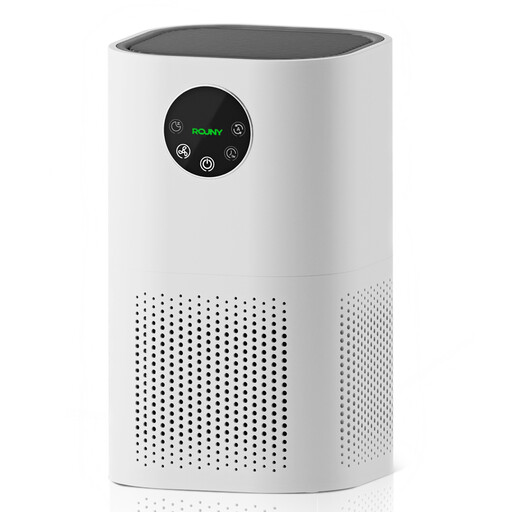
Why it suits this profile: This model combines a CADR of 150 m³/hour with four speeds, an air-quality indicator and a timer. That makes it easy to use for anyone buying an air purifier for the first time.
The product information states both the sleep-mode noise level of up to 25 dB and the noise level on high power. Filter replacement and room coverage are also clearly specified.
H13 filter, air-quality display, 2/4/8-hour timer and a stated coverage of 20–50 m².
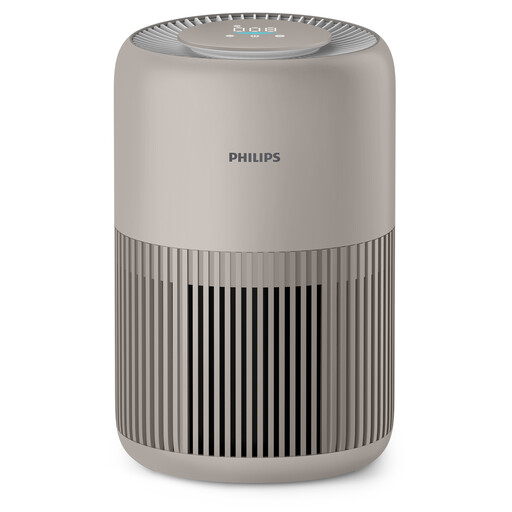
Why it suits this profile: With a CADR of 250 m³/hour, automatic mode, PM2.5 sensor and sleep mode from 20.5 dB, this model is well suited to daily use in a bedroom, study or medium-sized living space.
The stated noise levels range from 20.5 to 49 dB(A). This gives you a clearer idea of what to expect at night and when using higher fan speeds.
Two-layer HEPA system, automatic operation, maximum power of 21 W and filter notification.
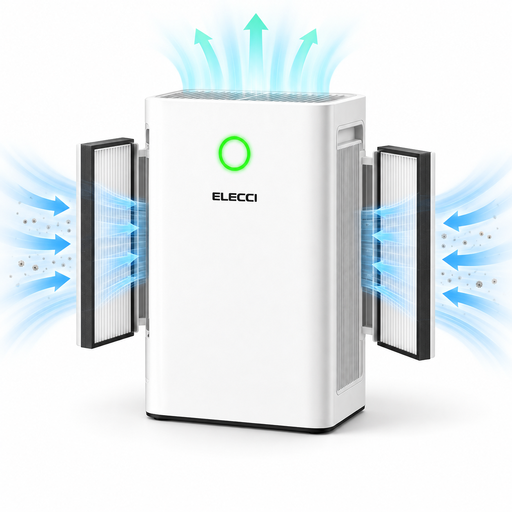
Why it suits this profile: With a stated CADR of 550 m³/hour and coverage of up to 48 m², this model is designed for larger living rooms, offices or more intensive use.
Alongside room coverage, the manufacturer also states the air volume of 120 m³ and the CADR. The washable pre-filter can capture coarse dust and hair before they reach the main filter.
Dual-HEPA configuration, PM2.5 indicator, 8-hour timer and, according to the product specification, 24 dB in sleep mode.

Why it suits this profile: This model is designed for households with pets and rooms measuring 16–27 m². The app, voice control and automatic adjustment are useful for everyday use.
The filter configuration includes a pre-filter, HEPA filter and activated carbon. The product specification also lists a PM2.5 sensor and a tool-free replaceable filter.
CADR of 230 m³/hour, three filter layers, app and voice control, child lock and 27 W power consumption.
We have put together a complete, up-to-date list of products that fully meet these strict selection criteria and the applicable European safety regulations.
That depends on your goal and the model you choose. A compact, quiet air purifier can be suitable for a bedroom when its CADR is appropriate for the room. Place the device on a stable surface with approximately 30 cm of clearance around the air inlet and outlet. Do not place it behind a curtain or directly next to the bed if this blocks the airflow.
The interval varies depending on the model, usage time and indoor air quality. The product specifications for the models mentioned indicate approximately 6 to 12 months. Check the filter notification and allow for additional dust, smoke or pets. You can sometimes vacuum or wash the pre-filter, but only do so if the manual permits it.
In addition to the purchase price, you will pay for electricity and replacement filters. A model rated at 20 to 30 W will generally use less electricity during continuous operation than a 50 to 60 W device, but actual consumption depends on the selected setting. Before buying an air purifier, compare the rated power, filter lifespan and price of a compatible replacement filter.
