
Vandaag of morgen in huis

Kwaliteit gegarandeerd

Welkomstaanbiedingen ontgrendelen: GRATIS bezorging | Tot 80% korting | Gratis 30 dagen JoyPlus-proefperiode
Download de app
An air purifier can help filter airborne particles, dust and certain odours from an indoor space. However, not every model is suitable for every home. A compact unit in a large living room may need to run constantly at high speed, while a powerful model in a bedroom could take up unnecessary space and use more energy than needed.
The product description alone does not always tell the whole story. Focus on verifiable specifications such as CADR, filter construction, noise levels and maintenance costs.
Manufacturers often state a maximum room size. This figure may be based on just one air change per hour. For a noticeable effect in a bedroom or living room, several air changes per hour are more practical.
So compare the stated room coverage with the CADR (Clean Air Delivery Rate). A model with a higher CADR moves and filters more air per hour. Around 150 to 250 m³/h may be enough for a small bedroom, while a large living room is more likely to need 400 m³/h or more. The right choice depends on ceiling height, ventilation and how quickly you want the air cleaned.
Terms such as “HEPA”, “H13” and “99.97%” sound clear-cut, but check what the claim actually refers to. According to the product descriptions from various brands, the percentage usually relates to particle filtration under specific laboratory conditions. It does not mean that all the air in a room will be cleaned completely straight away.
Claims about removing viruses, bacteria, allergens or odours are sometimes supplied by the brand itself, too. Treat these statements as manufacturer information, not as a medical guarantee. An air purifier is no substitute for ventilation, cleaning or allergy treatment.
An air purifier only works as intended when its filter is fitted correctly and replaced on time. A pre-filter can sometimes be vacuumed or washed, but a HEPA or combined main filter usually cannot. Check the following before you buy:
A model with a long filter lifespan may seem appealing, but always check the conditions and usage scenario behind the claim.
A HEPA air purifier uses a fine filter to capture small airborne particles. The pre-filter catches larger particles such as hair and dust, helping to extend the life of the main filter. An air purifier with a carbon filter is particularly useful if odours or cooking smells are a concern. Activated carbon can adsorb certain odorous substances and gases, but its effectiveness depends, among other things, on the amount of carbon and the airflow.
For homes with pets, a combination of pre-filter, HEPA filter and activated carbon is often more practical than a fine-particle filter alone. Bear in mind, though, that hair already on the floor will not be removed by the airflow.
Use the stated room coverage as a guide, not as your only selection criterion. A unit with 150 m³/h may suit a smaller room, while a model with 450 or 550 m³/h offers more capacity for a larger living space.
For example, the TRULIVA KJ450 lists a CADR of 450 m³/h and a stated operating area of 32 to 55 m². The ELECCI KXY550 lists 550 m³/h, making it suitable for larger spaces, but its specifications also give a maximum noise level of 69 dB. This difference matters if you plan to use the unit in both a living room and a bedroom.
A quiet air purifier should not only have a low noise level on its lowest setting. Check the noise level at higher settings, too. Sleep mode usually reduces the fan speed and dims the display, but it may also reduce the rate at which the air is cleaned.
An air purifier with a PM2.5 sensor can show measured air quality and adjust the fan speed in automatic mode. However, the sensor does not measure every possible pollutant. An air purifier with an app is most useful for scheduling, filter notifications and remote control; it is no substitute for clear technical specifications.
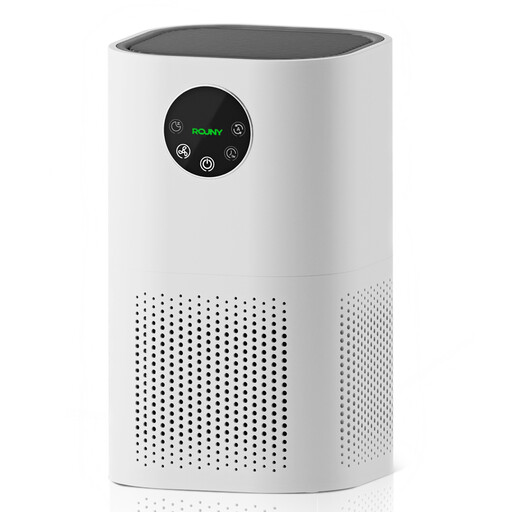
Why it suits this type of buyer: With a CADR of 150 m³/h, four speeds and a compact design, this model is a good fit for a bedroom, home office or smaller living room.
The stated CADR and noise level make it easier to choose than relying on a large room-coverage claim alone. The manufacturer recommends replacing the filter after around 6 to 8 months, depending on use.
H13 filter, air quality display, sleep mode at up to 25 dB and 2, 4 and 8-hour timers.
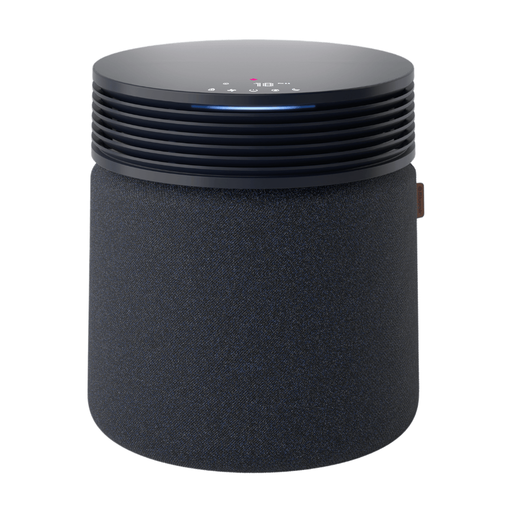
Why it suits this type of buyer: Designed for large living spaces, this model combines a stated CADR of over 700 m³/h with app control and automatic features.
The product information lists both its capacity and app notifications for filter replacement. Claims about filtration and odour reduction come from the brand’s description and should be treated as product specifications.
Seven-stage filtration according to the product description, automatic mode, night mode and control via the Blueair app.

Why it suits this type of buyer: Pet owners get a combination of pre-filter, HEPA filter, activated carbon, PM2.5 sensor and control via the Xiaomi Home app.
The product information lists a CADR of 230 m³/h and coverage of 16 to 27 m². This makes it clearer which room the model is designed for than a general claim that it suits the whole home.
App and voice control, child lock, 27 W power and a filter that can be replaced without tools.
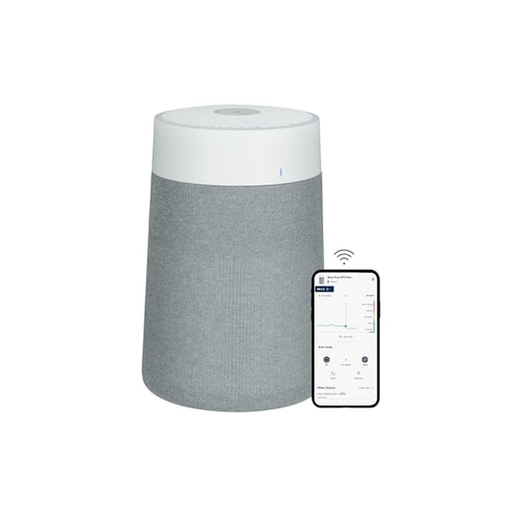
Why it suits this type of buyer: With a stated CADR of 212 m³/h and low noise on its lowest setting, this model is designed for smaller rooms and offices.
The specifications list both 19 dB on the lowest setting and 48 dB on the highest. This gives you a clearer idea of what to expect at different speeds.
HEPASilent filtration according to the manufacturer, night mode, app control and stated coverage of up to 43 m².
We’ve put together a complete, up-to-date list of products that meet these strict selection criteria and the applicable European safety regulations.
According to the product specifications, a model with a HEPA filter can filter airborne particles such as dust and pollen. This may be useful if you’re looking for an air purifier for allergies, but it is not a medical treatment and won’t remove allergens that have already settled on furniture, bedding or floors.
It varies depending on the model, how long it is used and the air quality. Manufacturers often quote a lifespan of around 6 to 12 months. Some products claim a longer lifespan. Treat this as a guide and follow the filter notification and maintenance instructions above all.
Energy use depends on the unit’s power rating and how many hours it runs. Models in this selection, for example, list power ratings of 21, 27, 32, 35 or 38 W. Use sleep or automatic mode when appropriate, and compare the stated power rating with how long you expect to use the unit.
