
Vandaag of morgen in huis

Kwaliteit gegarandeerd

Welkomstaanbiedingen ontgrendelen: GRATIS bezorging | Tot 80% korting | Gratis 30 dagen JoyPlus-proefperiode
Download de app
An air purifier can be useful in a bedroom, living room, office or home with pets. However, a high filter rating or a large claimed room size doesn’t automatically mean a unit is right for your space. When dealing with pollen, dust, cooking smells and pet odours in particular, it’s important to look beyond the advertising claims.
According to brands’ product information, some models can capture 99.97% of certain particles, for example. This is a claim based on specific testing conditions, not a guarantee that the device will perform the same way in every home. An air purifier should never be used as a substitute for ventilation or maintenance.
A HEPA air purifier sounds appealing, but overall performance also depends on airflow, the filter construction and how well the unit is sealed. An H13 filter in a small unit may be less practical for a large living room than a lower-rated filter with a higher CADR.
So always check:
Manufacturers don’t always use the same testing method. A unit described as suitable for 60 m² may, in practice, be better suited to a smaller room if you want several air changes per hour.
So consider the relationship between room size and CADR. A compact model is often enough for a 15 m² bedroom. For an open-plan living room or office, an air purifier for large rooms with a higher CADR makes more sense.
A quiet air purifier can be pleasant to use in sleep mode, but noise levels are often considerably higher at the highest fan setting. So check both the lowest and highest stated levels. A low setting may also move less air.
CADR stands for Clean Air Delivery Rate and is usually expressed in m³/h. The higher the figure, the more filtered air the unit is specified to deliver per hour. A rating of 117 to 150 m³/h may suit a small bedroom; for a larger living room, look for figures around 250 to 450 m³/h.
However, compare models using the same testing method. A stated floor area isn’t a universal standard.
A pre-filter traps larger particles such as hair and dust. A HEPA or similar fine-particle filter is designed for small airborne particles, such as dust and pollen. According to the product description, an air purifier with a carbon filter targets odours and certain gases.
For an air purifier for pets, an easily accessible pre-filter and a carbon layer are practical features. Hair and dander won’t all end up in the same filter layer. Clean or replace components according to the instructions.
An air purifier with a PM2.5 sensor can show the measured level of fine particles and automatically adjust the fan speed. However, the sensor won’t detect every possible odour, type of dust or pollutant.
A model with app control is handy for setting schedules and controlling the unit remotely. Check in advance whether you’ll need an account, Wi-Fi or a specific app. For straightforward use, physical buttons and a filter indicator may be all you need.
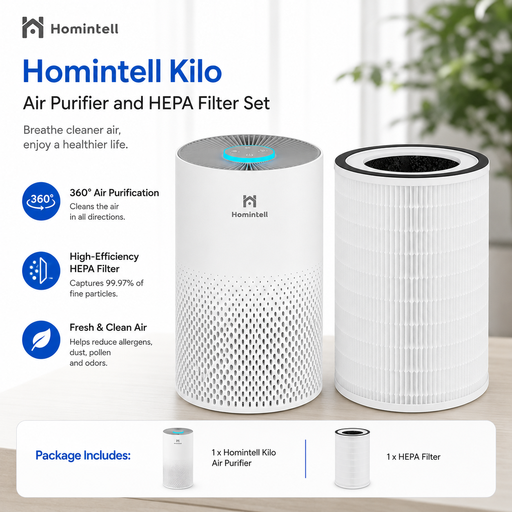
Why it suits this profile: According to the product information, this compact model is designed for rooms of around 16 to 18 m². It has three fan speeds, touch controls and a timer.
Its stated CADR of 150 m³/h and smaller recommended coverage area make it easier to choose than a model with an overly generous maximum room-size claim.
3-in-1 filter with a pre-filter, H11 filter and carbon layer; an extra replacement filter is included, according to the product listing.
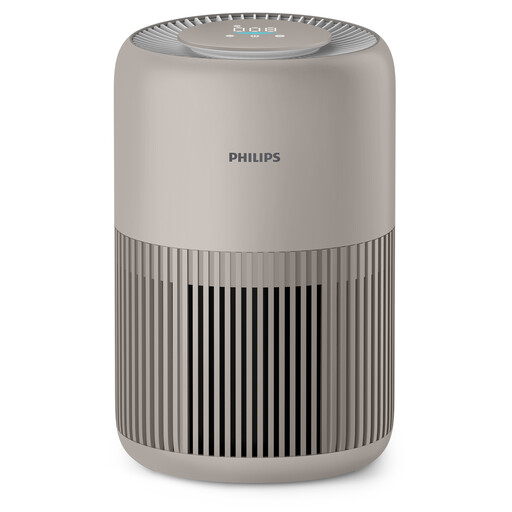
Why it suits this profile: Its stated CADR of 250 m³/h, PM2.5 sensor, automatic mode and sleep mode will suit anyone looking for clear specifications and minimal manual adjustments.
The product lists separate figures for CADR, noise level and energy consumption, rather than relying on a general marketing term.
Stated noise level of 20.5 to 49 dB(A); filter indicator and automatic mode, according to the product information.

Why it suits this profile: According to the product description, this model is designed for homes with pets and supports control through the Xiaomi Home app and voice commands.
The combination of a pre-filter, HEPA filter and activated carbon layer tackles different types of pollutants, while the sensor monitors indoor air quality.
CADR of 230 m³/h, child lock and tool-free filter replacement, according to the product information.
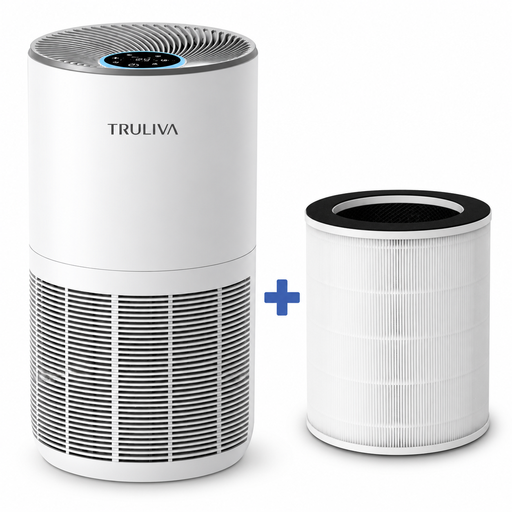
Why it suits this profile: Its stated CADR of 450 m³/h and claimed coverage of 32 to 55 m² make it a good fit for a larger living room or open-plan workspace.
The product specifications include both CADR and a recommended operating area, making it easier to compare the model with the size of your own room.
360° air intake, PM2.5 display, 24-hour timer and an extra H13 filter, according to the product listing.
We’ve put together a complete, up-to-date list of products that meet these strict selection criteria and the applicable European safety requirements.
Place the unit on a stable surface and keep the air inlet and outlet clear. Many models recommend leaving around 30 cm of space around the unit. Remove all plastic packaging from the filter before first use. Several models explicitly mention this.
Also remember to:
According to product information, a HEPA filter is designed to filter airborne particles such as dust and pollen. However, the unit won’t automatically remove pollen that has already settled on furniture, clothing or the floor. Regular cleaning and ventilation are still essential.
It varies by model and usage. Some product information gives an estimate of around six to eight months, while other models state a longer period. A filter indicator is a useful guide, but check the filter visually too and follow the instructions.
As well as electricity, you’ll need to pay for replacement filters. So check the stated power consumption, for example 21, 27, 38 or 50 watts, and the price of genuine filters. Daily use at a higher fan setting can increase both energy consumption and filter wear.
