
Vandaag of morgen in huis

Kwaliteit gegarandeerd

Welkomstaanbiedingen ontgrendelen: GRATIS bezorging | Tot 80% korting | Gratis 30 dagen JoyPlus-proefperiode
Download de app
An air purifier can help filter airborne particles, dust and certain odours from indoor air. However, not every model is suitable for every room. A small air purifier in a spacious living room may need to run continuously at high speed, while a powerful appliance in a bedroom may create unnecessary noise.
The biggest buying mistakes usually stem from three misconceptions:
An air purifier does not replace ventilation either. Continue ventilating your home in line with the relevant guidance, and tackle the source of smoke, moisture or dust wherever possible.
CADR stands for Clean Air Delivery Rate and is expressed in m³/hour. This figure indicates how much filtered air the appliance can move. A higher CADR is particularly relevant for large rooms, open-plan living spaces or situations where you want to filter the air more quickly.
Bear in mind that the stated area can vary from one brand to another. For example, one model may be described as suitable for one air change per hour, while another manufacturer may state a smaller coverage area based on multiple air changes. So, look at:
For a small bedroom, a compact model is often practical. For a living room or office with an open connection to other spaces, an air purifier for large rooms with a higher CADR is the more logical choice.
An air purifier with a HEPA filter is designed to capture fine airborne particles, such as dust, pollen and certain allergens. A pre-filter catches larger particles, such as hair and dust flakes. A carbon filter or layer of activated carbon is especially useful if you want to reduce odours, smoke or cooking smells.
Pay attention to the wording used in the product information. Claims such as ‘99.97% filtration’ are generally linked to specific particle sizes and test conditions. A brand’s own testing may show results that apply under those conditions; this does not mean that every room will produce the same outcome.
For an air purifier for allergies, a well-sealed filter housing, a suitable HEPA filter and sufficient air circulation are important. If you have pets, a washable or easy-to-clean pre-filter is useful. An air purifier will not capture all the hair that is already on the floor or furniture.
A quiet air purifier for the bedroom should offer more than just a low night setting. Dimmable lighting or a display that can be switched off is also useful. Models in the product selection, for example, offer sleep modes of around 20 to 25 dB, while the highest setting can be considerably louder.
Also check:
An air purifier with an air-quality sensor can automatically adjust the fan speed. A smart air purifier with app or voice control is handy if you want to operate it remotely, but it involves additional setup and reliance on Wi-Fi.
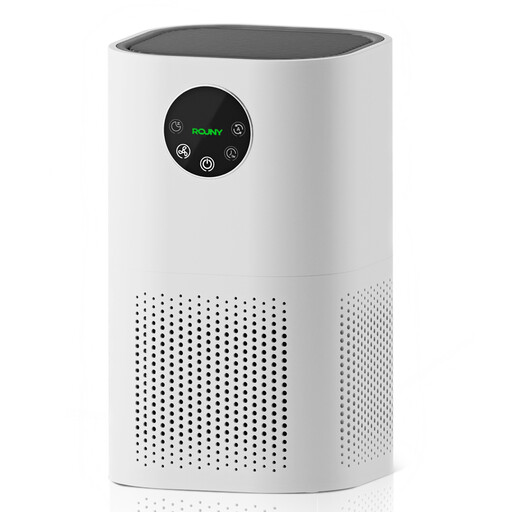
Why it suits this profile: This model has a CADR of 150 m³/h, four speeds, a timer and a sleep mode of up to 25 dB. This makes it suitable for a bedroom, home office or smaller living space.
The product specification states both the CADR and the coverage range of 20–50 m². This makes it easier to compare the stated coverage with your own room.
H13 HEPA filter, air-quality indicator, four speeds and a 2/4/8-hour timer.

Why it suits this profile: This compact air purifier has a CADR of 250 m³/h, a PM2.5 sensor and an automatic mode. According to the product information, it is designed for rooms of up to 65 m².
The stated noise range is 20.5 to 49 dB(A), so you do not have to consider only the quietest setting.
21 W maximum power, automatic sensor control and a sleep mode with dimmed lighting.
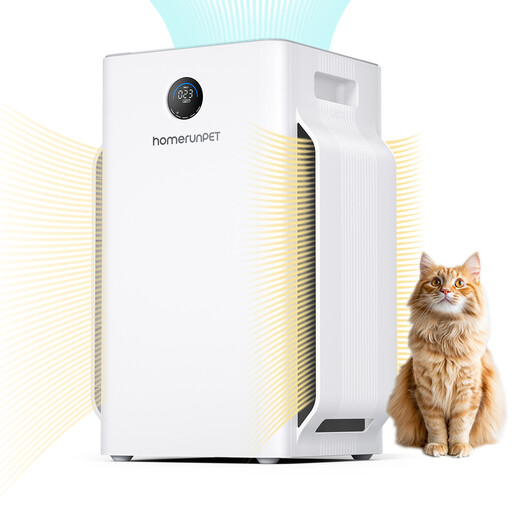
Why it suits this profile: This model is aimed at households with cats or dogs. Its stated CADR is suitable for rooms of up to 40 m² and, according to the product specification, the sleep mode operates at up to 25 dB.
The model combines a washable pre-filter with HEPA filtration and activated carbon. The manual recommends cleaning the pre-filter regularly.
PM sensor, automatic mode, child lock and filter replacement indicator.
We have put together a complete, up-to-date list of products that fully meet these strict selection criteria and the applicable European safety regulations.
Place the appliance on a stable, level surface with plenty of clearance around it. Keep the air inlet and outlet clear of curtains and furniture. Position the model in the room where you want to filter the air, and close the windows and doors when you want to clean the air more intensively for a while.
This varies depending on the model, how long it is used and the amount of dust or smoke in the room. Product information for various models gives a lifespan of approximately six to twelve months. Some models have a filter indicator. Always check the manual and use only a suitable replacement filter.
Consumption depends on the power rating and the selected speed. Compact models in this selection, for example, use around 21 to 35 W, while larger models may use 50 W or more. Automatic mode can reduce consumption when the sensor detects few particles, but actual usage will still depend on how long you use the appliance and which setting you select.
