
Vandaag of morgen in huis

Kwaliteit gegarandeerd

Welkomstaanbiedingen ontgrendelen: GRATIS bezorging | Tot 80% korting | Gratis 30 dagen JoyPlus-proefperiode
Download de app
Buying an air purifier may seem straightforward, until you try to compare HEPA filters, CADR ratings, sensors and apps. A compact model may work perfectly well in a bedroom but disappoint in an open-plan living room. Even a quiet air purifier can be considerably noisier on its highest setting than the packaging suggests.
For households in the Netherlands, there are three common pitfalls to watch out for:
A HEPA air purifier uses a filter to capture small airborne particles, such as dust, pollen and particulate matter. A pre-filter often catches larger particles, such as hair and dust bunnies. This is useful if you’re looking for an air purifier for pets, but it doesn’t replace regular vacuuming.
An air purifier with a carbon filter is designed to tackle odours and certain gases. The amount and quality of activated carbon vary from one model to another. Check whether it has a separate carbon layer or just a thin component in a combined filter.
Pay attention to the filter class too. Products in this range include H11 and H13 filters. A higher class doesn’t automatically mean the appliance will clean the air in your room more quickly: airflow still matters.
CADR stands for Clean Air Delivery Rate and is measured in m³/h. It gives you a more practical indication of how quickly an air purifier cleans the air than a claim such as “suitable for 50 m²” on its own.
As a simple guide:
A model with a CADR of 150 m³/h, such as the Homintell Kilo, is designed for rooms of around 16 to 18 m² according to its product specifications. An appliance with a CADR of 360 m³/h, such as the Xiaomi Smart Air Purifier 4 Lite or Rowenta PU6180, is better suited to larger living spaces. This doesn’t mean an air purifier for large rooms will automatically suit every open-plan floor: air circulation and placement still matter.
For an air purifier for the bedroom, the noise level on its lowest setting matters more than the noise level at maximum speed. Check whether the brand gives a value in dB(A), and which mode it applies to.
An air purifier with an app or a smart air purifier can be useful for automatic modes, timers and air quality readings. Check whether a Wi-Fi connection is required and which app you’ll need. A simple touch panel may be more practical if you’d rather not set up an extra account or network connection.
Finally, check for:
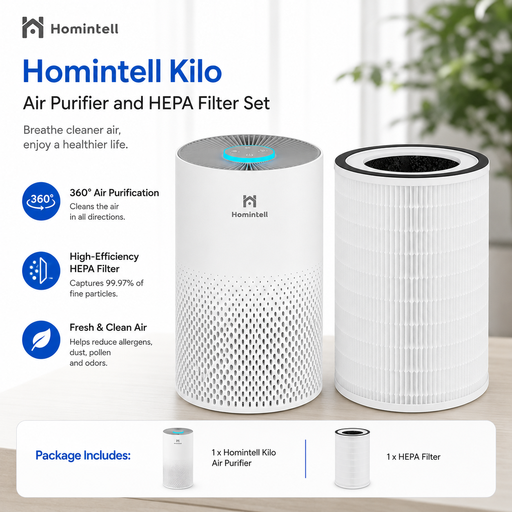
Why it suits this type of user: According to the product specifications, this compact model is designed for rooms of up to around 16 to 18 m², such as a bedroom, home office or student room.
Its stated CADR of 150 m³/h and 3-in-1 filter give you a clearer idea of its capacity than a general marketing claim alone. The product title also says that an extra replacement filter is included.
23 W power, three speeds, PM2.5 sensor, 2/4/8-hour timer and a combined pre-filter, HEPA filter and carbon filter.
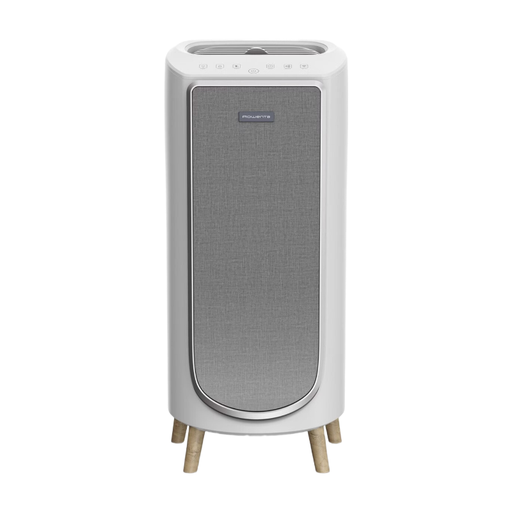
Why it suits this type of user: With a CADR of 360 m³/h, automatic detection, several modes and Wi-Fi controls, this model suits anyone looking to manage a larger room from one central point.
The product information lists both the CADR and the filter composition. This lets you compare its capacity with the size of your room, rather than relying on a coverage claim alone.
HEPA, carbon and nano filters according to the product specifications, Wi-Fi/app controls, automatic mode and a stated minimum noise level of 32 dB.
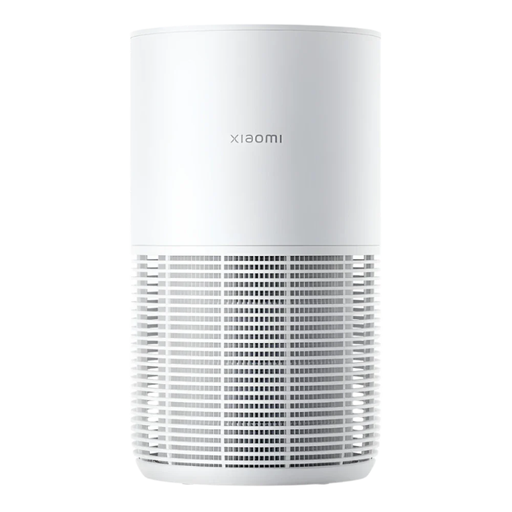
Why it suits this type of user: According to the product description, this model is designed for homes with pets and rooms of around 16 to 27 m².
The product specifications list a pre-filter, HEPA filter and activated carbon layer. A child lock and tool-free filter replacement make day-to-day maintenance easier.
CADR of 230 m³/h, controls via Xiaomi Home and voice commands, PM2.5 sensor and stated power consumption of 27 W.

Why it suits this type of user: Its compact design, sleep mode and stated minimum noise level of 20.5 dB(A) make it a good fit for a bedroom or home office.
The product specifications give a range of 20.5 to 49 dB(A), making the difference between the quiet and more powerful settings clear.
CADR of 250 m³/h, automatic mode, PM2.5 sensor, maximum power of 21 W and a filter indicator.
We’ve put together a complete, up-to-date list of products that meet these strict selection criteria and the applicable European safety regulations.
Place your air purifier on a stable surface, with plenty of space around it. Manufacturers often recommend a clearance of at least 20 to 30 cm, but always follow the instructions for your chosen model. Don’t put the appliance behind a curtain, right next to a cupboard or beside a heat source.
Filters don’t last for ever. Their lifespan depends on air pollution, cooking, smoke and the number of pets in your home. Some models specify six to eight months; others give an estimate of around twelve months. Treat these as estimates from the product information, not a guarantee. Only clean a washable pre-filter if the instructions say it’s safe to do so. HEPA and carbon filters generally shouldn’t be washed.
An air purifier for pollen or particulate matter only works in the room where it’s placed. Keep windows and doors closed when you want to filter the air in that room, and continue to ventilate your home as needed.
It can be, especially if it has a quiet mode, a timer and a suitable CADR. Choose a model with a clearly stated noise level for its lowest setting, and don’t place it right beside your head.
It varies by model and how you use it. Manufacturers often give an estimate of around six to twelve months. A filter indicator, discolouration, reduced airflow or a lingering smell could be a reason to check it sooner. Always use a compatible replacement filter.
Energy use depends on the appliance’s power rating and the setting you choose. A 23 W appliance uses less electricity when running continuously than a 60 W model, but the actual cost depends on your energy tariff and how many hours it runs. Use the quiet or automatic mode when you don’t need maximum capacity.
