
Vandaag of morgen in huis

Kwaliteit gegarandeerd

Welkomstaanbiedingen ontgrendelen: GRATIS bezorging | Tot 80% korting | Gratis 30 dagen JoyPlus-proefperiode
Download de app
An air purifier can be useful in a bedroom, living room, home office or home with pets. However, a purchase is not automatically a good one simply because the packaging says “HEPA”, “smart” or “suitable for large rooms”. The stated performance depends on the fan speed, room size and maintenance.
The three most common pitfalls:
An air purifier does not replace ventilation either. Continue ventilating according to the conditions in your home and do not use the appliance in a damp room such as the bathroom.
CADR, or Clean Air Delivery Rate, indicates how much filtered air an appliance delivers per hour. The value is usually expressed in m³/h. A higher CADR is generally suitable for a larger room or for users who want to filter the air more quickly.
Do not just look at “up to 40 m²” or “for large rooms”; compare the area with the CADR. For a bedroom of 15 to 20 m², a model offering approximately 117 to 250 m³/h can be practical. For a living room or open-plan space, a higher airflow, such as 360 to 550 m³/h, makes more sense.
An air purifier for large rooms only works efficiently if the air can circulate freely. Leave at least 30 cm of space around the air inlet and outlet, unless the instructions state otherwise.
A HEPA air purifier uses a fine-particle filter for small airborne particles. A pre-filter captures larger particles such as dust and hair. An air purifier with a carbon filter is also designed to tackle odours and certain gaseous substances.
For households with pets, a washable or easy-to-clean pre-filter is practical. However, bear in mind the difference between pet hair and airborne skin flakes: hair is mainly caught by the pre-filter, while finer particles are processed by the main filter.
Claims such as “99.97% filtration” are product-specific statements. According to the product descriptions provided by the relevant brands, these percentages apply under certain test conditions. Therefore, do not treat them as a guarantee of air quality in every Dutch home.
A quiet air purifier is particularly important in a bedroom or nursery. Check both the lowest and highest noise levels. An appliance that is quiet on its lowest setting may become clearly audible when switched to turbo mode.
An air purifier with a PM2.5 sensor can display the measured amount of fine particles and adjust the fan speed automatically. The sensor does not measure every possible pollutant, and the display is not an overall assessment of indoor air quality.
A smart air purifier can offer additional features such as app control, scheduling and compatibility with Google Assistant or Alexa. Check in advance whether Wi-Fi is required and whether the app is compatible with your phone and network.
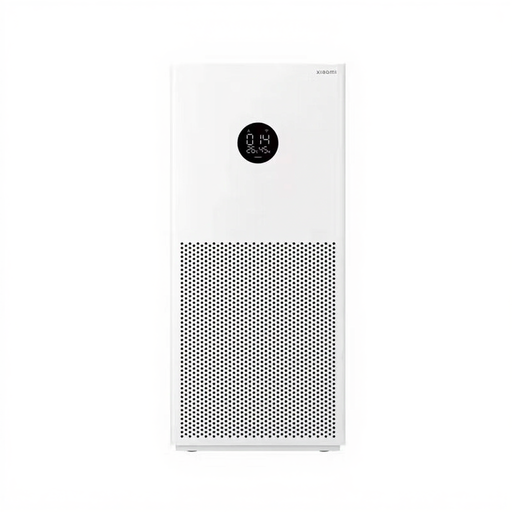
Why it suits this profile: The product specifications state a CADR of 360 m³/h, a coverage area of 25–43 m² and control via the Mi Home app. This makes the model suitable for anyone looking to combine automatic settings and app control with a medium-sized room.
You get more than just a marketing label: there are also specific figures for CADR, coverage and noise. The stated PM2.5 sensor supports automatic mode.
360 m³/h CADR, app and voice control, and a stated noise level from 33.4 dB.
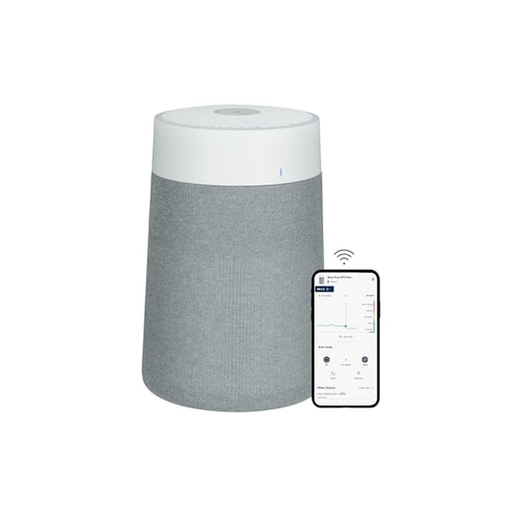
Why it suits this profile: According to the product description, this model has a CADR of 212 m³/h, a stated coverage area of up to 43 m² and control via the Blueair app. The listed noise levels range from 19 to 48 dB.
The product page lists both capacity and noise level. This makes it easier to assess whether it is suitable for a bedroom or study than simply relying on the word “quiet”.
HEPASilent filter technology according to Blueair, app control and a compact design for rooms up to the stated coverage area.
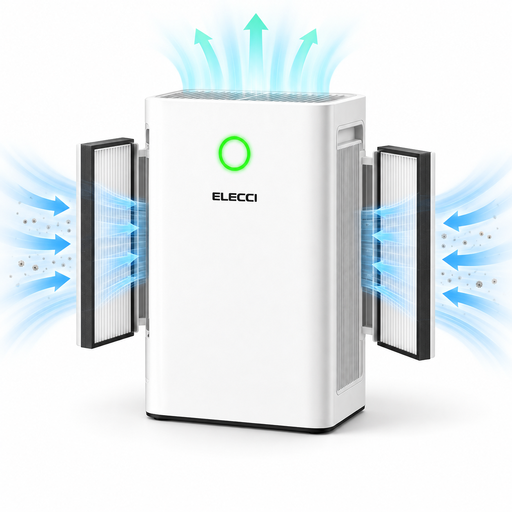
Why it suits this profile: The product specifications state a CADR of 550 m³/h and a stated capacity of up to 48 m² or 120 m³. This is suitable for intensive use in a living room, office or larger living space.
The stated CADR makes the capacity easier to verify. The manufacturer also mentions a washable pre-filter and filter indicator; however, check the current cost of the combined filter.
CADR of 550 m³/h, air quality indicator and a sleep mode listed as 24 dB in the product description.
We have put together a complete, up-to-date list of products that fully meet these strict selection criteria and the applicable European safety regulations.
Place the appliance on a stable, level surface with around 30 cm of clear space around the air openings. Do not place it behind a curtain, directly against a cupboard or next to a heat source. For a bedroom air purifier, a night mode with dimmed lighting is practical.
This varies depending on the model, how long it is used and the amount of dust, pollen or smoke in the home. The product information for the models mentioned gives guidelines ranging from approximately six to twelve months. Use the filter indicator as a guide, but also check the filter and maintenance instructions regularly.
In addition to electricity consumption, you will need to pay for replacement filters. A low wattage does not automatically mean low overall costs if filters are expensive or difficult to obtain. So compare power consumption, filter lifespan and the price of genuine filters before placing your order.
