
Vandaag of morgen in huis

Kwaliteit gegarandeerd

Welkomstaanbiedingen ontgrendelen: GRATIS bezorging | Tot 80% korting | Gratis 30 dagen JoyPlus-proefperiode
Download de app
An air purifier can help filter airborne particles, dust and odours from indoor air. However, not every model is right for every home. A compact air purifier for a bedroom needs different features from a powerful unit for a large living room or a home with pets.
The biggest buying mistakes are usually not about choosing the wrong colour or design, but about unclear specifications. So pay particular attention to these three common pitfalls.
Manufacturers do not always use the same method to measure room coverage. For example, a unit might treat a large room once an hour, while a smaller recommended room gets several air changes per hour.
So check the CADR rating too, which is measured in cubic metres per hour. CADR stands for Clean Air Delivery Rate and indicates how much filtered air the unit can deliver per hour. A higher rating is particularly relevant for living rooms, open-plan kitchens and rooms where doors are often left open.
A HEPA air purifier is designed to capture small airborne particles, such as dust and pollen. Odours and certain gaseous substances usually require a separate layer of activated carbon. Check whether the unit combines a pre-filter, HEPA filter and carbon filter.
Pay attention to how claims are worded, too. A brand’s claim about, for example, a filtration percentage comes from the brand’s product information and depends on test conditions, filters and fan speed. So do not automatically take it as a guarantee for every home.
A stated noise level of, for example, twenty decibels often applies to the lowest or sleep setting. Noise can be considerably higher at the highest setting. If you’re choosing an air purifier for a bedroom or nursery, check both the minimum and maximum noise levels, as well as whether the lights can be dimmed and whether there is a night mode.
Use the stated room coverage as a starting point, but always compare it with the CADR. Around 130 to 240 m³/h may be suitable for a small bedroom or home office. For a living room or more intensive use, a higher rating, such as 450 to 550 m³/h, is generally more appropriate.
Think about your home’s layout. An air purifier mainly works in the room where it is placed. One unit in the living room will not automatically replace several units in bedrooms and home offices.
A practical filter combination consists of:
An air purifier for dust and pollen needs a well-maintained particle filter. If you have pets, an accessible pre-filter is useful, as hair can clog it more quickly. Check the price and availability of replacement filters in advance. A cheap unit could end up costing more if its filters need frequent replacement.
An air purifier with an air quality sensor can adjust the fan speed automatically. A PM2.5 display or colour indicator gives you a useful idea of changes in the air, but the reading is not a laboratory measurement.
A smart air purifier with app control is useful if you want to set schedules, receive alerts and control it remotely. Check whether Wi-Fi is required for basic functions. For straightforward operation, buttons, a timer and an automatic mode are often enough.
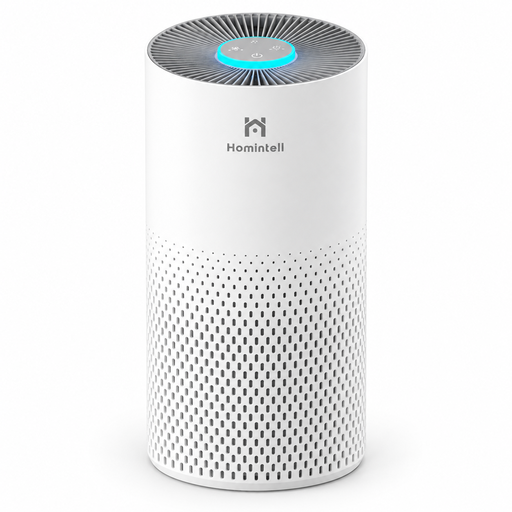
Why it suits this profile: A compact choice for rooms up to around 16–18 m², such as a bedroom, student room or home office.
The product lists a CADR of 130–150 m³/h and clearly states its limited room coverage. This makes its intended use more practical than a broad claim that it can cover an entire home.
3-in-1 filter with pre-filter, HEPA and activated carbon; 2, 4 or 8-hour timer and an air quality ring.
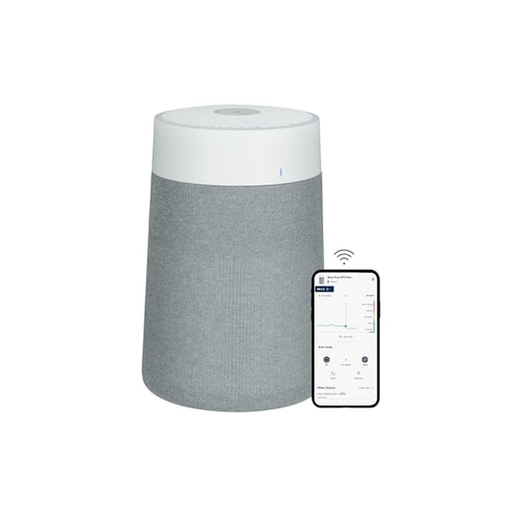
Why it suits this profile: Ideal if you’re looking for a quiet, smart air purifier for a bedroom, office or medium-sized living space.
The product information lists both a CADR of 212 m³/h and a noise level of 19 dB on the lowest setting, rising to a maximum of 48 dB.
App control, scheduling and air quality monitoring; according to the product information, a HEPASilent filter captures particles down to 0.1 microns.
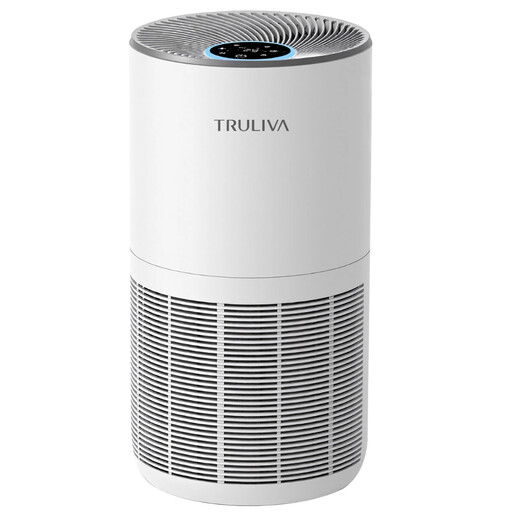
Why it suits this profile: Its high stated CADR is designed for larger living spaces, homes with pets and situations involving more dust or odours.
The manufacturer specifies a CADR of 450 m³/h and coverage of 32–55 m². However, the maximum noise level is ≤66 dB(A), so the sleep mode and where you place it are important considerations.
Pre-filter, H13 HEPA filter and activated carbon; PM2.5 display, 24-hour timer and child lock.

Why it suits this profile: A model for large rooms, families and households with pets where greater air circulation is needed.
The product description lists a CADR of over 700 m³/h and stated coverage of 154 m². However, check that this matches the air changes you want in your room.
App and voice control, automatic air quality mode and multi-layer filtration, according to the product information.
We’ve put together a complete, up-to-date list of products that meet these strict selection criteria and current European safety regulations.
Place the unit on a flat surface and keep the air inlet and outlet clear. You may need to leave around thirty centimetres between it and walls or furniture; check the manual for your chosen model.
Also bear the following in mind:
An air purifier can help create a more comfortable indoor environment, but it is not a medical device and does not replace a doctor’s advice for allergies or asthma.
It varies depending on the model, how long you use it and how much dust, smoke or hair is in the room. Product information often gives a lifespan of several months to around a year. Follow the filter indicator and check that replacement filters are available.
Place the unit in the room where you want to filter the air, leaving enough clear space around the inlet and outlet. Do not put it behind a sofa, curtain or cupboard. In a bedroom, a low noise level may matter more than maximum capacity.
The costs include electricity and filters. Compare the stated wattage, expected filter life and the price of genuine replacement filters. An automatic mode may reduce energy use when air quality is stable, but actual consumption depends on the settings you choose and how long you use the unit.
