
Vandaag of morgen in huis

Kwaliteit gegarandeerd

Welkomstaanbiedingen ontgrendelen: GRATIS bezorging | Tot 80% korting | Gratis 30 dagen JoyPlus-proefperiode
Download de app
An air purifier can help filter airborne particles, dust and certain odours from indoor air. However, it is easy to overpay for features that do not suit your home. For example, a device designed for a small bedroom will not automatically perform well in an open-plan living room. And a high filtration claim means little if the unit does not move enough air.
As a Joybuy Product Recommendation Officer, I filter the most important product specifications and turn marketing language into practical buying information. This allows you to compare a HEPA air purifier, a home air purifier or a bedroom air purifier based on the factors that genuinely matter.
Manufacturers use different measurement methods to determine room capacity. Therefore, also check the CADR rating: Clean Air Delivery Rate, expressed in m³/h. This figure indicates how much filtered air the device can deliver per hour.
A model with 150 m³/h is more suitable for a bedroom or office than for a large open-plan living space. For larger rooms, models offering approximately 250 to 550 m³/h are more practical, depending on ceiling height, layout and the desired air-change rate.
A HEPA filter is designed to capture fine airborne particles such as dust and pollen. It does not automatically remove all odours or gaseous substances. For those, an activated carbon filter is useful. A pre-filter captures larger particles such as hair and household dust, helping the fine-particle filter last longer.
Also consider replacement costs. An inexpensive device with costly or difficult-to-source filters may prove less economical in the long run.
A stated noise level usually applies to a specific operating mode. A quiet air purifier producing 20 to 25 dB in sleep mode may be considerably louder at its highest speed. Always check both the lowest and highest stated noise levels.
For a bedroom, sleep mode, dimmable lighting and a timer are practical features. In a living room, a higher fan speed may be more important than minimal noise output.
Use the recommended room size as a guideline, not a guarantee. A room with open doors, high ceilings or a high dust load requires greater capacity. According to the product description, the Philips PureProtect Mini 900 Series has a CADR of 250 m³/h and is rated for rooms up to 65 m². The Xiaomi Smart Air Purifier 4 Lite lists a PM-CADR of 360 m³/h and an effective coverage area of 25 to 43 m².
For pollen, fine dust and household dust, a HEPA or comparable fine-particle filter is relevant. For cooking odours, smoke and other smells, look for a carbon layer. For an air purifier for dust and smoke, a combination of pre-filter, HEPA filter and activated carbon filter is a logical choice.
Filter-efficiency claims come from the relevant product descriptions. For example, manufacturers or sellers of various models state that they remove up to 99.97% of certain particles under specific conditions. Do not treat this as a general guarantee for every room or usage scenario.
An air purifier with a PM2.5 sensor can measure the amount of fine particles in the air and automatically adjust the fan speed. Check whether the device has only a colour indicator or also displays a numerical reading.
A smart air purifier with app or voice control is convenient if you want to set schedules or operate the device remotely. For straightforward operation, buttons, a timer and an automatic mode are often sufficient.
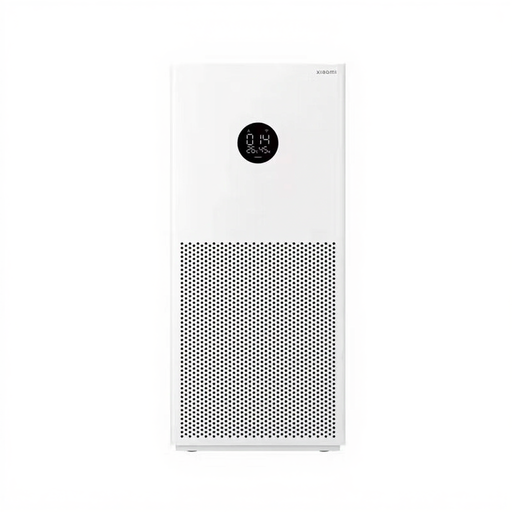
Why it fits: A practical choice for an apartment, home office or medium-sized bedroom. The Xiaomi Home app and compatibility with Google Assistant and Amazon Alexa are convenient for everyday use.
The stated effective coverage of 25 to 43 m² is more useful than a broad marketing phrase such as ‘for the whole house’.
PM2.5 sensor, 360 m³/h PM-CADR and a stated low noise level from 33.4 dB.
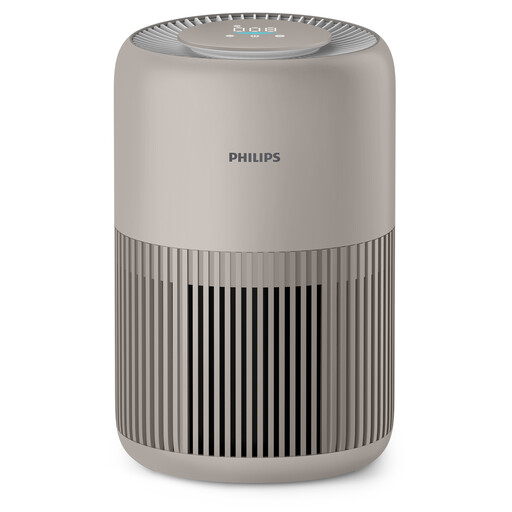
Why it fits: Suitable for anyone looking for a compact air purifier for a bedroom or home office, with automatic control and a quiet sleep mode.
The product information mentions both 20 m² and up to 65 m². Use the 250 m³/h CADR and the room layout to set realistic expectations.
PM2.5 sensor, automatic mode, 20.5 dB in sleep mode and maximum power consumption of 21 W according to the product specifications.
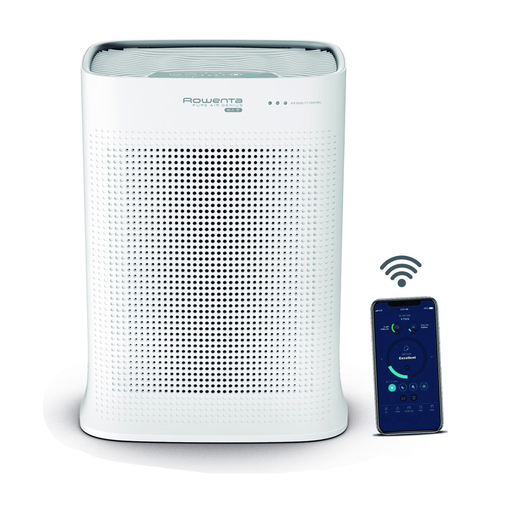
Why it fits: With a stated capacity of up to 140 m², this model is worth considering for a spacious living room, open-plan living area or larger office.
Do not focus solely on the generous room-size claim. Also ensure that the four-stage filter and 360° air intake have sufficient clearance around the unit.
Pre-filter, activated carbon, HEPA and formaldehyde filters; five fan speeds and an automatic mode.

Why it fits: Designed for homes with pets, where hair, odours and airborne particles are a recurring concern. Its compact footprint suits rooms measuring 16 to 27 m².
An air purifier is not a substitute for vacuuming or ventilation. Use the pre-filter and keep the air intake clear of hair.
Three filter layers, PM2.5 sensor, app and voice control, child lock and a stated power consumption of 27 W.
Place the air purifier on a level surface with approximately 30 cm of clearance around the air intake and outlet. Do not position the device behind a curtain, directly next to a radiator or in a damp bathroom. In a bedroom, a low setting is often more comfortable than running the unit continuously at its highest speed.
Check the filter regularly. Some models specify a replacement interval of six to nine months; Philips states approximately twelve months for the PureProtect Mini 900 Series. Actual filter life depends on operating time, smoke, pets and indoor air quality. Do not wash a HEPA filter unless the manual explicitly permits it. Switch off the device and unplug it before replacing the filter.
Browse a current selection of room air filtration units with different filter types, CADR ratings, sensors and noise levels for homes in the Netherlands.
According to the product specifications, a fine-particle filter can capture pollen and other airborne particles. Performance depends on filter quality, air circulation, room size and proper maintenance. An air purifier is not a substitute for medical advice or ventilation.
This varies by model. Many product descriptions specify six to twelve months. Always check the filter indicator and manual. In homes with significant dust, smoke or pets, replacement may be required sooner.
Consumption depends on the power rating and operating time. The compact models in this selection specify approximately 21 to 38 W, while larger units may use around 50 to 60 W. Automatic mode can reduce energy consumption by adjusting the fan speed when the sensor detects few particles.
