
Vandaag of morgen in huis

Kwaliteit gegarandeerd

Welkomstaanbiedingen ontgrendelen: GRATIS bezorging | Tot 80% korting | Gratis 30 dagen JoyPlus-proefperiode
Download de app
An air purifier can help filter dust, pollen, smoke particles and odours from indoor air. However, it is unwise to rely solely on terms such as “powerful filtration” or “suitable for large rooms”. Actual suitability depends on the room, airflow, filter type and maintenance requirements.
For households in the Netherlands, three potential pitfalls are particularly important:
A HEPA air purifier is designed to filter fine particles, such as dust, pollen, smoke particles and pet dander. A pre-filter captures larger particles such as hair. An ** activated carbon filter** is particularly useful when odours or certain gaseous substances are a concern.
Pay attention to the difference between:
Claims such as “99.97% filtration” are product specifications based on particular test conditions. According to the relevant brand’s own research or the product description, this may, for example, apply to particles of a specific size. It does not guarantee that all pollutants will be completely removed in every home.
CADR, or Clean Air Delivery Rate, indicates how much filtered air a device delivers per hour. A higher CADR is generally more practical for a large living room or when you want to clean the air more quickly.
Treat the stated coverage area as a guide, not the only deciding factor. A model advertised as suitable for 65 m² may operate more quietly and effectively in a smaller room if you want a higher air-change rate.
As a general guide:
A quiet air purifier for the bedroom should not only have a low minimum noise rating. Also check the levels on higher settings. A device with a PM2.5 sensor can monitor the amount of fine particles in the air and adjust the fan speed automatically. However, this type of sensor does not automatically detect odours, humidity or all gaseous substances.
A smart air purifier with app control is useful for schedules, notifications and remote operation. On the other hand, not everyone needs Wi-Fi. If you mainly want to switch on the device and leave it to run, physical buttons and an automatic mode can be a cheaper and simpler option.
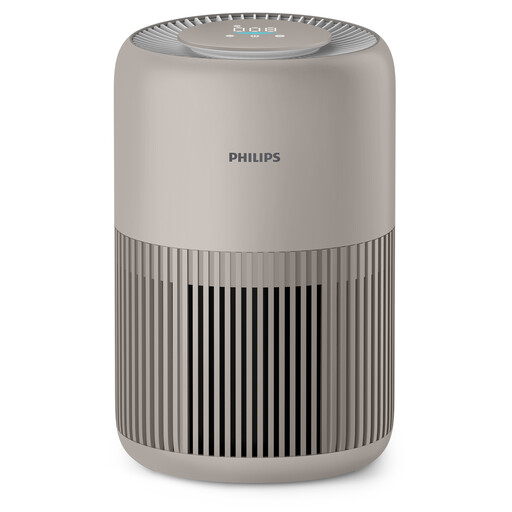
Why it suits this profile: According to the product information, this compact model is suitable for rooms up to 65 m² and has a CADR of 250 m³/h. The automatic and sleep modes make it straightforward to use.
The product specification lists both CADR and the recommended coverage area. This makes it easier to choose the right model than relying on a marketing label alone.
PM2.5 sensor, automatic mode, 20.5 dB(A) on the lowest setting and 21 W power consumption according to the product details.
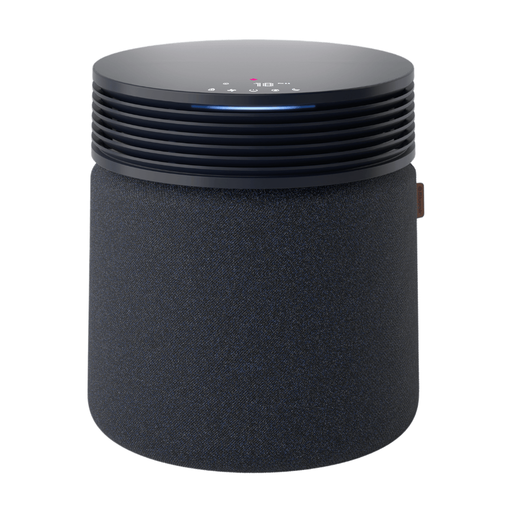
Why it suits this profile: For a large living room, the stated CADR of more than 700 m³/h, app control and automatic mode are useful specifications to consider.
Alongside coverage of 154 m², the product information mentions a CADR, filtration stages and filter replacement. This provides more context than a large coverage label alone.
7-stage filtration according to the product description, app and voice control, night mode and a PM sensor with automatic adjustment.
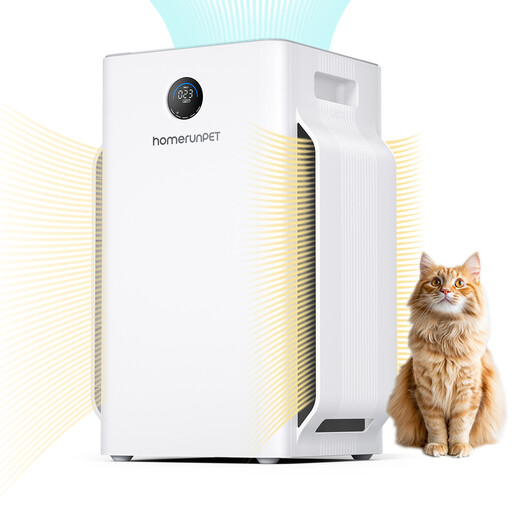
Why it suits this profile: According to the product specification, this model is designed for households with pets, with a capacity of up to 40 m² and a combination of pre-filter, HEPA filter and carbon filter.
The maintenance information recommends cleaning the reusable pre-filter and replacing the combined filter after approximately 6 to 12 months, depending on usage.
PM sensor, automatic mode, child lock, odour filter and a sleep mode from 25 dB according to the product details.
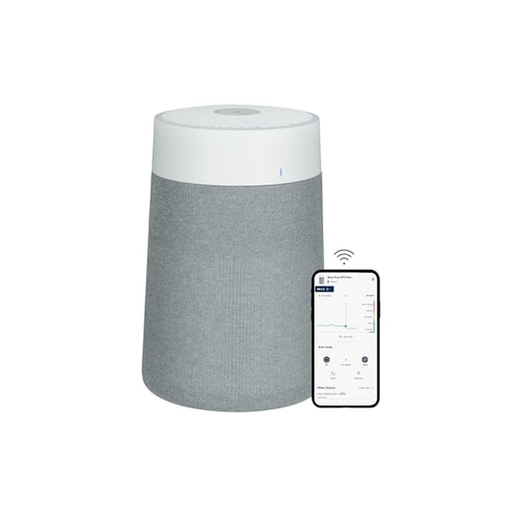
Why it suits this profile: The stated noise level ranges from 19 to 48 dB and the model has a night mode. Its CADR of 212 m³/h is suitable for bedrooms, offices and other medium-sized rooms.
The product page lists both the lowest and highest noise levels. This shows that “quiet” does not necessarily apply to every fan setting.
HEPASilent filtration according to the brand description, app control, PM2.5 monitoring and a stated capacity of up to 43 m².
We have put together a complete, up-to-date list of products that fully meet these strict selection criteria and the applicable European safety regulations.
Place an air purifier on a stable, level surface with approximately 20 to 30 cm of clearance around the air inlet and outlet. Do not place the device behind a curtain, directly next to a radiator or in a damp bathroom.
Keep the following maintenance points in mind:
A filter lifespan of six to twelve months is common across several models, but the actual interval depends on usage, pets and the air quality in the room. Products with a longer stated filter lifespan may therefore have lower maintenance costs, but always check the availability and price of the correct replacement filter.
According to the product specifications of many models, a HEPA filter is designed to capture fine particles such as pollen and pet dander. For pet odours, an air purifier with a carbon filter is a more logical choice than a model with a particle filter only. Performance against odours varies according to the amount and type of carbon used. An air purifier does not replace cleaning, ventilation or removing the source of the odour.
Place the device in a clear spot beside or opposite the bed, rather than directly against a wall or piece of furniture. Choose a model whose lowest fan setting produces a comfortable level of noise, and also check whether the display can be dimmed. An automatic mode can be useful, but a PM2.5 sensor does not detect every possible source of noise or odour.
Running costs consist of electricity and filters. Power consumption is usually given in watts. A 25 W device running continuously theoretically uses around 0.6 kWh per day; the actual cost depends on the electricity price and the selected setting. Add the price and replacement frequency of the filters to this. That way, you can avoid a low purchase price becoming less attractive later because of expensive filters.
