
Vandaag of morgen in huis

Kwaliteit gegarandeerd

Welkomstaanbiedingen ontgrendelen: GRATIS bezorging | Tot 80% korting | Gratis 30 dagen JoyPlus-proefperiode
Download de app
An air purifier can help reduce airborne particles, dust and odours in your home. However, it’s not wise to rely on claims such as “powerful filtration” or “suitable for large rooms” alone. The main differences between models are their capacity, filter design, noise levels and maintenance requirements.
There are three common pitfalls for households in the Netherlands:
The CADR, or Clean Air Delivery Rate, shows how much filtered air an appliance can move per hour. It’s a more useful point of comparison than the stated room size alone.
As a guide:
Check how the figure was measured. Manufacturers may use different air changes per hour. So a claim that a model is “suitable for 130 m²” doesn’t automatically mean it will refresh the air quickly in that space.
An air purifier with a HEPA filter usually has several layers:
Some brands state in their product descriptions that certain models have a filtration efficiency of 99.97%. Treat this as a product specification measured under particular conditions, not as a guarantee that all the air in your home will be completely purified.
For an air purifier for pets, an easy-to-access pre-filter is practical. Pet hair can clog the main filter more quickly. If you’re mainly looking for an air purifier for smoke and odours, it’s worth checking the amount and type of activated carbon. A HEPA filter alone isn’t primarily designed to tackle odours.
A quiet setting of, for example, 20 to 30 dB can be useful in a bedroom, but check the noise level at higher settings too. You may want to use a higher setting when cooking, vacuuming or dealing with a temporary increase in odours.
An air purifier with a PM2.5 sensor shows an indication of fine particles in the air. Auto mode can then adjust the fan speed. However, the sensor doesn’t measure every possible pollutant. An app is useful for scheduling and notifications, but it doesn’t automatically make an appliance more effective.
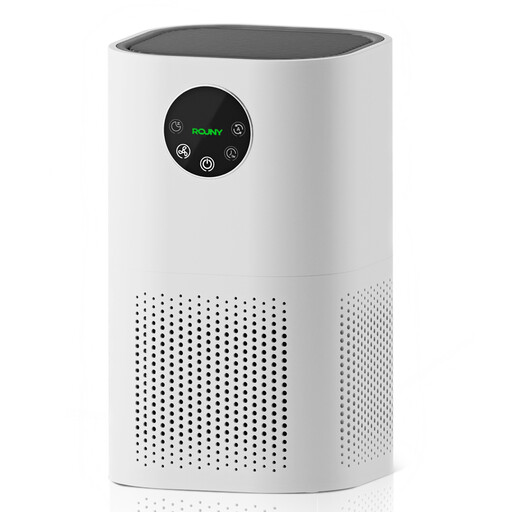
Why it suits this profile: This compact model has a CADR of 150 m³/h, four fan speeds, a timer and a sleep mode. That makes it a practical choice for a bedroom, office or smaller living space.
Its stated CADR and coverage of 20–50 m² make it clear that this isn’t the obvious choice for a large open-plan living room.
According to the product description: H13 HEPA filter, sleep mode down to ≤25 dB and filter replacement after around 6–8 months, depending on use.
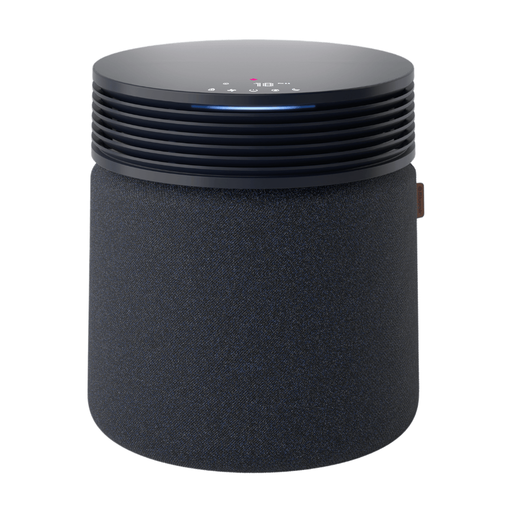
Why it suits this profile: With a stated CADR of over 700 m³/h, app controls, an automatic mode and coverage of up to 154 m² according to the product information, this model is designed for spacious living areas.
Its high airflow makes it a better fit for large rooms than a compact bedroom model. Still, check the actual layout of your room.
Seven-stage filtration according to the product description, OdorFence technology, app and voice controls, and a night mode.

Why it suits this profile: The combination of a pre-filter, HEPA filter and activated carbon is designed for households with pets. Its coverage of 16–27 m² makes it suitable for a specific room.
Its limited room coverage helps set realistic expectations: an appliance rated at 230 m³/h isn’t designed for an entire home.
According to the product description: PM2.5 laser sensor, Xiaomi Home app, voice control, child lock and a stated power rating of 27 W.
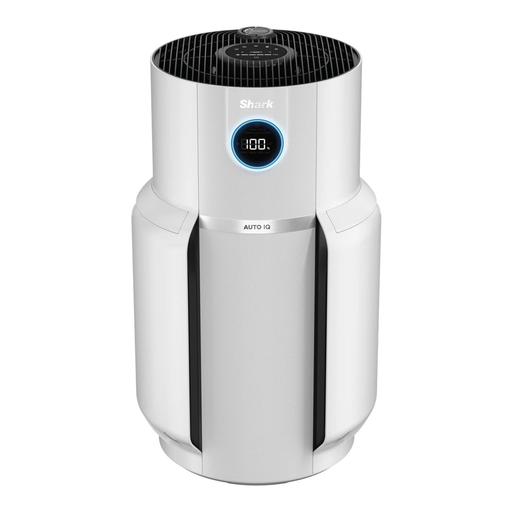
Why it suits this profile: According to the product description, this model is designed for large rooms of up to 130 m² at one air change per hour. Its automatic air quality control is useful when the level of pollutants varies.
The product information gives figures for different air changes per hour. This makes it easier to compare its large coverage area with the air-cleaning speed you want.
According to Shark: filter life of up to five years, automatic mode, LED display and a stated noise level of 45 dB.
We’ve put together a complete, up-to-date list of products that meet these strict selection criteria and the applicable European safety regulations.
Place the air purifier on a flat surface, leaving enough space around the air inlet and outlet. Ideally, put it in the room where you spend most of your time. Keep windows and doors closed when assessing the effect of one appliance in that room, but continue to ventilate your home as usual, following its ventilation guidance.
Clean the pre-filter as instructed in the manual and keep an eye on the filter indicator. Replacement intervals range from around six months to several years. They depend on the model, how long you use it, whether you have pets and how much dust there is in your home. A replacement filter, such as an H12 HEPA filter for ELECCI KXY550H-AW, must be compatible with the correct appliance.
According to product descriptions, a HEPA filter is designed to capture certain airborne particles, including dust and pollen. However, the appliance won’t remove sources of allergens from furniture, floors or bedding. Regular cleaning and ventilation are still important.
It varies by model. Many appliances recommend replacing the filter every six to twelve months. Some models state a longer lifespan. Use the filter indicator and follow the manufacturer’s instructions; a saturated filter can restrict airflow.
Consumption depends on the rated power and the setting you choose. A 27 W model will theoretically use more electricity when running continuously than on a low or automatic setting. Compare the stated wattage and use the automatic or sleep mode if it suits your needs.
