
Vandaag of morgen in huis

Kwaliteit gegarandeerd

Welkomstaanbiedingen ontgrendelen: GRATIS bezorging | Tot 80% korting | Gratis 30 dagen JoyPlus-proefperiode
Download de app
An air purifier can help filter dust, pollen, smoke particles and certain odours from the air indoors. However, not every model is suitable for every home. A compact air purifier for the bedroom works differently from a powerful appliance for a large living room.
The biggest mistakes when buying one usually come down to three misconceptions:
CADR stands for Clean Air Delivery Rate and is usually measured in m³/h. This figure indicates how much filtered air the appliance can deliver per hour. A higher CADR is particularly important for large rooms, high ceilings or situations where you want to filter the air more quickly.
Use the stated room capacity as a guide, not a guarantee of the same air quality in every home. For example, a living room with an open-plan kitchen, lots of textiles or pets will need more capacity than an enclosed home office.
For small rooms, a CADR of around 100 to 150 m³/h may be enough. For a living room or larger space, a model with around 250 to 550 m³/h is a better choice. Leave around 30 cm of clear space around the air inlet and outlet.
A HEPA air purifier is designed to capture fine airborne particles. Product information sometimes states a filtration efficiency of 99.97%, but always check the conditions and particle size that the claim applies to. According to Blueair’s own product information, the stated 99.97% applies to particles as small as 0.1 microns on certain models. Other models are listed with an H13 filter and a claim covering particles as small as 0.3 microns.
A good filter system often consists of several layers:
A carbon filter is therefore worth considering if you’re looking for an air purifier for smoke and pollen, although pollen is mainly captured by the particle filter. Odours and smoke gases need a separate carbon layer. Check the amount of carbon and the cost of replacements; “with carbon filter” doesn’t automatically mean that every type of odour will be reduced to the same extent.
When choosing a quiet air purifier for the bedroom, the lowest setting and sleep mode matter more than the maximum motor power alone. Specifications vary, with models ranging from around 20 dB in sleep mode to more than 50 dB at high speed.
A PM2.5 sensor indicates the level of fine particles in the air. A PM2.5 air purifier with an automatic mode can adjust its fan speed when the sensor detects a change. The accuracy and meaning of the reading depend on the appliance and where it’s placed. So use the sensor as a guide, not as a complete assessment of all air pollution.
Before buying, check:
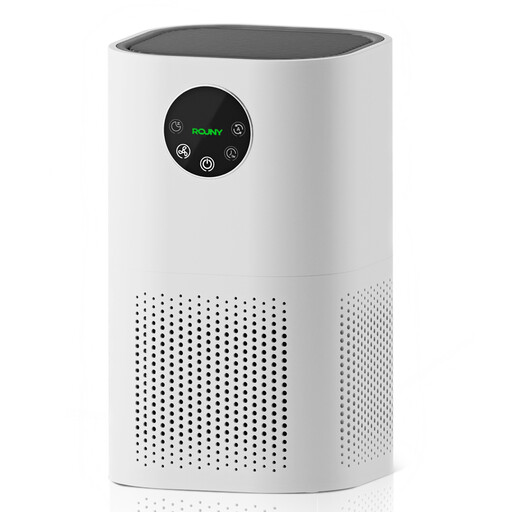
Why it suits this profile: This model combines an H13 filter, PM2.5 display, four fan speeds and a timer. According to the product information, it’s suitable for rooms of around 20 to 50 m².
The CADR of 150 m³/h gives you a clearer indication of performance than a marketing claim about “large coverage” alone. According to the specifications, the sleep mode reaches a maximum of 25 dB.
H13 filter, PM2.5 indicator, 2/4/8-hour timer and four speeds.
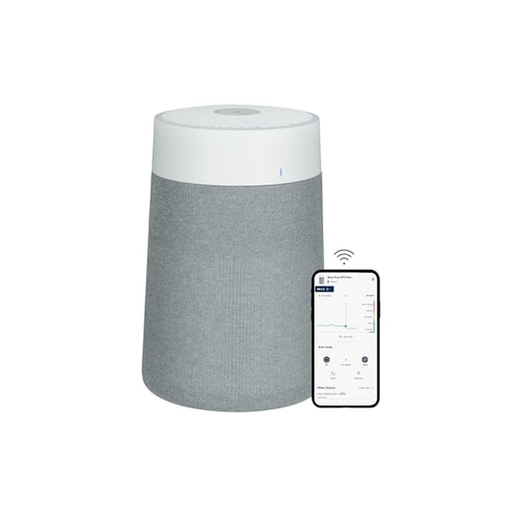
Why it suits this profile: According to the product description, this smart air purifier is designed for bedrooms, home offices and living spaces of up to 43 m².
The CADR of 212 m³/h and stated noise range of 19 to 48 dB make it easier to check whether the room size and noise level are right for you.
App control, real-time air quality information, scheduling, night mode and a filter included.
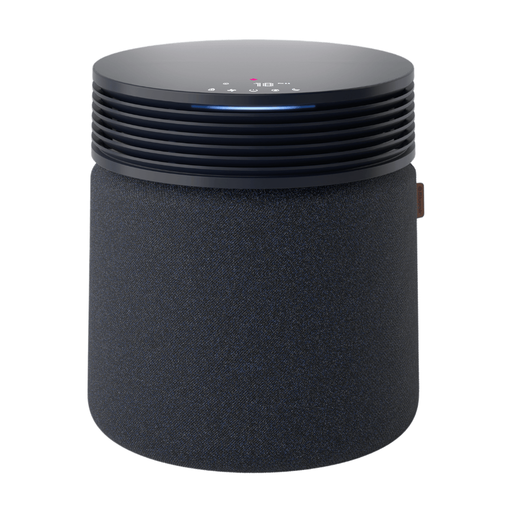
Why it suits this profile: For large living spaces, families and households with pets, the product information states a capacity of up to 154 m² and a CADR of more than 700 m³/h.
The high CADR helps prevent a compact model from having to run constantly at maximum speed in a large room. Be sure to check the actual layout of your home.
Seven filter stages according to the product information, app and voice control, automatic mode and OdorFence technology.
We’ve put together a complete, up-to-date list of products that meet these strict selection criteria and the applicable European safety regulations.
Place the appliance on a stable, level surface and leave around 30 cm of clear space around it. Don’t put it directly behind curtains, next to a radiator or in a damp room. Use sleep mode if noise is a concern. If you only want to treat the air in that room, it’s best to keep the door closed.
It depends on the model, how long you use it for and the air quality. The specifications for various models recommend replacing the filter roughly every six to twelve months. A filter indicator is useful, but check the filter itself too and follow the instructions. A saturated filter can reduce airflow.
Running costs mainly come from electricity and replacement filters. An appliance rated at 20 to 30 watts uses less electricity when run continuously than a 60-watt model, but the actual cost depends on the setting you choose and your local energy tariff. So compare more than just the purchase price: check the power rating, filter type and cost of genuine replacement filters.
