
Vandaag of morgen in huis

Kwaliteit gegarandeerd

Welkomstaanbiedingen ontgrendelen: GRATIS bezorging | Tot 80% korting | Gratis 30 dagen JoyPlus-proefperiode
Download de app
An air purifier can help reduce airborne particles, pollen, dust and odours in your home. However, not every model is suitable for every living room, bedroom or home office. Manufacturers also use different testing methods and give generous estimates for the areas their products can cover. As a result, a compact device might look suitable for a large room on paper, even though it moves less air than you might expect in everyday use.
Use these practical checks to compare an air purifier based on verifiable specifications, rather than marketing claims alone.
A manufacturer may quote a generous maximum room size based on one air change per hour. For a noticeable difference in a living room or bedroom, several air changes are often more relevant. So pay particular attention to the CADR, or the volume of filtered air delivered per hour.
For example, a model rated at 117 m³/h is better suited to a smaller room than an open-plan living room. An air purifier rated at 360 to 450 m³/h moves more air, but it will often take up more space and use more electricity too.
An air purifier with a HEPA filter is designed to capture airborne particles such as dust and pollen. HEPA filter material does not deal with odours and certain gases in the same way. A separate layer of activated carbon can help with these.
So check whether the device has multiple filter layers:
Some brands state in their product information that certain models offer 99.97% particle filtration at 0.3 microns. This is a product specification given under certain test conditions, not a guarantee that every room will remain completely free of particles.
A quiet air purifier for the bedroom may make very little noise in sleep mode, but be considerably louder on its highest setting. Check whether the noise level is stated for each setting. Placement also matters: a device positioned against a wall, curtain or piece of furniture may draw in air less effectively and make more noise.
CADR stands for Clean Air Delivery Rate and is usually measured in m³/h. A higher figure means the device can process more air per hour. Use the stated room size as a guide, but take ceiling height, open doors and the number of air changes you want into account.
For a small bedroom or home office, around 117 to 150 m³/h may be practical. For a living room or open-plan space, 260 to 450 m³/h is more appropriate. So an air purifier for large rooms should be more than just a big name on the packaging: its CADR needs to match the space too.
A HEPA 13 air purifier may be worth considering if you want to reduce pollen, dust or pet dander in your home. Be sure to check:
A carbon filter can help with cooking smells or pet odours, but the amount of carbon varies considerably from one product to another. A thicker carbon layer will generally be stated more clearly in the product specifications.
An air purifier with a PM2.5 sensor can display the measured particle concentration and adjust the fan speed in automatic mode. The sensor does not automatically detect every type of odour or pollutant. Treat the display as a helpful guide, not a complete analysis of your indoor air.
Smart models offer control via an app or voice assistant. This is useful if you want to set a schedule, but check first that the app works with your phone and Wi-Fi. Also check the rated power. A 20 to 30-watt device may use a different amount of energy over extended periods than a 50 to 60-watt model.
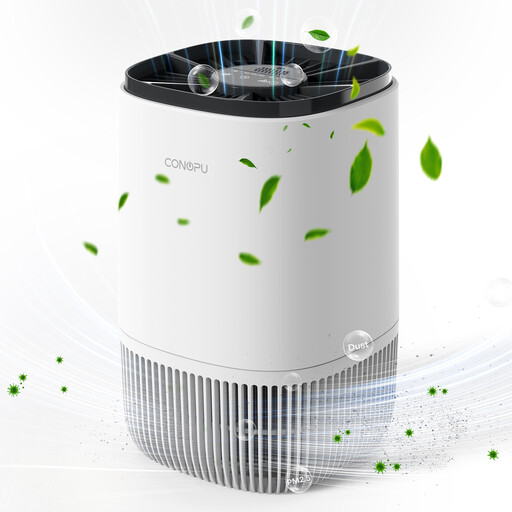
Why it suits this profile: This compact model is easy to move between the bedroom, home office and living room. The product specifications list an H13 filter, 5 watts of power and three settings.
The combination of a pre-filter, HEPA filter and activated carbon makes it clear which filter layers are included. Before buying, check the current availability of replacement filters and the actual room size the purifier is suited to.
Compact design, three filter layers and a 24-hour timer, according to the product information.
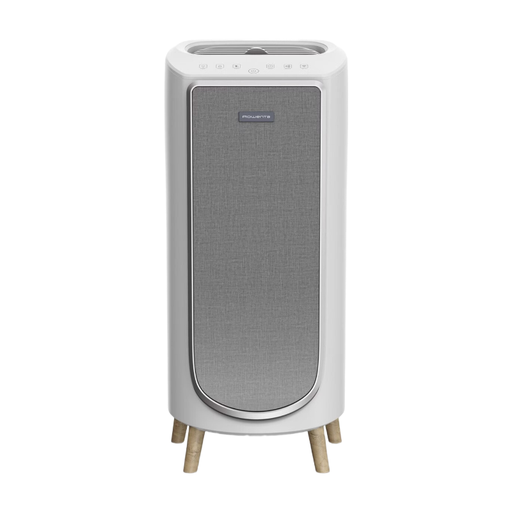
Why it suits this profile: This model is aimed at households looking for several control options, automatic adjustment and greater air circulation.
Its stated CADR of 360 m³/h, automatic pollution detection and separate night and quiet settings give you more information than a maximum room-size claim alone.
HEPA, carbon and nano filters according to the product information; Wi-Fi control and a stated noise level from 32 dB.

Why it suits this profile: This model is designed for households with pets looking for app control, a PM2.5 sensor and a compact solution for 16–27 m².
Its stated CADR of 230 m³/h and listed filter layers make its capacity easier to compare than the label ‘for pets’ alone.
Three filter layers, the Xiaomi Home app, voice control, a child lock and a stated power rating of 27 watts.
We’ve put together a complete, up-to-date list of products that meet these strict selection criteria and the applicable European safety requirements.
Place the device on a stable, level surface and leave space around it for the air inlet and outlet. Don’t put it directly behind a curtain or next to a radiator. Use sleep mode if noise is a concern, and check whether the lights can be dimmed.
It depends on the filter, how long you use it and the quality of your indoor air. Many product manuals recommend replacing the filter every six to twelve months, but households with pets, lots of dust or smoke may need to replace it sooner. Follow the filter indicator and the manual. A dirty filter can restrict airflow.
Check the rated power, the fan setting you choose and how many hours you use it for. On paper, a 25-watt model running for 8 hours a day uses less energy than a 60-watt model under the same conditions. The actual cost depends on your electricity tariff and usage. Don’t forget to check the price and availability of replacement filters too.
