
Vandaag of morgen in huis

Kwaliteit gegarandeerd

Welkomstaanbiedingen ontgrendelen: GRATIS bezorging | Tot 80% korting | Gratis 30 dagen JoyPlus-proefperiode
Download de app
An air purifier can help filter dust particles, pollen, smoke particles and certain odours from indoor air. However, not every model is suitable for every home. A compact air purifier for home use may work well in a bedroom, but move too little air in an open-plan living room.
The main pitfalls are often not related to appearance, but to how performance is presented.
Manufacturers often state a maximum room size. This figure may be based on one air change per hour, while you may need several air changes for noticeably faster filtration. You should therefore also check the CADR rating, expressed in m³/hour.
A device with a CADR of 150 m³/hour is not automatically suitable for a large living room. It could be a practical choice for a bedroom or home office.
A claim such as “99.97% filtration” usually refers to specific particles, a particular particle size and specific test conditions. According to the product specifications of various brands, this may refer to particles measuring 0.1 or 0.3 micrometres, for example. It does not automatically tell you anything about odours, gases or how quickly the air in your room is purified.
So pay attention to the complete system: pre-filter, HEPA filter and, where applicable, a carbon filter. A pre-filter traps larger particles such as hair. A HEPA filter is designed for fine airborne particles. According to product descriptions, activated carbon is intended to reduce odours.
A quiet air purifier for the bedroom may produce, for example, 20 to 33 dB on its lowest setting, but considerably more on the highest setting. Check whether the stated noise level applies to sleep mode, the lowest setting or maximum power.
A display, ambient lighting or beeping can also be distracting at night. A dimming function, night mode and timer are often more useful in a bedroom than extra control features.
CADR, or Clean Air Delivery Rate, indicates how much filtered air a device can move per hour. A higher CADR is generally relevant for larger rooms or when you want to filter the air more quickly.
Use the stated room capacity as a guide and consider the layout of your home. An open-plan kitchen and living room places greater demands on an air purifier than an enclosed bedroom of the same size. For an air purifier for large rooms, a high CADR, sufficient air intake and multiple fan speeds are important considerations.
If you are looking for a HEPA air purifier or an air purifier for pollen and dust, it is worth checking exactly what type of filter is specified. H13 HEPA, HEPA NanoProtect and proprietary filter technologies cannot automatically be compared on a like-for-like basis. Check the official specifications and the particle size to which the claim relates.
An air purifier with a carbon filter may be useful for cooking smells, smoke or pet odours. However, the amount of carbon differs from one model to another. A thin carbon layer is not the same as a large carbon element. Also, do not expect a complete solution for damp, mould in the building structure or an ongoing source of pollution.
A filter must be replaced on time. The recommended replacement period varies from around six to twelve months, depending on usage and indoor air quality. Before buying, check:
A low wattage can be beneficial if you use the device every day. The Rowenta Pure Air PU3080, for example, specifies 50 W, while the Philips PureProtect Mini 900 Series states a maximum power of 21 W. Actual consumption depends on the selected setting and operating time.

Why it suits this profile: This compact model is designed for smaller rooms and has a stated CADR of 250 m³/hour. The automatic mode and PM2.5 sensor make it easy to operate.
The product specifications state both the CADR and a range of up to 65 m². This makes it easier to compare the capacity with the size of your room, rather than relying solely on a marketing label.
250 m³/hour CADR, 21 W maximum power, sleep mode from 20.5 dB(A) and a filter indicator.
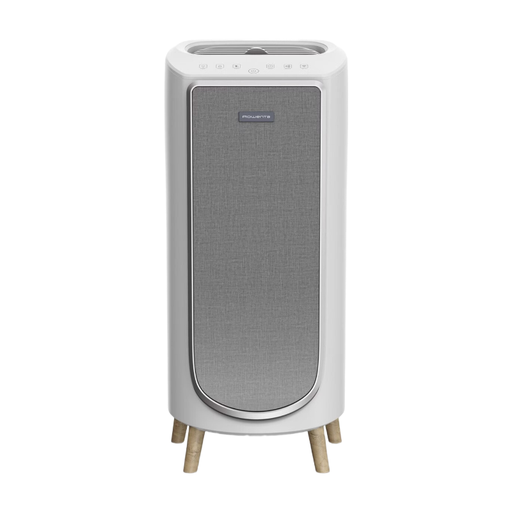
Why it suits this profile: This model combines a HEPA, carbon and Nanocaptur filter with WiFi control and several modes. It is well suited to users who value monitoring and automatic settings.
In addition to brand claims about filtration, you can assess the verifiable data: a CADR of 360 m³/hour, four modes and a stated noise level of 32 dB on the lowest setting.
WiFi and app control, automatic pollution detection, 360 m³/hour CADR, and day, night, boost and quiet modes.
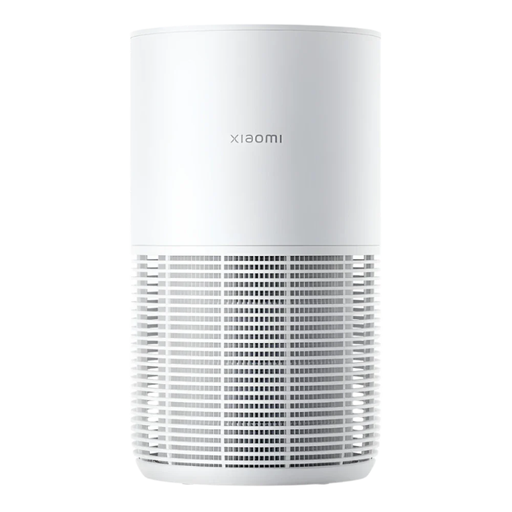
Why it suits this profile: According to Xiaomi, the combination of a pre-filter, HEPA filter and activated carbon is designed for households with pets. The app, voice control and compact size make it suitable for everyday use at home.
The stated capacity is 16–27 m² and the CADR is 230 m³/hour. This helps prevent you from using a compact model in an excessively large open space.
230 m³/hour CADR, 27 W, PM2.5 sensor, app and voice control, child lock and tool-free filter replacement.
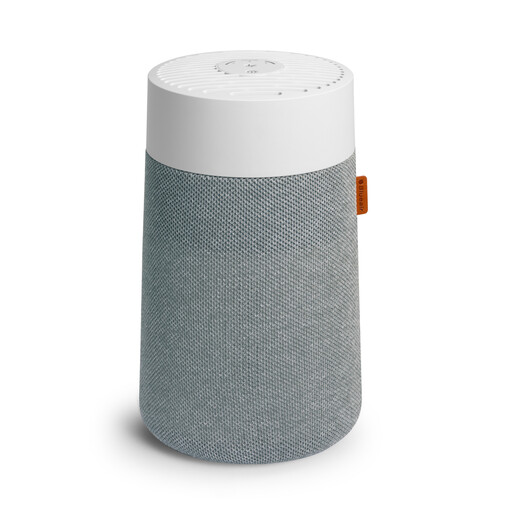
Why it suits this profile: Its compact size and stated capacity of up to 20 m² make this model suitable for a bedroom, nursery or office with limited space.
The product specifications state a CADR of 117 m³/hour and recommend replacing the filter after approximately six to nine months. This makes it easier to assess the capacity and maintenance requirements in advance.
117 m³/hour CADR, weight of 2.5 kg, simple two-button operation and compact dimensions of 29 × 17.3 × 17.3 cm.
We have put together a complete, up-to-date list of products that fully meet these strict selection criteria and the applicable European safety regulations.
Place the device on a stable, level surface and leave approximately 30 cm of clearance around it. Do not place it behind a curtain, directly against a cupboard or next to a heat source. In a bedroom, positioning it some distance from the bed is often more practical than placing it directly on the bedside table.
Use automatic mode if the model has a PM2.5 sensor. However, check the filter regularly and dust the sensor opening as instructed in the manual. An air purifier does not replace ventilation: continue to ventilate your home properly and tackle the source of smoke, damp or dust wherever possible.
According to the product specifications, a model with a suitable HEPA or comparable fine-particle filter is designed to filter airborne particles such as dust and pollen. The device does not remove dust that has already settled on furniture or floors. Regular vacuuming and cleaning are therefore still necessary.
This varies depending on the model and usage. Product information commonly gives replacement intervals of around six to twelve months. With high levels of dust, smoke or pet hair, the filter may become saturated sooner. Follow the filter indicator and the manufacturer's instructions.
Calculate this using: power in kW × operating hours × your electricity tariff. A 30 W device running for 24 hours theoretically uses 0.72 kWh per day. Actual costs depend on the fan speed, automatic control and the tariff on your energy bill.
