
Vandaag of morgen in huis

Kwaliteit gegarandeerd

Welkomstaanbiedingen ontgrendelen: GRATIS bezorging | Tot 80% korting | Gratis 30 dagen JoyPlus-proefperiode
Download de app
An air purifier can help filter airborne particles, dust and certain odours from an indoor space. However, there can be a big difference between models. A device that’s suitable for a bedroom may not have enough capacity for an open-plan living room. Claims such as ‘quiet operation’ or ‘for large rooms’ can also give an incomplete picture.
So focus on the technical specifications rather than just the marketing name. Below, you’ll find out which specifications matter, which pitfalls to watch out for and what type of air purifier might suit your needs.
A manufacturer may quote a large maximum floor area even when the CADR rating is relatively low. CADR stands for Clean Air Delivery Rate and indicates how much purified air the device circulates per hour. A model with a higher CADR is generally more suitable for a large living room than a compact model making the same marketing claim about room size.
Also check whether the stated area is based on one, two or more air changes per hour. A lower capacity may be sufficient for a bedroom than for a busy living room with pets.
An air purifier with a HEPA filter is designed to capture fine particles such as dust and pollen. An activated carbon filter is useful for odours, smoke and some gases. A pre-filter traps larger particles such as hair and fluff. These three layers work together.
According to product information from various brands, H13 or similar HEPA filters can trap a high percentage of small particles. Treat these figures as product specifications based on particular test conditions, not as a guarantee of a completely dust-free or allergen-free home.
A quiet sleep mode of 20 to 27 dB sounds appealing, but the noise level is often considerably higher at the top fan setting. So check both the noise level in sleep mode and the maximum level. This is especially important when choosing a quiet air purifier for the bedroom or a device to use next to your workspace.
Use CADR as a practical point of comparison:
An air purifier for large rooms will only work well if you leave enough space between it and walls, curtains and furniture. Always follow the clearance distances given in the manual.
Don’t just look for ‘HEPA’. Also check:
Filters are consumables. Emerio models and some other brands recommend replacing filters every six to eight months, depending on use and air quality. Other models state a longer service life. Factor in the cost of replacement filters before you buy.
An air purifier with a PM2.5 sensor can show the level of fine particles in the room and adjust the fan speed in automatic mode. A display or colour indicator lets you see the air quality at a glance. With a smart air purifier, app control, timers and voice control can be useful, but check beforehand that the app is compatible with your phone and smart home platform.
A sensor doesn’t automatically measure every type of pollutant. For example, a PM2.5 sensor doesn’t tell you everything about odours or humidity. So use its readings to help you operate the device, rather than as a complete analysis of your indoor air.
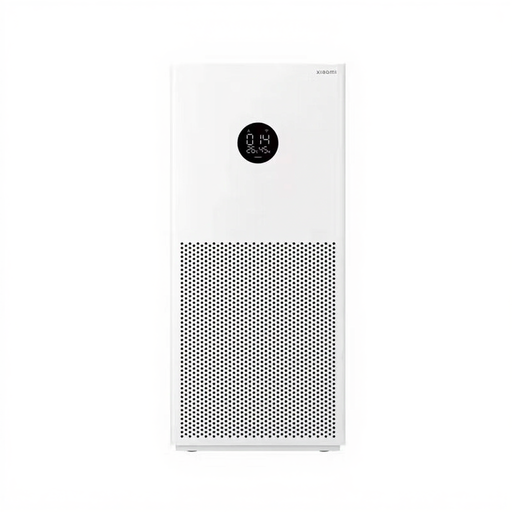
Why it suits this profile: With a stated coverage area of 25–43 m², a PM2.5 sensor and control via the Mi Home app, this is a practical choice for a bedroom, living room or home office.
The product specifications give both the CADR of 360 m³/h and the recommended coverage area. The stated noise level ranges from 33.4 dB in quiet mode to a maximum of 61 dB(A).
PM2.5, temperature and humidity sensors; support for Google Assistant and Amazon Alexa according to the product description.
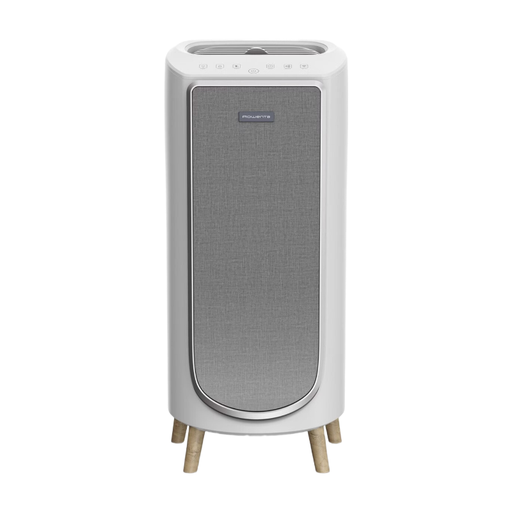
Why it suits this profile: This model combines HEPA, carbon and nanofilters with Wi-Fi control, automatic detection and several operating modes.
The product specifications state a CADR of 360 m³/h and a noise level of 32 dB(A) on the lowest setting, so you can assess its capacity and quietness separately.
Four modes, an activated carbon filter and automatic adjustment based on measured air quality, according to the product information.
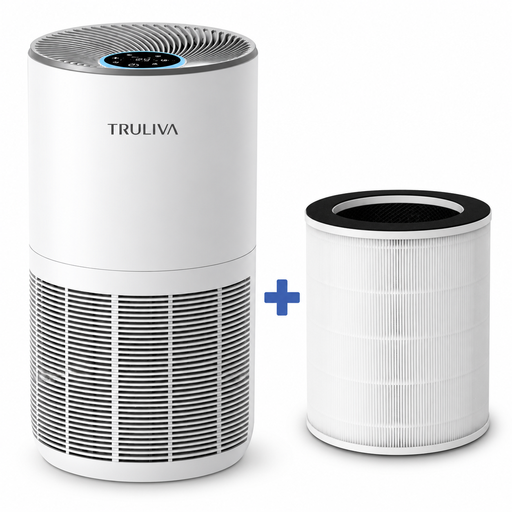
Why it suits this profile: With a CADR of 450 m³/h and a stated operating area of 32–55 m², this model is designed for larger living spaces, families and households with pets.
The capacity is listed alongside the CADR, so you don’t have to judge the model on its claimed floor area alone. An extra filter is also included.
Three filter layers, 360° air intake, PM2.5 display, child lock and a timer of up to 24 hours, according to the product description.

Why it suits this profile: The 360° filter system includes a pre-filter, HEPA filter and activated carbon layer. It’s designed for rooms of 16–27 m².
The stated coverage area helps you avoid mistaking this compact model for an air purifier designed for large rooms. The child lock is useful in households with children or curious pets.
CADR of 230 m³/h, app and voice control, and tool-free filter replacement, according to the product information.
We’ve put together a complete, up-to-date list of products that meet these strict selection criteria and the applicable European safety regulations.
It depends on what you want to achieve and the size of the room. For a bedroom, look for a model with a quiet setting, a dimmable display and a suitable CADR. Don’t place the device right next to your head, and make sure the air inlet and outlet are unobstructed.
Follow the filter indicator and the manual. Many models recommend replacing the filter every six to eight months, while some devices state a longer service life. If you have a lot of dust, pollen, smoke or pets, you may need to replace it sooner. A clogged filter restricts airflow.
The costs include electricity and replacement filters. Multiply the power consumption in kW by the number of hours it runs and your electricity tariff. A 30 W device running for 24 hours uses a theoretical 0.72 kWh per day. The actual cost depends on the fan setting and automatic controls.
