
Vandaag of morgen in huis

Kwaliteit gegarandeerd

Welkomstaanbiedingen ontgrendelen: GRATIS bezorging | Tot 80% korting | Gratis 30 dagen JoyPlus-proefperiode
Download de app
An air purifier can be useful if your home has issues with dust, pollen, smoke, cooking odours or pet smells. However, a large number on the packaging does not automatically mean that a device is suitable for your living room or bedroom. The real difference often lies in the combination of filter type, airflow, noise level and maintenance requirements.
As a Joybuy Product Recommendation Officer, I filter product information down to practical specifications. Below, you’ll find what to look for in 2026, which claims to assess with a degree of caution and which models suit different households in the Netherlands.
Manufacturers often state a maximum room size. This figure may be based on just one air change per hour. For a noticeable effect in a living room, bedroom or office, the CADR rating is also important. CADR stands for Clean Air Delivery Rate and indicates how much purified air the device can circulate per hour.
An air purifier with a CADR of 150 m³/h may be suitable for a smaller room, but it will need more time to clean the air in a large open-plan living room. Always consider both the stated room size and the CADR.
A HEPA air purifier is designed to target small airborne particles such as dust and pollen. For odours and certain gaseous pollutants, you also need an activated carbon filter. A pre-filter helps capture larger particles such as hair and dust clumps.
Also pay attention to the difference between an officially defined filter type and a broad marketing term such as “high efficiency”. According to the relevant manufacturers’ product information, several models claim a filtration efficiency of 99.97%. Treat this as a product specification under specific test conditions, not as a guarantee for every home or every type of pollutant.
A quiet bedroom air purifier may indicate a noise level of 20 dB on its lowest setting, yet become considerably louder at high speed. Always check both figures. For everyday use, night mode, dimmable lighting and a timer are practical features.
Use the room size as your initial filter, then compare the CADR. For a small bedroom, around 130 to 250 m³/h is often a sensible category. For a larger living room or open-plan space, look for 260 m³/h or higher.
Keep in mind that some product pages state a floor area based on one air change per hour, while others use multiple air changes. Do not compare square-metre figures alone.
For many Dutch households, a 3-in-1 filter is a practical choice:
A pet air purifier particularly benefits from an easily accessible pre-filter and an affordably priced replacement filter. An air purifier with a fine-particle filter or HEPA filter is more suitable for households concerned about pollen, dust or PM2.5.
An air purifier with a PM2.5 sensor can display the measured fine-particle level and adjust the fan speed automatically. The sensor does not detect every possible pollutant. The display should therefore be viewed primarily as a tool for monitoring changes in indoor air quality.
A smart air purifier adds features such as app control, schedules, notifications and, in some cases, voice control. Check in advance whether you need a 2.4GHz Wi-Fi network and whether the app is compatible with your phone.
Filters are consumable items. Check:
A model with low energy consumption can be attractive if it runs for several hours a day. A longer filter lifespan is only beneficial if replacement filters remain readily available.
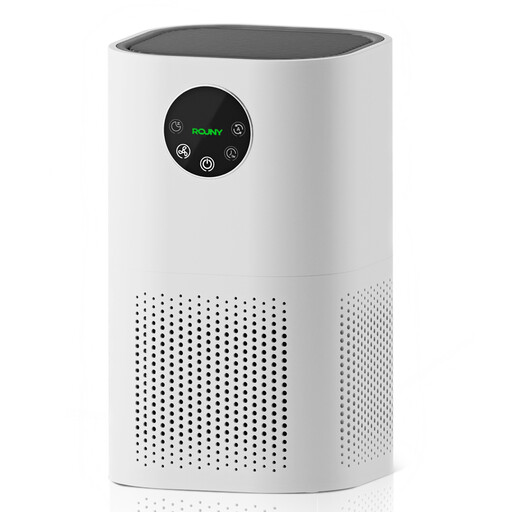
Why it’s a good match: A compact choice for a bedroom, home office or smaller living room. The stated capacity ranges from 20 to 50 m².
The CADR of 150 m³/h gives a clearer indication of airflow than a general room-size claim alone. The product information specifies a filter lifespan of 6 to 8 months.
H13 HEPA filter, air-quality indicator, four fan speeds and a sleep mode rated at up to 25 dB according to the product specifications.
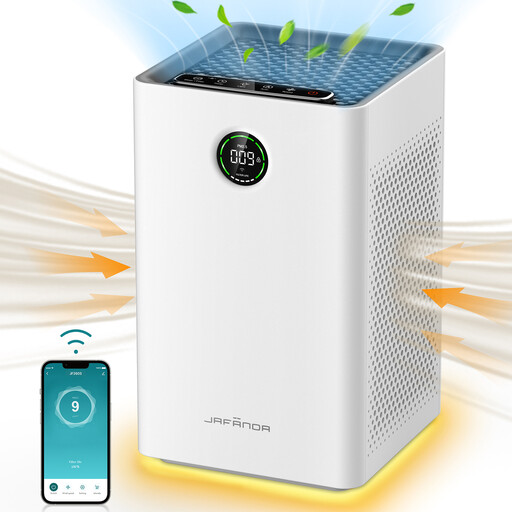
Why it’s a good match: Ideal if remote control, automatic mode and PM2.5 monitoring are important in a living room or open-plan space.
The product information lists multiple air-change rates: 238 ft² at five air changes per hour and 1190 ft² at one. This shows why actual capacity varies by situation.
CADR 260 m³/h, H13 filter, 300 grams of activated carbon, app and voice control, and a sleep mode from 23 dB according to the manufacturer.
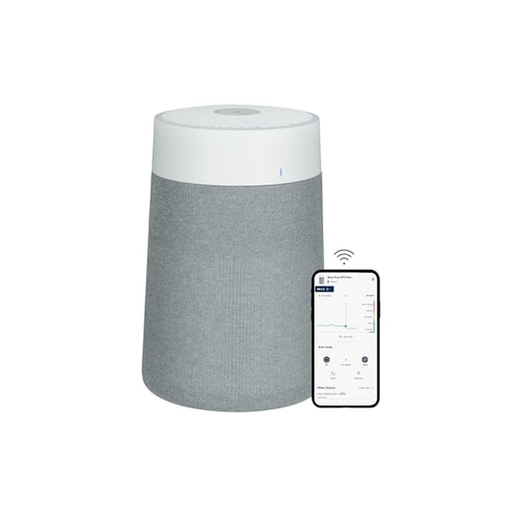
Why it’s a good match: A compact model for a bedroom, home office or child’s room where size and noise level are key considerations.
Alongside the low setting of 19 dB, the product page also lists a maximum of 48 dB. This gives you a realistic idea of what to expect at higher fan speeds.
CADR 212 m³/h, app control, scheduling and a stated coverage area of up to 43 m². The filter is pre-installed.
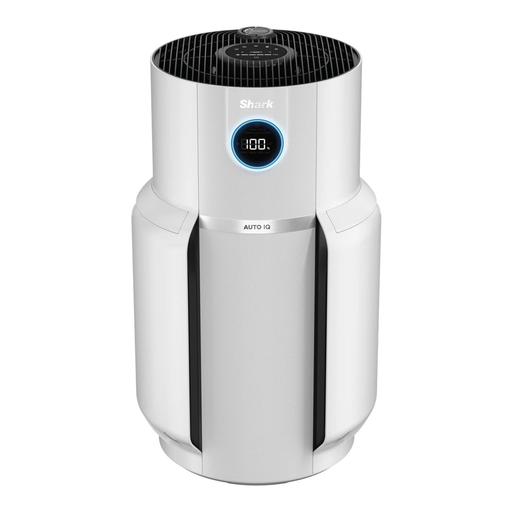
Why it’s a good match: A larger unit for households with a spacious living room, pets or a need for extended daily use.
The stated 130 m² applies at one air change per hour. For more intensive purification, the product information specifies 28 m² at 4.8 air changes per hour.
Four-stage filtration, Auto IQ, an LED air-quality display and a filter lifespan of up to five years, according to the product information.
Browse a current selection of models that can be compared by filter type, capacity, noise level and smart features.
According to the product information, a HEPA filter is designed to capture airborne particles such as dust and pollen. An air purifier for allergies is not a substitute for ventilation, cleaning or professional medical advice. If you have pets, also choose a pre-filter that captures hair and an activated carbon filter for odours.
This varies by model, operating time and indoor air quality. In the supplied product specifications, recommended replacement intervals range from approximately 6 to 12 months, while Shark states a longer period for a specific model. Always check the filter indicator and the user manual. Do not use a filter without its packaging or an incompatible replacement filter.
Multiply the power consumption in watts by the number of operating hours and divide by 1,000 to calculate consumption in kWh. A 25-watt device running for 8 hours a day uses approximately 6 kWh per month in theory. Multiply this by your current electricity tariff. Actual costs depend on the selected speed and standby mode.
