
Vandaag of morgen in huis

Kwaliteit gegarandeerd

Welkomstaanbiedingen ontgrendelen: GRATIS bezorging | Tot 80% korting | Gratis 30 dagen JoyPlus-proefperiode
Download de app
An air purifier can help make indoor air more comfortable if you’re dealing with dust, pollen, smoke or pet odours. But it’s best not to rely on claims such as “smart”, “powerful” or “for large rooms” alone. The right choice depends mainly on airflow, filter type, noise level and maintenance costs.
A stated room capacity is often based on one air change per hour. That may be enough for basic filtration, but if you want faster results with pollen, smoke or dust, you’ll need a higher CADR rating. CADR stands for Clean Air Delivery Rate and indicates how much filtered air a device delivers per hour.
So don’t just compare “up to 130 m²” with “up to 65 m²”. Check how many air changes per hour the stated capacity is based on, too.
According to the product description, an air purifier with a HEPA filter can capture small particles such as dust and pollen. However, the actual running costs depend on how often the filter needs replacing and how much new filters cost. A model with a long filter life could therefore be a better choice than a cheaper one that needs a replacement every year.
Also check the difference between a washable pre-filter and a non-washable main filter. The instructions for several models state that a high-efficiency filter must not be washed or reused.
A HEPA filter is designed to capture airborne particles. For smoke and odours, you’ll usually need activated carbon or a similar odour filter. Claims about reducing odours come from the brand’s product information, so don’t treat them as a universal guarantee for every home.
For general household use, a combination of a pre-filter, HEPA filter and activated carbon is practical. The pre-filter captures larger particles such as hair, the HEPA filter is designed for finer particles, and activated carbon targets odours and certain gases, according to the product description.
If you’re looking for an air purifier for dust and pollen, it’s worth checking the filter type and whether replacement filters are available. For smoke and odours, the amount of activated carbon matters, but similar terms used by different brands aren’t always directly comparable.
An air purifier for large rooms needs to be able to move enough air. A low CADR in a large living room could mean the air passes through the filter less often. So use the stated room capacity as a guide and check the measurement behind it.
For a bedroom, home office or child’s room, a compact air purifier with a lower CADR may be more practical. Place the device in an open position, with enough space around the air inlet and outlet.
A quiet air purifier is especially important in a bedroom. Check the noise level on both the lowest and highest settings. Night mode often reduces the fan speed and dims the display, but that also means the air is refreshed more slowly.
An air purifier with automatic mode uses a sensor to adjust the fan speed. A smart air purifier with Wi-Fi may also offer control through an app or voice assistant. Check whether you really need these features before buying: Wi-Fi makes the device more convenient, but it doesn’t automatically improve its filtration capacity.

Why it suits this profile: This compact model is designed for rooms up to 65 m² and has a stated CADR of 250 m³/h. Its dimensions and weight of 2.5 kg make it easy to move between rooms.
The product information gives both the CADR and the maximum room size, helping you assess the marketing claim more accurately. The filter should be replaced when the indicator tells you to, according to the instructions.
Two-layer HEPA filtration, automatic mode, night mode and a stated noise level from 20.5 dB(A).

Why it suits this profile: According to the product description, this model is designed for large living spaces, with a CADR of over 700 m³/h, app control and automatic mode.
The product information lists both the CADR and an estimated room capacity. This helps you assess its suitability for a large living room without relying on the stated floor area alone.
HEPASilent filtration according to Blueair, app and voice control, automatic mode and night mode.
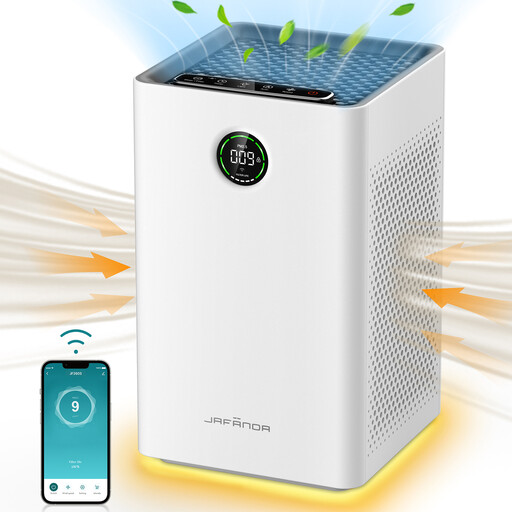
Why it suits this profile: This model combines an H13 True HEPA filter with activated carbon, a PM2.5 sensor, five fan speeds and Wi-Fi or voice control.
The manufacturer lists different air change rates: once per hour for 1190 ft² and five times per hour for 238 ft². This makes it clearer what the stated room capacity means in practice.
CADR of 260 m³/h, a 300 g activated carbon layer according to the product information, and sleep mode from 23 dB.
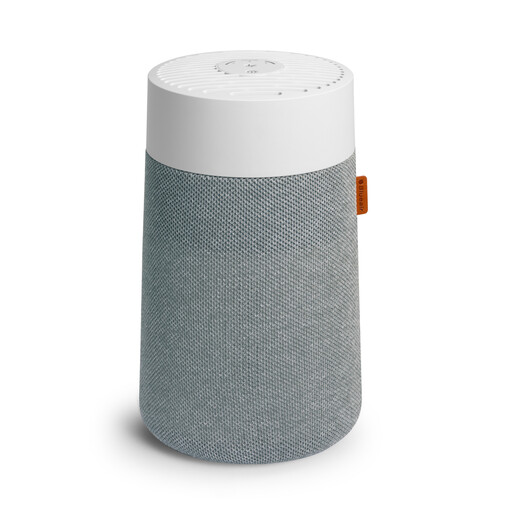
Why it suits this profile: Its compact design and weight of 2.5 kg make this model suitable for a bedroom, home office or child’s room up to around 20 m², according to the product information.
Its stated CADR of 117 m³/h is suited to smaller rooms. That way, you won’t pay for a high capacity you’re unlikely to need in a compact room.
HEPASilent technology according to Blueair, simple two-button controls and filter replacement at the recommended maintenance interval.
We’ve put together a complete, up-to-date list of products that meet these strict selection criteria and the applicable European safety regulations.
According to the product description, an air purifier with a HEPA filter is designed to capture airborne particles such as dust and pollen. The results depend on the CADR, the size of the room, where you place the device and how long it runs. An air purifier is no substitute for cleaning, ventilation or other measures around the home.
It varies by model and use. The manufacturer of the Shark NeverChange Max states that its filter can last up to five years. Other models, such as the Blueair Blue Pure Mini Max, recommend replacing the filter after around six to nine months. Always check the filter indicator, operating hours and official maintenance instructions.
Energy use depends on the power rating, fan speed and how many hours the device runs. A 21-watt model running continuously uses less electricity than a 54-watt device running for the same length of time, but the actual cost depends on your electricity tariff. Automatic mode can lower the fan speed when the sensor indicates that air quality allows it.
