
Vandaag of morgen in huis

Kwaliteit gegarandeerd

Welkomstaanbiedingen ontgrendelen: GRATIS bezorging | Tot 80% korting | Gratis 30 dagen JoyPlus-proefperiode
Download de app
An air purifier can help reduce airborne particles, dust and odours in a room. However, it’s not wise to rely solely on terms such as “HEPA”, “smart” or “suitable for large rooms”. Capacity, filter design and maintenance all affect how practical a device will be for your home.
A manufacturer may quote a large floor area based on just one air change per hour. You may want a higher air-change rate for a bedroom, living room or room with pets. So check the CADR rating too, measured in m³/h. This figure shows how much filtered air the device can deliver per hour.
A model with a high CADR isn’t automatically suitable for every room. Noise level, size, positioning and filter costs still matter.
An air purifier with a HEPA filter can filter fine particles from the air, but the stated filter class and test conditions vary from model to model. Some products specify H11 or H13, while others refer to True HEPA or their own technology.
According to the relevant manufacturers’ product information, various models claim to filter 99.97% of particles of a certain size. Treat this as a product specification under stated conditions, not a guarantee of air quality throughout your home. Also check whether the filter can be replaced and how much a replacement costs.
An air purifier with a carbon filter may be particularly useful if you want to tackle smoke, cooking smells or pet odours. A carbon layer can adsorb odours and certain gaseous substances, but the thickness of the layer makes a difference. A thin carbon filter generally contains less material than a model with a larger carbon cartridge.
Be wary of marketing claims about formaldehyde, viruses or bacteria, too. A brand’s own research or claims may be based on results obtained under laboratory conditions. That doesn’t automatically mean the device will achieve the same results in every home. An air purifier is no substitute for ventilation, cleaning or tackling the source of the problem.
Use the stated capacity as a starting point when narrowing down your options, but compare models using the same unit of measurement. Some manufacturers specify square metres, while others give cubic metres per hour or the number of air changes per hour.
As a practical guide:
An air purifier designed for large rooms won’t work at its best if it’s tucked into a corner behind a sofa. Keep the air intake and outlet clear, and follow the minimum clearance instructions in the manual.
A useful filter combination often includes:
Check whether the pre-filter can be removed or cleaned. The main filter usually shouldn’t be washed. Replacement intervals in product information range from around six months to several years. A longer lifespan may sound appealing, but always check the conditions of use and notifications specified by the manufacturer.
For a quiet air purifier in the bedroom, the sleep setting matters more than the highest fan speed. A device rated at 20 to 26 dB on its lowest setting may be considerably louder at its highest setting.
Also check the power rating. A 20 W device running for long periods each day may cost less to run than a more powerful 60 W model. Annual costs depend on the power rating, the number of hours it runs and your electricity price. Remember to factor in the cost of replacement filters, too.
An air purifier with an air quality sensor can adjust the fan speed automatically. This is handy, but a sensor doesn’t measure every possible pollutant. A PM2.5 sensor, for example, detects fine particles and doesn’t automatically tell you anything about odours or all gaseous substances.
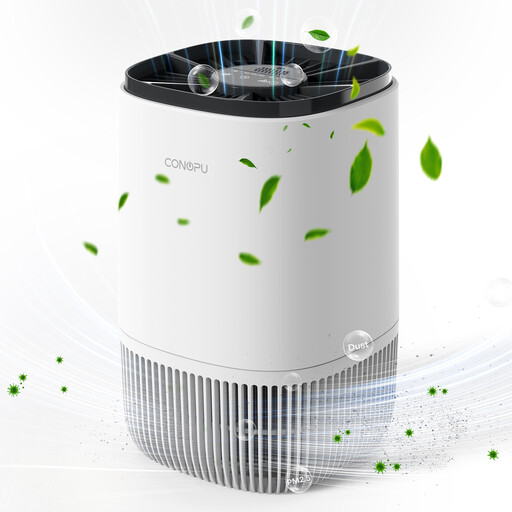
Why it suits this profile: This compact model has three settings, a timer and a combination of pre-filter, H13 filter and activated carbon. That makes it easy to use in a bedroom, home office or smaller living room.
The specifications state a power rating of 5 W and a compact size. Be sure to check the actual room capacity and the future cost of replacement filters.
H13 filter, activated carbon, three fan speeds and a portable design.
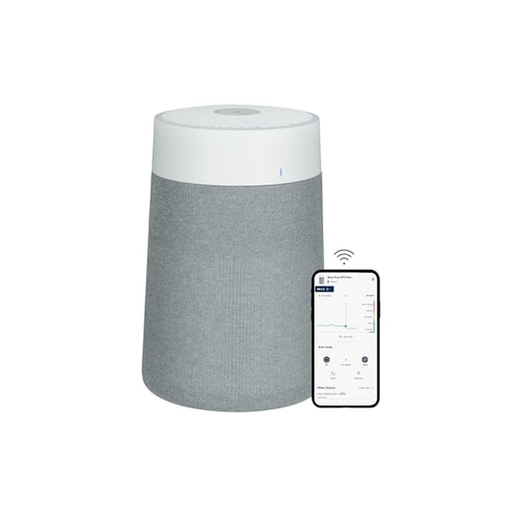
Why it suits this profile: With a CADR of 212 m³/h, app control and a stated noise level of 19 dB on its lowest setting, this model is a good fit for users who value easy control and a comfortable night’s sleep.
As well as the marketing name, the CADR, lowest and highest noise levels, and app features are clearly specified.
Suitable for rooms up to 43 m² according to the product information, with app control, scheduling and air quality monitoring.
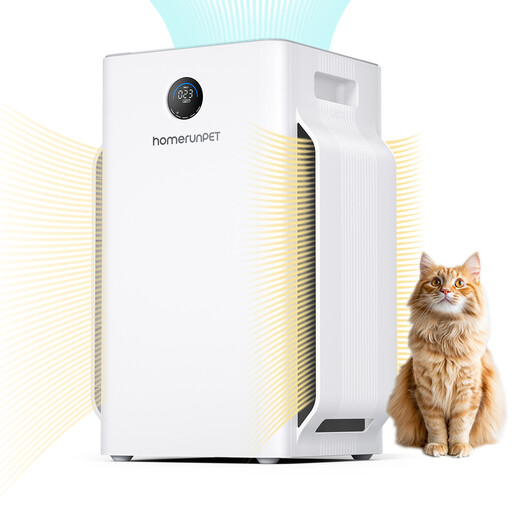
Why it suits this profile: According to the product information, this model is designed for households with cats or dogs. Its stated capacity is up to 40 m², and the sleep mode runs at up to 25 dB.
The product information specifies a reusable pre-filter and a replaceable combined HEPA and carbon filter. This makes maintenance easier to keep track of.
Air quality sensor, automatic mode, child lock and carbon filter; the manufacturer recommends replacing the filter approximately every six to twelve months.
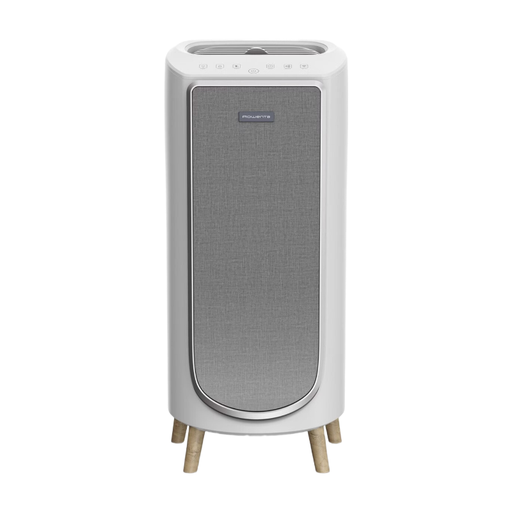
Why it suits this profile: With a stated CADR of 360 m³/h, automatic pollution detection and Wi-Fi control, this model suits anyone looking to manage a larger living area from one device.
The stated room capacity is backed up by details of the CADR, filter type and noise level. This helps you look beyond the room size alone.
HEPA, carbon and nanofilter according to the product information, plus app control and a stated lowest noise level of 32 dB.
We’ve put together a complete, up-to-date list of products that meet these stringent selection criteria and the applicable European safety regulations.
According to the product information, a model with a suitable HEPA filter is designed to filter airborne particles such as dust and pollen. However, it won’t remove dust that has already settled on furniture or floors. Regular cleaning and ventilation are still essential. If you have pets, a pre-filter is useful for capturing hair and larger fluff particles.
Place the device on a stable, flat surface and leave enough space around it. Don’t put it directly behind curtains, under a desk or against a wall if this will block the airflow. Close windows and doors only when you want to filter the air in that room specifically; ventilation is still important for the overall indoor air quality.
It depends on the model, how long it’s used, the amount of dust and whether you have pets. Manufacturers often state intervals of around six to twelve months, although some models claim a longer lifespan. Use the filter indicator as a guide, but check the filter for dirt as well and work out the cost of an original replacement filter in advance.
