
Vandaag of morgen in huis

Kwaliteit gegarandeerd

Welkomstaanbiedingen ontgrendelen: GRATIS bezorging | Tot 80% korting | Gratis 30 dagen JoyPlus-proefperiode
Download de app
An air purifier can help reduce dust, pollen, smoke particles and odours in your home. However, it’s not wise to rely solely on claims such as “powerful purification” or “for large rooms”. The difference between a suitable appliance and a poor purchase usually comes down to the specifications.
A bedroom calls for different features from a living room with pets. So pay particular attention to the filter type, airflow, noise level and actual room coverage.
Manufacturers sometimes quote a large maximum floor area. That doesn’t always mean the air in that room will be filtered quickly. Check the CADR rating too: the Clean Air Delivery Rate, measured in cubic metres per hour.
A model with a low CADR may be suitable for a small bedroom, but less practical in an open-plan living room. Some models also list different performance levels for one, two or five air changes per hour. So check which usage scenario suits you.
A HEPA filter is designed to capture fine particles such as dust and pollen. A carbon filter is useful for cooking smells, smoke odours and pet smells. So an air purifier with only a HEPA filter isn’t automatically suitable for every home.
Check whether the appliance combines a pre-filter, HEPA filter and activated carbon layer. The pre-filter captures larger particles, while the other filter layers target different types of pollutants.
A quiet air purifier might produce 20 or 26 dB on its lowest setting, for example, but make noticeably more noise on its highest setting. So check the noise level for each mode. For a bedroom, useful features include a sleep mode, dimmed lights and a timer.
Also consider ongoing costs. According to product information, filters often need replacing after around six to twelve months, depending on usage and indoor air quality. Before buying, check that replacement filters are available and how much they cost.
An air purifier with a HEPA filter is particularly useful for dust, pollen and other fine particles. Manufacturer claims about filter efficiency should be treated as product specifications, not as a medical guarantee.
An air purifier with a carbon filter can also help reduce odours and certain gaseous substances. The amount of carbon matters, but not every model specifies it. For a home with pets or an open-plan kitchen, a combination of pre-filter, HEPA filter and activated carbon layer is a sensible choice.
CADR indicates how much filtered air the appliance can deliver per hour. A higher rating isn’t automatically needed for every room, but it does provide greater capacity.
As a practical guide:
An air purifier with a PM2.5 sensor displays the measured concentration of fine particles and can adjust the fan speed in automatic mode. The reading depends on the sensor and where the appliance is positioned.
A smart air purifier, or one with an app, is handy if you want to set schedules, control it remotely or receive filter notifications. Check which app is required and whether voice control via Google Assistant or Amazon Alexa is supported. A model without Wi-Fi may be simpler if you only need manual controls.
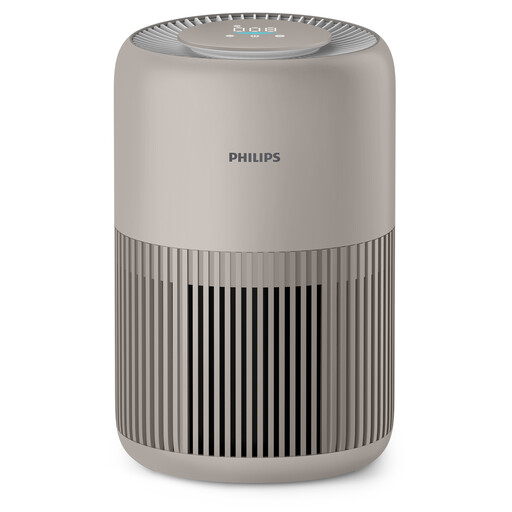
Why it suits this profile: This compact model has a CADR of 250 m³/h, a PM2.5 sensor and a sleep mode. That makes it practical for a bedroom, nursery or home office, without the need for a large appliance.
The product information lists both the CADR and a noise level of 20.5 to 49 dB(A). This lets you assess capacity and night-time use separately, rather than relying on a room-size claim alone.
250 m³/h CADR, PM2.5 sensor, automatic mode and a stated sleep-mode noise level from 20.5 dB(A).
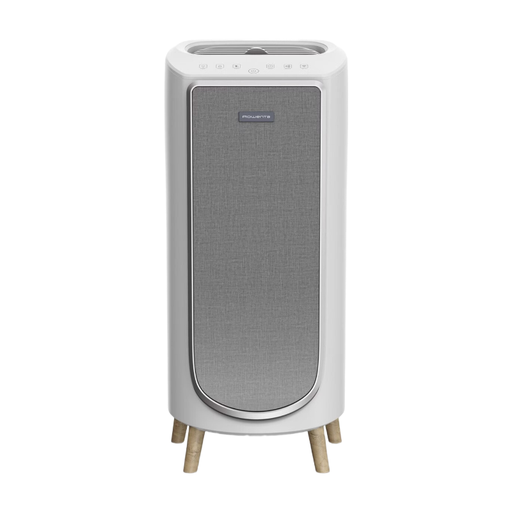
Why it suits this profile: This model combines a CADR of 360 m³/h with Wi-Fi, app control, automatic pollution detection and several modes. It’s a good fit if you want to monitor settings and air quality remotely.
The choice isn’t based on a filter claim alone: the capacity, minimum noise level of 32 dB and available modes are listed separately.
360 m³/h CADR, app control, automatic detection, and day, night, boost and silent modes.

Why it suits this profile: For pet owners, practical features include the 360° filter, three filter layers, PM2.5 sensor, app and voice control. The stated coverage is 16–27 m².
The product specifications list a pre-filter, HEPA filter and activated carbon layer separately. This makes it clearer which filter layer is designed to capture hair, fine particles and odours.
230 m³/h CADR, three filter layers, app and voice control, child lock and tool-free filter replacement.
We’ve put together a full, up-to-date list of products that meet these strict selection criteria and the applicable European safety regulations.
Place an air purifier on a level surface, leaving around 30 cm of clear space around it unless the manual says otherwise. Don’t put it behind a sofa, curtain or cupboard. In a bedroom, a spot with good airflow is more practical than a cramped bedside table.
Remove all plastic packaging from around the filter before first use. Clean the pre-filter according to the manual, using a soft brush or vacuum cleaner. Don’t wash a HEPA or carbon filter unless the manufacturer expressly allows it. Replace filters when the indicator tells you to or according to the recommended maintenance schedule.
An air purifier doesn’t replace ventilation. Keep rooms appropriately ventilated and deal with the source of smoke, damp or strong odours.
According to the product specifications, a model with a HEPA filter is designed to filter airborne particles such as dust and pollen. This may suit a household where allergens are a concern. The appliance isn’t a medical device and doesn’t replace advice from a doctor or other healthcare professional.
It depends on the model, how long it’s used and the air quality in your home. The product specifications provided often state six to twelve months; some models quote a longer lifespan. Check the filter indicator and manual, and compare the cost of replacement filters in advance.
Energy use depends on the wattage, fan speed selected and number of hours it runs. A 27 W model uses less energy when running continuously than the same appliance on a higher setting. Remember to factor in filter costs as well as electricity. An automatic mode and timer can help you tailor usage to the room and time of day.
