
Vandaag of morgen in huis

Kwaliteit gegarandeerd

Welkomstaanbiedingen ontgrendelen: GRATIS bezorging | Tot 80% korting | Gratis 30 dagen JoyPlus-proefperiode
Download de app
Getting a breath of fresh air without stepping outside. That's the promise of an air purifier. Especially in modern homes where hay fever, pets, and tightly sealed windows can lead to poor indoor air quality, this sounds like a perfect solution. But the market is flooded with models making lofty promises. It's easy to get lost in technical specifications and marketing claims.
As a Joybuy Product Recommendation Officer, I'm here to help you cut through the noise. We won't focus on slick sales pitches, but on what truly matters. Before you buy an air purifier, it's crucial to know the most common pitfalls that can unnecessarily drive up costs.
Pitfall 1: The "large room" myth. Many manufacturers advertise an impressive square footage (ft?). Often, this number is based on just one air change per hour. For effective purification, especially for allergies, you need at least three to five air changes per hour. A device "suitable for 800 ft?" might, in reality, only be able to properly handle a 200 ft? bedroom.
Pitfall 2: The hidden cost of filters. A budget-friendly air purifier seems like a smart deal—until you have to replace the filters. Some brands use expensive, hard-to-find filters that significantly increase the total cost of ownership over a few years.
Pitfall 3: The "whisper-quiet" lie. A quiet air purifier is essential for the bedroom. Many models claim a low noise level, but this often only applies to the lowest, least effective setting. The noise level on the settings you'll actually use is what you need to pay attention to.
To avoid buyer's remorse, focus on three objective specifications. These numbers tell you more than any marketing brochure.
The CADR is the most important specification. It indicates how many cubic meters (m?) of clean air the device delivers per hour. A higher CADR means faster and more effective purification. Instead of focusing on the advertised square footage, you should compare the CADR to the size of your room.
Not all filters are created equal. A HEPA air purifier is the gold standard for those suffering from allergies.
Pay attention to the noise level in decibels (dB) in sleep mode or the lowest setting. For an undisturbed night's sleep, you want a value below 30 dB. A value around 20-25 dB is comparable to a whisper and is considered very quiet. Also, check the noise level on the highest setting to know what to expect during intensive cleaning.
Below are a few models that stand out for their specifications and suit different needs and situations.
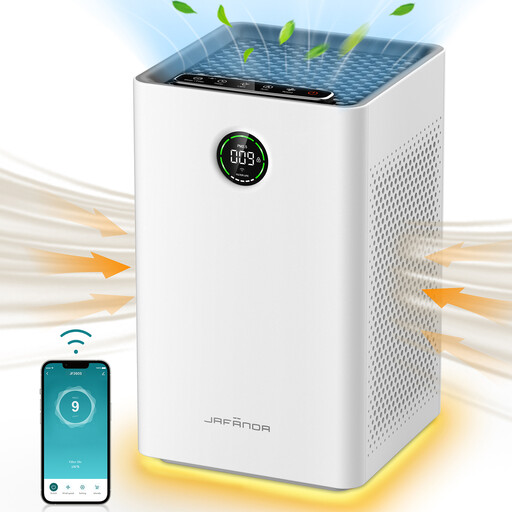
Why This Fits Their Persona: Ideal for the bedroom due to its very quiet sleep mode and the ability to turn off the display lights completely. The smart features make it easy to operate from your bed.
This model bypasses the "whisper-quiet" lie by specifying a concrete and very low noise level of 23 dB in sleep mode, which is barely audible in practice.
The combination of an H13 HEPA filter, a PM2.5 sensor with auto mode, and smart control via app or voice assistant offers a lot of functionality for its price range.
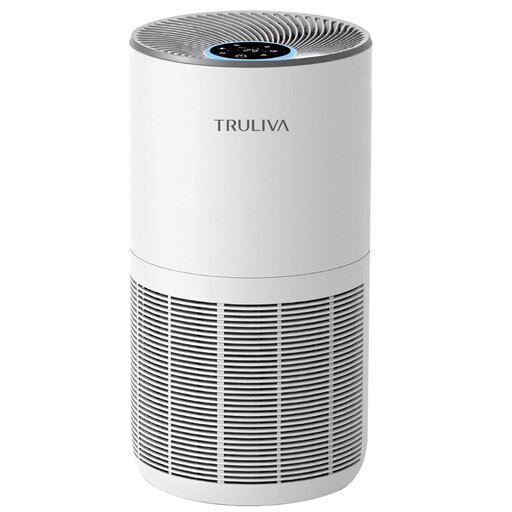
Why This Fits Their Persona: With a very high CADR and 360° air intake, this model is designed to quickly and efficiently purify the air in a large living room. Ideal for capturing airborne pet hair and neutralizing odours.
This model tackles the "large room" myth by stating a clear and powerful CADR of 450 m?/h. This is an objective metric that confirms its capacity for larger spaces, instead of a vague ft? claim.
The combination of a high CADR, 360° air circulation, and a PM2.5 display for real-time feedback makes this a powerful all-rounder for those who need serious cleaning power.
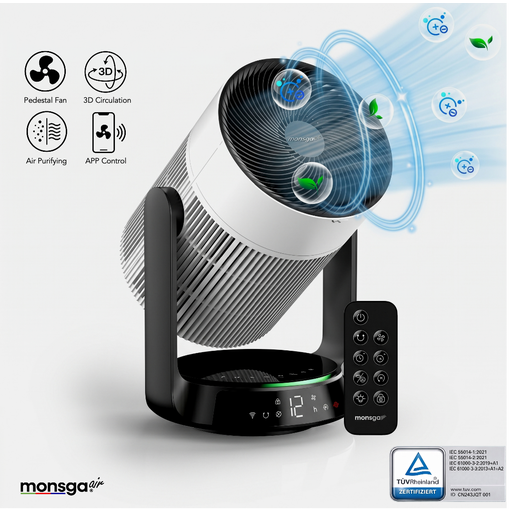
Why This Fits Their Persona: This is more than an air purifier; it's also a fan that circulates air throughout the entire room. Perfect for those who want a single smart device for both cooling and purification all year round.
This device prevents you from having to buy and store two separate appliances (a fan and an air purifier). Its 2-in-1 functionality makes the investment useful and efficient throughout the year.
The unique 360° omnidirectional oscillation ensures superior air circulation throughout the room. Control via the Tuya app, remote, or the device panel offers maximum flexibility.
We have compiled a complete, up-to-date list of products that fully meet these strict selection criteria and safety standards.
This depends on the model, usage, and the air quality in your home. Most manufacturers recommend replacing the HEPA filter every 6 to 12 months. Many modern air purifiers have an indicator that tells you when it's time for a replacement, which simplifies maintenance.
Yes, that's exactly what it's for. Indoor air pollution is a continuous process. For optimal effect, especially for an air purifier in the bedroom, it is recommended to run the device continuously on a low, quiet setting. Choose a model with a dedicated sleep mode that minimizes noise and dims the lights.
An air purifier for allergies can make a noticeable difference. A model with a True HEPA filter is designed to filter particles like pollen, mould spores, and dust mite droppings from the air. While it's not a miracle cure, it can significantly reduce the concentration of these allergens in the air and thus alleviate symptoms.
