
Vandaag of morgen in huis

Kwaliteit gegarandeerd

Welkomstaanbiedingen ontgrendelen: GRATIS bezorging | Tot 80% korting | Gratis 30 dagen JoyPlus-proefperiode
Download de app
An air purifier can help reduce airborne particles, dust and certain odours in a room. However, it is not wise to rely solely on terms such as “powerful purification” or a high percentage shown on the packaging. The right choice mainly depends on the room, the filter, the noise level and maintenance costs.
A manufacturer may quote a large maximum area, but this figure is often based on just one air change per hour. For noticeably higher circulation, the same air purifier may be suitable for a much smaller room.
Pay attention to the CADR, or Clean Air Delivery Rate. This is the amount of filtered air the appliance delivers per hour, expressed in m³/h. A model with 150 m³/h is more suitable for a bedroom or home office than for a large open-plan living room. For larger rooms, values from around 250 m³/h upwards are more practical for comparison.
“Quiet” may refer to the lowest fan setting. At the highest setting, the noise level is often considerably higher. So check both the figure for sleep mode and the maximum noise level.
For a quiet air purifier for the bedroom, a low sleep-mode noise level, dimmed lighting and a timer are important. An appliance that can ventilate powerfully during the day but switches down to around 20 to 25 dB at night is often more practical than a small model without a quiet mode.
An air purifier with a HEPA filter will generally also have a pre-filter and sometimes an activated carbon filter. The pre-filter catches larger particles such as dust and hair. The HEPA filter is designed for finer particles. Activated carbon is particularly relevant if you are looking for an air purifier for smoke and odours.
Check the following before buying:
A longer theoretical filter lifespan does not automatically mean that the filter will last just as long under all usage conditions. Pets, smoke and large amounts of dust can increase maintenance requirements.
An air purifier with a HEPA filter is worth considering for households looking to tackle airborne dust particles, pollen or skin flakes. Pay attention to the difference between a standalone HEPA filter and a complete filtration system. A pre-filter reduces the load on the main filter, while activated carbon can help reduce odours.
Brands may state their own test results, but these should not be interpreted as a universal guarantee. If it says “99.97%”, for example, check the test conditions and the particle size to which this applies. According to the product information for various models in this overview, these are specific laboratory measurements; the results do not mean that all air pollution disappears from a home.
Use the CADR as your first point of comparison:
Do not place the appliance directly against a wall or behind a sofa. Many manufacturers recommend leaving approximately 20 to 30 cm of clear space around the air intake and outlet.
An air purifier with an air quality indicator often uses a coloured ring or display. An air purifier with a PM2.5 display shows an indication or measurement of fine dust particles. This is useful for monitoring changes while cooking, airing the room or vacuuming, but the display is not a complete analysis of all substances in the air.
A smart air purifier can also be controlled via an app, follow a schedule or automatically adjust the fan speed. Check whether Wi-Fi, voice control and app features are genuinely necessary. For straightforward everyday use, button controls may be sufficient.
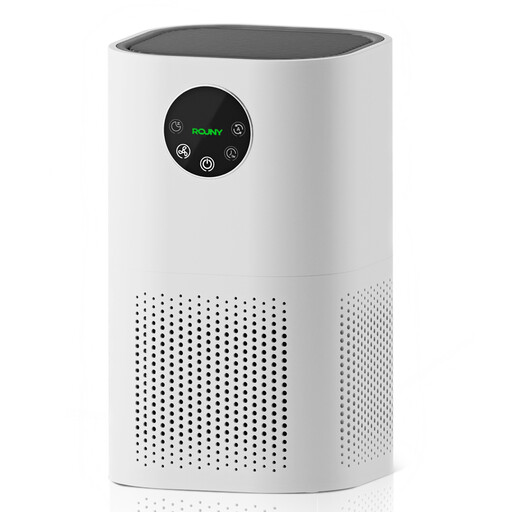
Why it suits this profile: This compact model has four fan settings, a timer and an air quality display. According to the product information, it is intended for rooms measuring between 20 and 50 m².
The CADR of 150 m³/h and the sleep-mode rating of up to 25 dB are stated alongside the larger coverage range. This allows you to compare capacity and noise more effectively.
H13 HEPA filter, air quality indicator, 2/4/8-hour timer and four speeds.
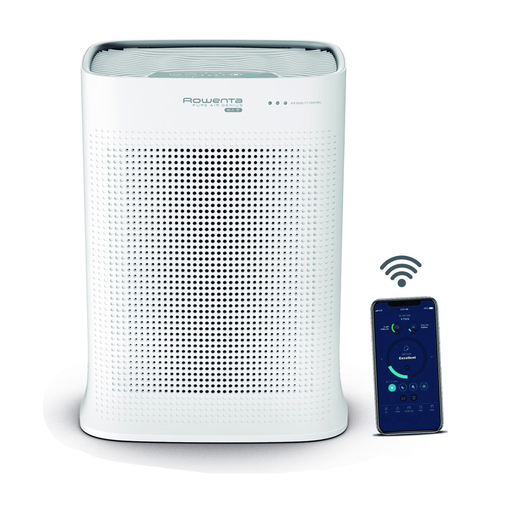
Why it suits this profile: The four-layer filtration, automatic mode and capacity for large rooms make it suitable for anyone looking for one appliance for a spacious living room or open-plan living area.
The product information states both the recommended area of up to 140 m² and CADR-related filtration data. Compare these figures with the number of air changes you require.
Pre-filter, activated carbon, HEPA and formaldehyde filter; five speeds and a stated noise level from 52 dB.
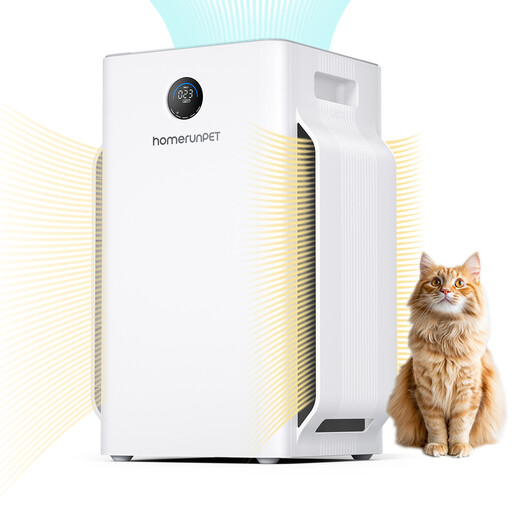
Why it suits this profile: According to the product information, this model was developed for households with cats, dogs and other pets. It features a pre-filter, HEPA filter, activated carbon and automatic air quality monitoring.
According to the instructions, the washable pre-filter can be regularly dusted. This prevents hair and larger dust particles from accumulating solely on the combined main filter.
CADR for up to 40 m², sleep mode from 25 dB, child lock and filter replacement reminder.
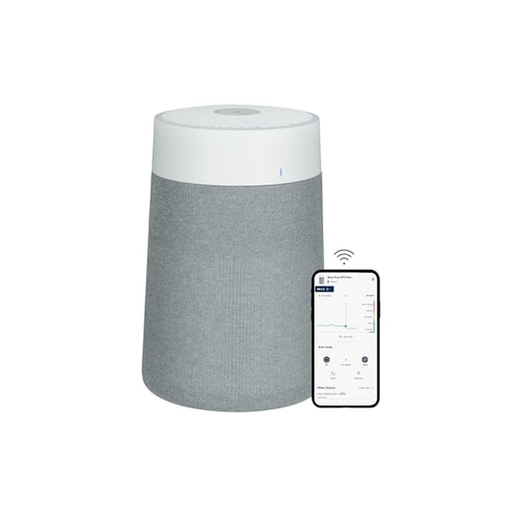
Why it suits this profile: The product information states a CADR of 212 m³/h, app control, night mode and a noise level of 19 dB on the lowest setting.
The specifications show both the low and high noise levels: 19 dB on the lowest setting and up to 48 dB. This makes it clear that quiet operation mainly applies at a lower speed.
App with scheduling and air quality monitoring; compact design and a stated coverage area of up to 43 m².
We have put together a complete, up-to-date list of products that fully meet these strict selection criteria and the applicable European safety regulations.
According to the product specifications, a model with a pre-filter and HEPA filter may be designed to target airborne particles such as dust and pollen. Its effectiveness depends on the room, the CADR, its placement and how long the appliance runs. An air purifier for allergies is not a substitute for ventilation or medical advice.
This varies by model and usage. In the product information listed, replacement intervals range from approximately six to twelve months. If you have pets, smoke indoors or experience high levels of dust, the filter may need to be replaced sooner. Therefore, check the filter indicator and the instructions for the specific appliance.
Energy consumption depends on the wattage and the selected fan setting. A 20 to 60-watt model uses less energy on the low setting than at maximum speed. Also include the cost of replacement filters when comparing total running costs.
