
Vandaag of morgen in huis

Kwaliteit gegarandeerd

Welkomstaanbiedingen ontgrendelen: GRATIS bezorging | Tot 80% korting | Gratis 30 dagen JoyPlus-proefperiode
Download de app
An air purifier can help reduce airborne particles, dust and odours in your home. However, it is not wise to rely solely on terms such as “powerful purification”, “for large rooms” or a high removal percentage. The right choice depends mainly on the room, the filter, the airflow and the noise level.
A bedroom also has different requirements from a living room with pets. Below, we explain the most important considerations, common purchasing pitfalls and several models suited to different situations.
A manufacturer may state a maximum room capacity based on one air change per hour. For a noticeable effect in a busy living room or in homes with a lot of dust, a higher air-change rate is often more practical. So do not look only at the number of square metres; also check the CADR rating: Clean Air Delivery Rate, expressed in m³/h.
A compact air purifier with a low CADR may be well suited to a home office, but it will need more time to clean the air in a large living room. Also check whether the stated capacity matches your ceiling height and room layout.
A HEPA air purifier uses a fine-particle filter, but performance varies between models and filter configurations. Check:
Claims about removing pollen, allergens or other particles come from product information or tests carried out by a brand or external organisation. According to a brand’s own research, this does not automatically mean that the same result will be achieved in every UK home.
A quiet air purifier can be ideal for the bedroom, but always compare the noise level across several settings. A device will usually be louder at its highest setting. Also look for a sleep mode, dimmable lighting and a timer.
An air purifier for the bedroom that appears quiet on paper can still become disruptive if the automatic mode regularly increases the fan speed. For this reason, do not place the device directly next to the bed and, preferably, choose a model with adjustable speed settings.
The CADR indicates how much purified air a device can deliver per hour. A higher figure is particularly relevant for larger rooms or situations where the air purifier runs for many hours each day. For a small bedroom, a CADR of around 117 to 150 m³/h may be suitable, while a living room will generally require greater airflow.
Bear in mind that stated room capacities can vary from one manufacturer to another. Use the figure as a point of comparison, not as a guarantee of identical results in your home.
A practical filter configuration often consists of:
An air purifier for pollen and dust relies mainly on a good combination of airflow and fine-particle filtration. For homes with pets, a washable or removable pre-filter is useful, as hair can put greater strain on the main filter.
An air purifier with a PM2.5 sensor can display the concentration of fine particles in the room and adjust the fan speed automatically. This is useful if you do not want to keep changing the settings manually.
A smart air purifier, or one with an app, may offer additional features such as scheduling, remote control and filter notifications. Check beforehand that the app works with your phone and whether Wi-Fi is required for the main functions.
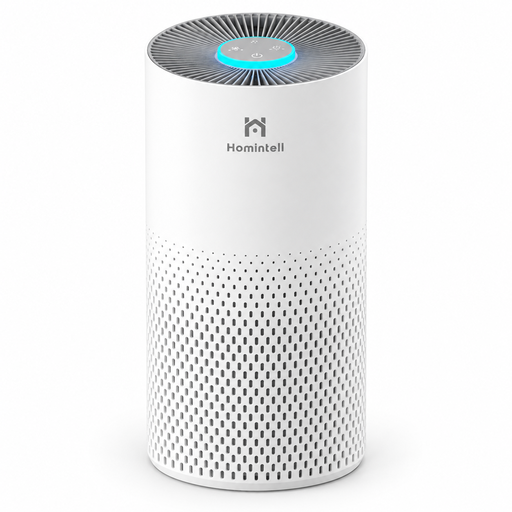
Why it suits this profile: This model is designed for smaller rooms of up to around 16–18 m² and offers straightforward controls with three speeds, a timer and a night light.
The stated CADR of 130–150 m³/h makes it clear that this is a model for smaller rooms, not an entire home.
3-in-1 filter with pre-filter, HEPA filter and activated carbon; 2-, 4- and 8-hour timer settings.
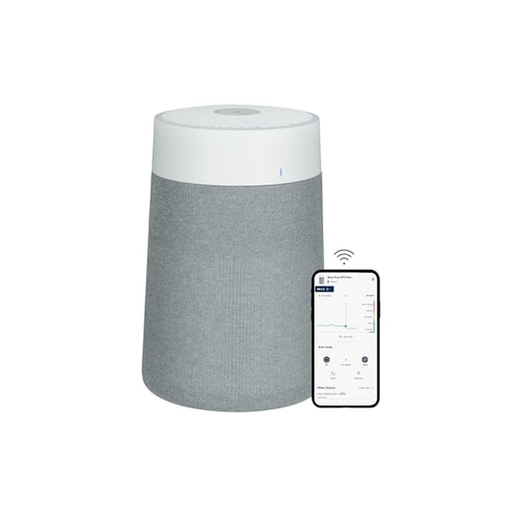
Why it suits this profile: For anyone who wants to combine quiet operation, smart controls and a compact design. The product information states a CADR of 212 m³/h and coverage of up to 43 m².
The lowest stated setting is 19 dB and the highest is 48 dB. This shows the difference between overnight use and maximum airflow.
HEPASilent filter technology according to the product information; control and air-quality monitoring via the Blueair app.
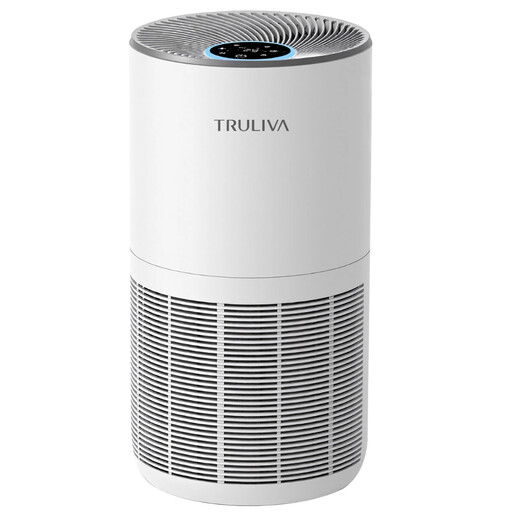
Why it suits this profile: The combination of a CADR of 450 m³/h, 360° air intake and PM2.5 display is well suited to larger living spaces, households with pets or intensive daily use.
The specifications state both a coverage area of 32–55 m² and a noise level of up to 66 dB(A). This allows you to weigh the room capacity against the noise produced at higher settings.
H13 HEPA and carbon filter; PM2.5 display, sleep mode, 24-hour timer and child lock.
We have put together a complete, up-to-date list of products that fully meet these strict selection criteria and the applicable European safety regulations.
An air purifier is not a substitute for ventilation. Continue to ventilate your home in line with UK conditions and address the source of smoke, moisture or dust wherever possible.
A model with a pre-filter and HEPA filter is designed, according to the product description, to filter airborne dust particles and pollen. Its effectiveness depends on the CADR, the size of the room, its placement and how long the device runs. An air purifier does not remove dust that has already settled on furniture or floors.
This varies depending on the model, how long it is used and the air quality. The product information for various models states a period of approximately 6 to 12 months. Always follow the filter indicator and the instructions. A saturated filter can restrict airflow.
Consumption depends on the rated power and the number of hours the device runs. A 25 W model running for 8 hours a day theoretically uses 0.2 kWh per day. The actual cost depends on your energy tariff and the selected fan speed. So, alongside the purchase price, also consider the wattage and the cost of replacement filters.
