
Vandaag of morgen in huis

Kwaliteit gegarandeerd
Download de app
Categorieën

The desire for cleaner air at home is a growing concern for many. Whether it's due to pollen during hay fever season, dust in an older house, or the presence of pets, indoor air quality is not always optimal. An air purifier can offer a solution, but the market is vast and specifications are often unclear, making it easy to make the wrong choice. This guide will help you understand the key specifications and find a model that fits your situation, cutting through the marketing jargon.
Before you make a choice, it's crucial to understand a few technical specifications. These determine the effectiveness of the device for your specific space and needs.
The CADR is the primary metric for an air purifier's capacity. This figure indicates how many cubic metres of clean air the device can deliver per hour. A higher CADR means the air in a room is purified more quickly.
How do you choose the right CADR? A general rule of thumb is that the air purifier should be able to completely refresh the air in the intended space at least two to three times per hour. You can estimate this using the following formula:
For an average bedroom of 15 m² with a ceiling height of 2.6 metres, the calculation is: (15 m² × 2.6 m) × 2.5 = 97.5 m³/h. Therefore, an air purifier with a CADR of 100 m³/h or higher is suitable here.
The heart of any air purifier is its filter. Most models use a multi-stage system:
No one wants a disruptive appliance in their home, especially not in the bedroom. The noise level, expressed in decibels (dB), is therefore a key factor. A quiet air purifier produces less than 30 dB on its lowest setting (sleep mode), which is comparable to a whisper. Pay attention to the noise level on the highest setting, as this determines how intrusive the device is when running at full power.
Consider where you will place the device. A compact model is ideal for an air purifier in the bedroom, while a larger living room will require a more powerful model. A smart air purifier with features like Wi-Fi control, an automatic mode (which adjusts fan speed based on measured air quality), and a timer can significantly enhance user convenience.
Based on the criteria above, we have selected a range of models with clear specifications for different applications.
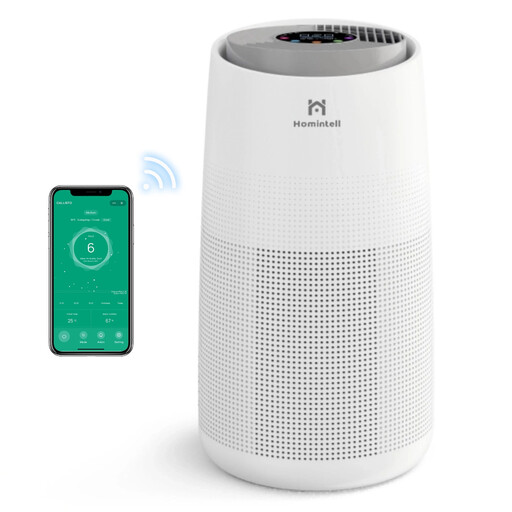
Why We Chose It This model offers an excellent balance between capacity and smart features. With a CADR of 300 m³/h, it's powerful enough for medium-sized living rooms or bedrooms. The combination of an H13 HEPA filter and additional features like UV sterilisation and an ioniser makes it a versatile choice.
Advantages:
Best For: Users looking for an effective air purifier for a living room, home office, or large bedroom. The smart features are ideal for those who value convenience and remote control. Suitable as an air purifier for dust and allergens thanks to its H13 filter.
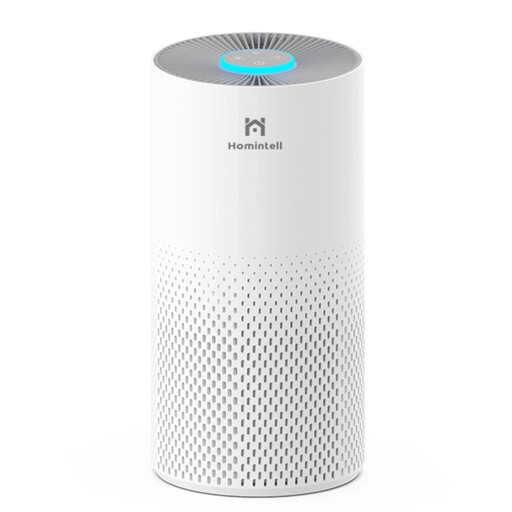
Why We Chose It The Homintell Kilo is a compact and user-friendly model designed for smaller spaces. It combines effective basic filtration with a few useful extras, such as ambient lighting.
Advantages:
Best For: This is an excellent choice as an air purifier for the bedroom, a child's room, or a small office. It's aimed at users who want a functional and affordable device without the complexity of smart features.
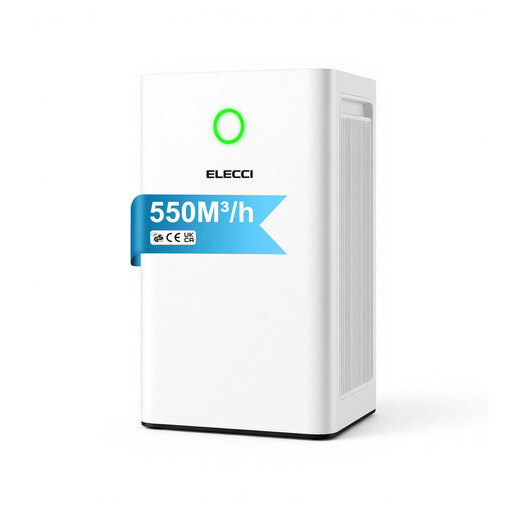
Why We Chose It This model is engineered for maximum performance in large spaces. Its very high CADR of 550 m³/h ensures rapid and thorough air purification in open-plan living rooms or office spaces.
Advantages:
Best For: Ideal for people with large, open-plan living areas or for situations where maximum air purification is required, such as for severe allergies or smoke removal. A great option as an air purifier for pets due to its high capacity to quickly filter dander and hair from the air.
Every space and need is unique. The models above are a selection based on common scenarios, but more configurations are available. For a broader overview of models with different capacities, filter types, and features, you can browse our full range of air purifiers.
1. How often should I replace the HEPA filter in an air purifier? A filter's lifespan depends on usage and the air quality in your environment. Generally, it is recommended to replace a HEPA filter every 6 to 12 months. Most modern air purifiers have an indicator that lets you know when it's time for a replacement.
2. Do air purifiers really help with hay fever and pet allergies? An air purifier with a HEPA filter is designed to capture very small particles from the air. This includes allergens like pollen, pet dander, and dust mite spores. By filtering these particles from the air, the device can help reduce indoor allergy symptoms.
3. Can an air purifier run 24/7? Yes, most air purifiers are designed for continuous operation. Models with an automatic mode adjust their performance as needed, so they only run on a higher setting when necessary. In sleep or low mode, energy consumption is typically very low.
Written by the Joybuy Product Recommendation Officer
Our recommendations are based on an analysis of product parameters and specifications to help you make an informed choice.