
Vandaag of morgen in huis

Kwaliteit gegarandeerd

Welkomstaanbiedingen ontgrendelen: GRATIS bezorging | Tot 80% korting | Gratis 30 dagen JoyPlus-proefperiode
Download de app
An air purifier can help filter airborne particles, dust and certain odours from indoor air. However, it is unwise to rely solely on terms such as “powerful”, “quiet” or “suitable for large rooms”. The main differences between models are their capacity, filter configuration, noise level and maintenance costs.
For homes in the Netherlands, three pitfalls are particularly relevant:
The CADR, or Clean Air Delivery Rate, indicates how much filtered air an appliance can deliver per hour. The value is expressed in m³/h. A higher CADR is generally suitable for a larger room or for situations where you want the air to be filtered more quickly.
Pay attention to how the manufacturer calculates the room size. For example, a model may be listed as suitable for 60 m² with one air change per hour, but for a smaller room with multiple air changes. Therefore, consider:
For an air purifier for large rooms, high air circulation is more important than a compact design. For a bedroom or home office, a lower CADR may be sufficient.
An air purifier with a HEPA filter uses a fine-mesh filter for small airborne particles. However, H13, H11 and brand-specific designations are not automatically comparable. Always check:
When a brand claims, for example, that 99.97% of certain particles are filtered, you should interpret this as a manufacturer’s claim under specific test conditions. According to the brand’s own research or test information, that result may apply to a particular particle size, airflow and filter configuration. It is not a guarantee of the same performance in every home.
An air purifier for allergies, dust or smoke can therefore be a practical addition to cleaning and ventilation, but it does not replace medical advice or necessary ventilation.
For a quiet air purifier, the lowest stated noise level is relevant, but you should also check the maximum. An appliance operating at 20 dB in sleep mode may be considerably louder at high speed.
A PM2.5 sensor measures fine particles in the air and can control an automatic mode. The displayed value indicates the air quality in the area around the appliance; it is not a complete measurement of the entire home.
A smart air purifier with Wi-Fi often offers app control, scheduling and filter-replacement notifications. Check in advance whether the app works with your network, whether an account is required and whether voice control is compatible with Alexa or Google Assistant.
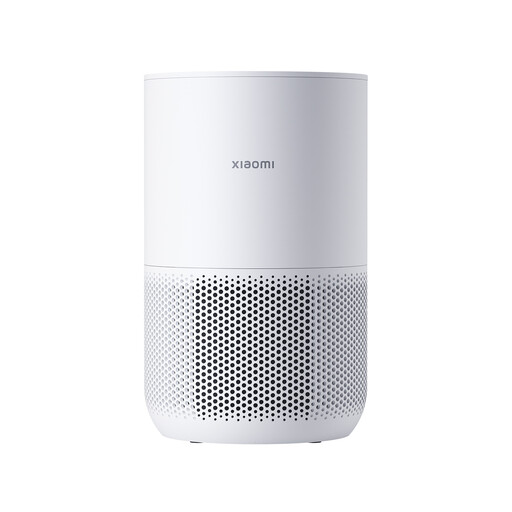
Why it suits this profile: This compact model has a CADR of 230 m³/h, 2.4 GHz Wi-Fi and a stated noise level of 18.3 to 47.4 dB(A). This makes it suitable for a bedroom, home office or smaller living space.
The CADR and noise levels are clearly stated. However, check the actual room size and allow for filter replacement after approximately 6 to 12 months, according to the product information.
Compact size, Wi-Fi connectivity, 230 m³/h particle CADR and a low stated noise level in quiet mode.
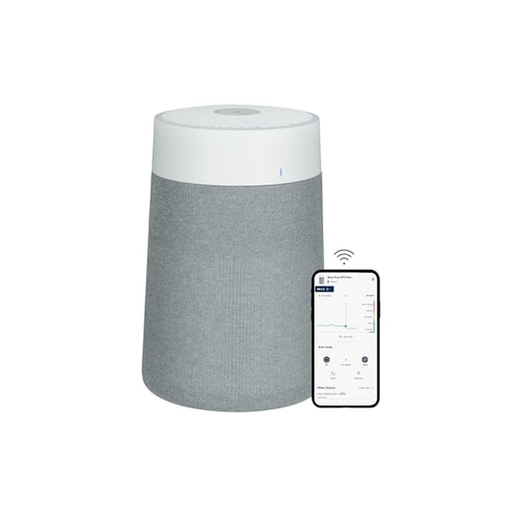
Why it suits this profile: The stated CADR is 212 m³/h and the manufacturer specifies a coverage area of up to 43 m². According to Blueair, HEPASilent technology combines mechanical and electrostatic filtration.
The product information specifies both the capacity and the noise range of 19 to 48 dB. This allows you to distinguish sleep mode from the higher fan speeds.
App control, night mode, 212 m³/h CADR and a supplied, pre-installed filter.
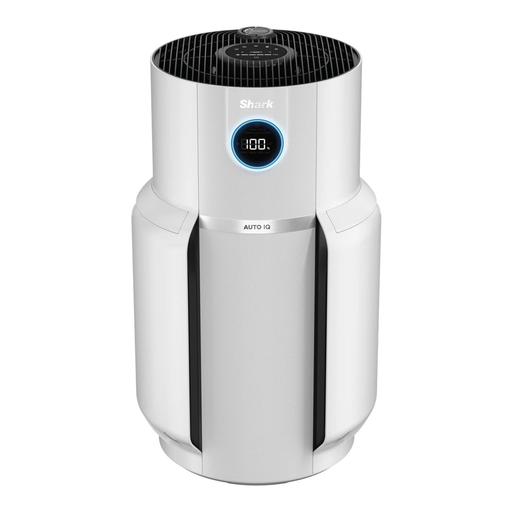
Why it suits this profile: This model is designed for larger spaces and uses a four-stage filtration system. The product information states a filter lifespan of up to five years, depending on use and conditions.
The manufacturer specifies different usage scenarios: up to 130 m² with one air change per hour and 28 m² with 4.8 air changes per hour. This prevents a single large area figure from being interpreted without context.
Auto IQ, an LED air-quality indicator, a stated noise level of 45 dB and a filter system with a claim of a long replacement interval.
Place an air purifier on a flat surface with plenty of clearance around the air inlet and outlet. Do not position the appliance directly behind a sofa, curtain or cupboard. In a bedroom, a spot some distance from the bed is often more practical than a bedside table, especially when the model draws air in from the top or sides.
Ventilation remains necessary to manage humidity and carbon dioxide. An air purifier does not remove moisture from a bathroom and is not intended for use in a damp environment. Regularly remove dust from the pre-filter and replace the main filter according to the instructions. Do not wash a HEPA or composite filter unless the manufacturer expressly permits it.
For pet owners, an air purifier for pets is particularly useful when the pre-filter captures hair and dander. The appliance does not automatically remove hair that is already on the floor, sofa or clothing. Regular vacuuming therefore remains part of the maintenance routine.
We have compiled a complete, up-to-date list of products that fully meet these strict selection criteria and the applicable European safety regulations.
That depends on the room, the filter and your intended use. Choose a low noise level at night, a suitable CADR and a sleep mode that dims the lighting. Do not position the appliance so close to your bed that the airflow becomes a nuisance.
The interval ranges from a few months to several years. Dust levels, pets, smoke and the number of operating hours all have an impact. Follow the filter indicator and, before buying, check whether replacement filters are available and how much they cost.
Consumption depends on the power draw and the speed used. An appliance rated at 20 to 60 watts uses less electricity when running continuously on a low setting than at maximum speed. An automatic mode can reduce consumption when the sensor detects few particles, but the actual cost depends on your energy tariff and usage pattern.
