
Vandaag of morgen in huis

Kwaliteit gegarandeerd

Welkomstaanbiedingen ontgrendelen: GRATIS bezorging | Tot 80% korting | Gratis 30 dagen JoyPlus-proefperiode
Download de app
An air fryer can be handy for cooking chips, vegetables, chicken, rolls and complete meals. However, not every model is right for every kitchen. A compact basket may be enough for one or two people, while a dual air fryer offers more flexibility for a family. If you’re looking for the taste and cooking method of traditional deep-fat frying, a classic deep-fat fryer may be a better choice.
So the most important question isn’t which air fryer has the most features, but which capacity, layout and controls suit the way you’ll use it.
A 9-litre air fryer may seem spacious, but on a model with two baskets, that capacity is split between two cooking zones. That’s useful when you want to cook two different dishes at the same time, but less suitable for one large item. So always check the capacity of each basket, not just the total number of litres.
A family air fryer usually needs a capacity of at least 5 litres to cook several portions. For larger households, a 9-litre air fryer or a model with two baskets is a sensible option.
Brands may make claims about using less oil, shorter cooking times or lower energy consumption. Treat this information as a claim from the manufacturer, rather than a result that applies in every situation. For example, according to Midea’s own information, its 4-litre air fryer can use up to 90% less oil. Philips states that the HD9270/00 can use up to 90% less oil. The final result depends on the dish, the quantity and the cooking method.
An oil-free healthy fryer also doesn’t guarantee that every meal will automatically be healthy. The ingredients and overall make-up of the meal still matter.
A basket that’s difficult to clean can quickly become a daily nuisance. Look for an air fryer with dishwasher-safe parts, a removable pan and a good-quality non-stick coating. Also check how much clearance the appliance needs around it. Many models require around 10 centimetres of ventilation space; some instructions recommend leaving more distance from combustible materials.
An air fryer with dual baskets usually offers independent temperature and time settings. A feature such as Sync Finish lets both cooking zones finish at the same time. This is particularly useful when ingredients have different cooking times.
A higher wattage doesn’t automatically mean lower energy consumption. The wattage mainly indicates how much electricity the appliance can draw while in use. Overall running costs depend on the cooking time, temperature, amount of food and how often you use the appliance.
Look for:
A digital air fryer is handy if you often use different settings. A simpler model with a dial may be easier to use every day.
An air fryer with a viewing window lets you check on your food without opening the basket fully. This can be useful for dishes where you want to keep an eye on how brown they’re getting. However, a viewing window doesn’t replace checking the cooking time and temperature.
Also check which parts the manufacturer specifically lists as dishwasher-safe. The main unit, plug and cord must not be submerged in water.
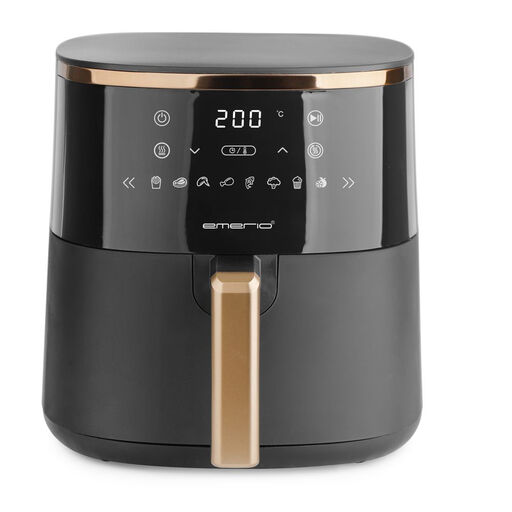
Why it suits this profile: A straightforward model for smaller households and everyday use, without a dual cooking zone or a bulky design.
Its 4.2-litre capacity is clearly specified. The dishwasher-safe basket and temperature range of 60 to 200 °C make the essentials easy to assess.
Digital controls, timer, dehydrating function, non-stick basket and 1450-watt power.
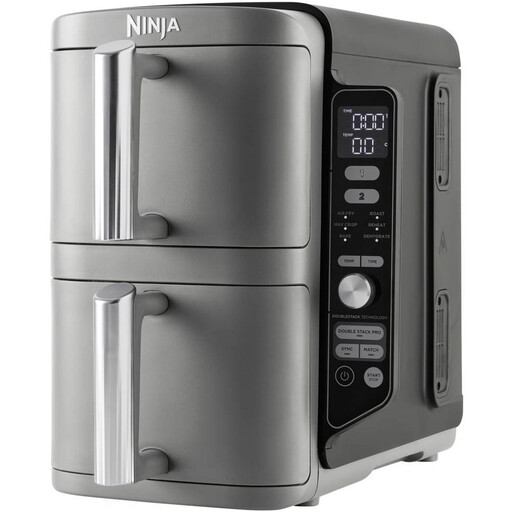
Why it suits this profile: Suitable for households that want to cook two dishes at once and have limited worktop space in terms of width.
The two independently controlled drawers mean you don’t have to cook all the ingredients at the same temperature and for the same length of time. Check that its height of 38.5 cm fits beneath your cupboards.
Two 4.75-litre drawers, six cooking functions, Sync function and dishwasher-safe parts.
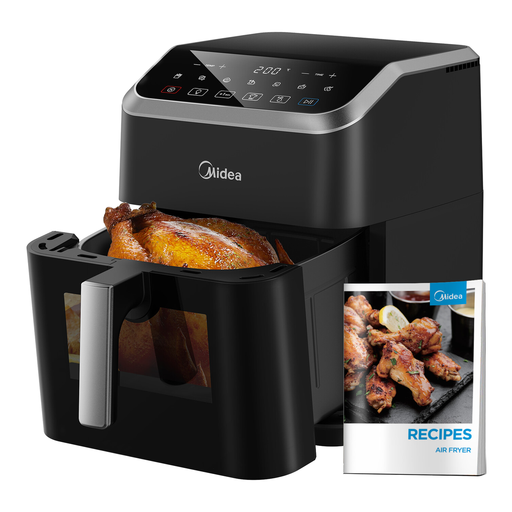
Why it suits this profile: A spacious air fryer for families cooking larger portions who want to keep an eye on their food as it cooks.
The 7-litre capacity and viewing window make it easier to assess the practical capacity and monitor cooking than with a fully enclosed basket.
Seven-litre capacity, illuminated viewing window, seven programmes and manual time and temperature settings.
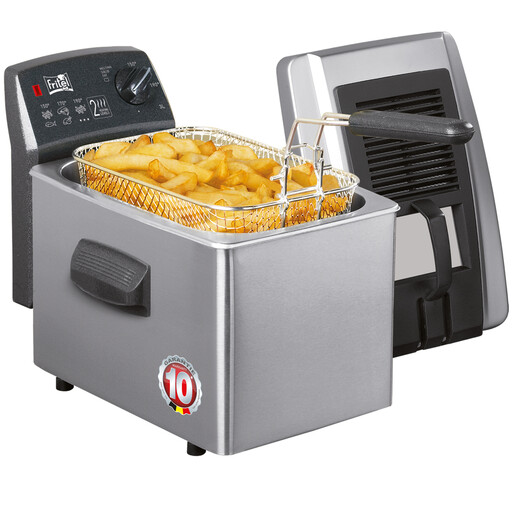
Why it suits this profile: For anyone who specifically wants to fry with oil or solid fat and isn’t looking for an air fryer.
This isn’t an air fryer, but a classic deep-fat fryer with a clearly specified 3-litre capacity and an adjustable temperature range of 150 to 190 °C.
2400 watts, viewing window, permanent metal filter and removable parts that, according to the product information, are dishwasher-safe.
We’ve put together a complete, up-to-date list of products that meet these strict selection criteria and the applicable European safety regulations.
Place the air fryer on a flat, heat-resistant surface and don’t block the air inlet or outlet. Keep children away from the appliance while it’s in use and immediately afterwards. The basket, steam and exterior can become hot.
Also bear these points in mind:
For two to four people, around 5 to 7 litres is often practical. For larger families, a dual air fryer with a capacity of 9 litres or more may be more convenient. Always check the capacity of each basket and allow enough room for the ingredients to circulate properly.
That depends on the model, cooking time, temperature and amount of food. A smaller air fryer doesn’t need to heat the entire oven cavity, but wattage and running time together determine energy use. So compare not only the power in watts, but also the actual cooking time.
Its lifespan depends on how it’s used and cleaned, as well as the quality of parts such as the basket, coating and heating element. Follow the care instructions, avoid overloading it and replace damaged parts if the manufacturer makes them available. In the European Union, statutory guarantees also apply under the relevant consumer rules; if there’s a fault, you can contact the retailer.
