
Households with several seats on the sofa
You want to spread the airflow across the shared seating area rather than direct it at one fixed spot. The Consumers’ Association notes that a table or desk fan is primarily designed for one person.


For seating shared by several people, an air circulator with adjustable oscillation is a handy choice. If you’d rather not have a constant breeze blowing across the sofa, choose a model that directs air upwards or indirectly. Check the noise level at the setting you’ll use, and make sure the unit can stand securely out of the way. A fan moves air around, but it does not replace a supply of fresh air.
You want to spread the airflow across the shared seating area rather than direct it at one fixed spot. The Consumers’ Association notes that a table or desk fan is primarily designed for one person.
You want to choose how the air moves during conversations or while watching TV, without constantly feeling a direct breeze. Check the noise level at the setting you’ll use and from the distance you’ll be sitting; the Consumers’ Association measures fan noise at different speeds and distances.
You need to weigh up placement, coverage, stability and keeping the walkway clear. The Consumers’ Association recommends placing a fan somewhere stable, as residents, visitors or pets could knock it over.
Choose this when: airflow is mainly needed for one seat and there’s a stable piece of furniture at a suitable height.
Bear in mind: a table model takes up less floor space, but the Consumers’ Association says it is primarily designed for one person.
Choose this when: several people sit in different places and you want the airflow to move between them automatically.
Bear in mind: check each model’s oscillation directions, lowest setting and footprint.
Choose this when: you want air to move around the lounge without a constant breeze blowing directly across the sofa.
Bear in mind: manually directing air upwards is different from automatically distributing it across several seats.
For a shared seating area, your choice mainly comes down to how the airflow is distributed, noise at the setting you’ll use, indirect airflow and finding a stable spot out of the way.
| What to consider | What should you check? | Who is this important for? |
|---|---|---|
| Distributing airflow across several seats | Check whether the head oscillates horizontally and, if applicable, vertically. Also consider how the airflow will reach the sofa from the spot where you plan to place it. | If several people sit in different places, I want the airflow to move around the seating area. Around 36% of consumers put coverage across the seats first. |
| Noise during conversations or while watching TV | Compare noise and airflow at the same setting and distance. A minimum noise figure alone won’t tell you what the unit sounds like when you need more airflow. | If I don’t want fan noise to drown out conversations or the TV, I look at the setting I’d actually use. Around 29% of consumers prioritise being able to talk comfortably. |
| Air movement without a constant direct draught | Check whether the head can be angled upwards or oscillated. Indirect airflow doesn’t give you the same focused breeze as air directed straight at the sofa. | If I want the air to move without sitting directly in its path all the time, indirect airflow matters more to me. Around 21% of consumers prioritise this. |
| Placement and stability | Measure the available floor or furniture space and choose a stable spot. A narrower model isn’t automatically more stable. | When space is limited and I need to keep the walkway clear, I want somewhere the unit can stand securely. Around 14% of consumers put compact, stable placement first. |
A fan moves air, which can make you feel cooler, but it doesn’t lower the air temperature. Air circulation also doesn’t bring in fresh air or remove polluted air.
Choose a fan to move air around the sofa, and manage temperature and ventilation separately.
Noise and airflow vary depending on the setting and distance. A minimum figure therefore won’t tell you what the unit sounds like at the setting you need.
Assess the noise alongside the useful airflow at the distance between the fan and the sofa.
Visitors, children or pets could knock the unit over too; its height or shape alone doesn’t guarantee stability.
Check the available space and place the model somewhere stable.
The Vento 3D Silent Comfort Black is an example of a model for anyone looking for automatic horizontal and vertical oscillation in the seating area.
The F220 is designed for buyers who want to direct the airflow upwards manually.
The 2000 Series CX2050/00 table fan is an option when just one seat needs localised airflow.
The Globe is another option if you want to consider noise levels at both low and high settings.
This selection includes pedestal models with automatic oscillation to move airflow around a shared seating area, as well as a compact desk model for localised airflow.
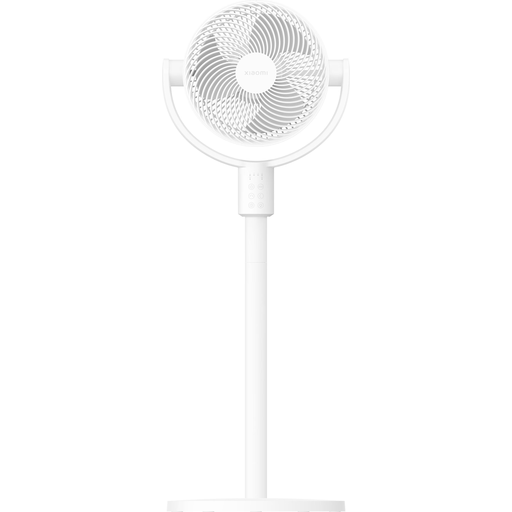 No image available
The title mentions 3D automatic oscillation and adjustable height, which may suit anyone who wants airflow to move between several seats.
The title lists app control, 2 modes and 100 speeds, as well as an airflow of 1440 m³/h and a range of 13 m. It also states 28 dB for sleep mode.
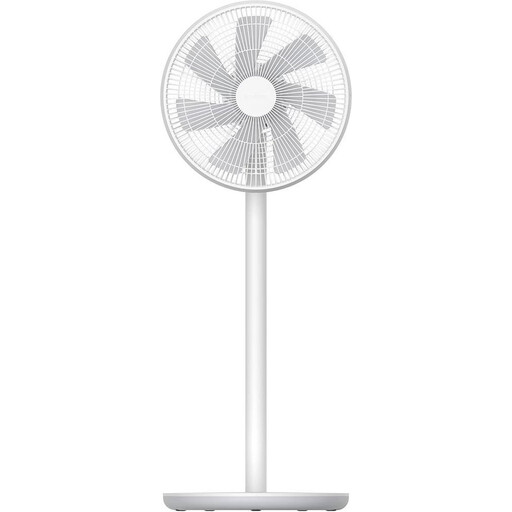 No image available
This pedestal model may suit you if you want to adjust airflow in the seating area; the product information mentions automatic oscillation and use as either a table or floor fan.
The title lists app control and 100 speeds. The product information mentions natural and direct airflow, as well as adjustable height. The instructions say to place the fan on a stable, level surface.
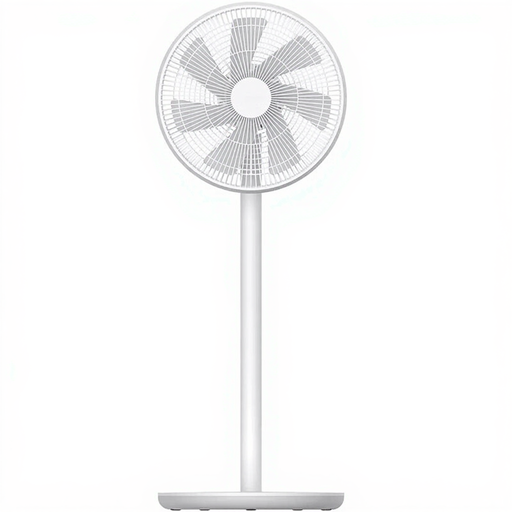 No image available
The title mentions adjustable height and 90° oscillation, features to consider if you want to direct airflow around the sofa and move it between seats.
The title lists app control, 7 blades and an airflow range of 12 m.
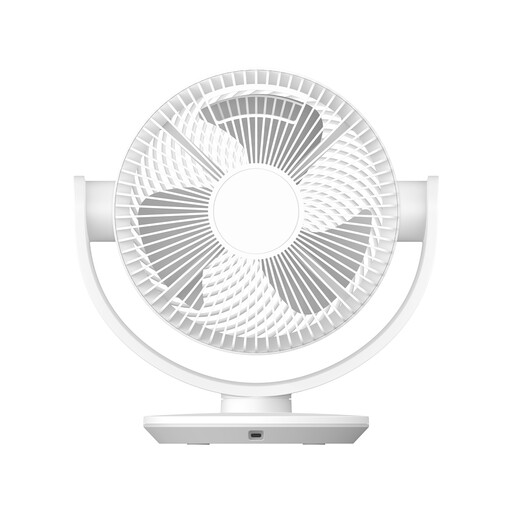 No image available
If just one spot beside the sofa needs airflow, a desk model may be suitable if you have a stable, suitable surface to put it on.
The stated dimensions are 324 × 200 × 334 mm and the stated weight is 2,0 kg. Any table or furniture surface you use should be stable.
No. An air circulator moves air around the room, while ventilation brings in fresh air and removes polluted air. Make sure you have a suitable supply and extraction of air separately.
Place the fan somewhere stable where residents, visitors or pets are unlikely to knock it over. Follow the instructions for the exact model when opening and cleaning it; Duux provides separate maintenance instructions for the Globe.
If a product is faulty, contact the seller about your statutory warranty; in the Netherlands, there is no fixed statutory warranty period. For distance purchases, you usually have a 14-day cooling-off period. Check the terms that apply to your purchase.
Check the product information and the seller’s details. The European Commission explains that CE marking is only required for products covered by the relevant harmonised EU rules; a CE logo alone doesn’t prove that the product has been tested by a central EU authority.