
People with a regular seat
You want to direct and adjust the airflow around your own chair, without automatically affecting the whole room.


If you want airflow directed at one chair, an adjustable desk fan is a good option if you have a sturdy raised surface to put it on. Choose adjustable oscillation if you want the airflow to reach other seats too. Compare noise and airflow at the setting you’ll actually use: the Consumentenbond treats these as separate factors to consider. A fan circulates air, but it doesn’t replace ventilation that brings in fresh air, as the Dutch government also points out.
You want to direct and adjust the airflow around your own chair, without automatically affecting the whole room.
You want useful air circulation that won’t unnecessarily disturb conversations or other people with noise or a constant draught.
You need to find a spot where the appliance won’t obstruct the walkway and can stand securely beside the chair.
First decide whether you mainly need airflow at one chair or want it to reach other seats too. The Consumentenbond considers air circulation, noise, stability and ease of use separately.
| What to consider | What should you look for? | Who is this important for? |
|---|---|---|
| Airflow at your seat | Check the positioning height, tilt adjustment and speed settings. | If I mainly want to feel a breeze at my chair and be able to direct it away from faces or papers, adjustable airflow suits my needs; around 33% of consumers put this at the top of their list. |
| Keeping others comfortable | Compare noise and airflow at the same usable setting, and check whether oscillation is adjustable. | If people need to talk or read in the same room, I want to minimise noise and a constant draught, even if the airflow isn’t always directed at my chair; around 27% of consumers prioritise this. |
| Space and stability | Measure the available space and check the base, cable routing and airflow height. | If my seating area is compact, I want to position the appliance securely without obstructing the walkway; around 20% of consumers choose this as their main consideration. |
| Controls for longer use | Check whether you can reach the controls from your chair and compare the stated power at the setting you need. | If the fan will be on often, I want to adjust the airflow easily and take its energy use into account; around 20% of consumers put these practical features first. |
Moving air around won’t, by itself, remove stale air from a busy lounge.
Consider air movement at the chair and ventilation for the room as two separate needs.
A stated quiet setting and maximum air speed may refer to different settings. In that case, you can’t compare them as if they were achieved at the same time.
Compare noise and airflow at the setting you’d actually use in the lounge.
A desk fan may blow too low if placed on the floor. An appliance in a walkway needs to be stable, with its cable routed safely.
Decide in advance what surface you’ll use, the airflow height you want and how much floor space the base will need.
Being able to direct the fan manually doesn’t mean it will turn automatically. Duux says the battery for the Duux Whisper Flex² Smart is optional.
Check the features and box contents for the exact version.
A battery sold separately may cost extra.
The Turbo Silence Compact QV2540F1 is a desk fan worth considering if you want both horizontal and vertical oscillation.
The Whisper Flex² Smart can be adjusted in height for use on a table or on the floor.
The CX2050/00 is a desk fan to consider if you want to direct airflow at one chair.
This selection includes height-adjustable pedestal air circulators and a desktop model for use on a raised surface. Choose based on the space available and the airflow you want at your chair.
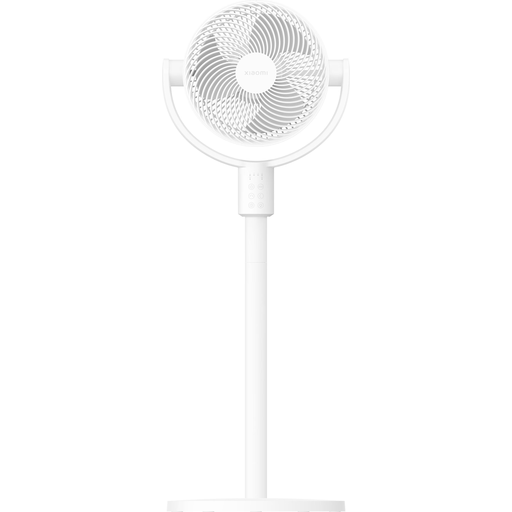 No image available
The height adjustment and automatic oscillation may suit you if you want to direct airflow at one chair or distribute it across several seats.
The product title lists 3D automatic oscillation, 100 speeds, 2 modes, app control and a DC inverter motor. It also mentions 1440 m³/h, 13 m, 28 dB and a Quiet Sleep Mode; check the conditions behind these figures before comparing them.
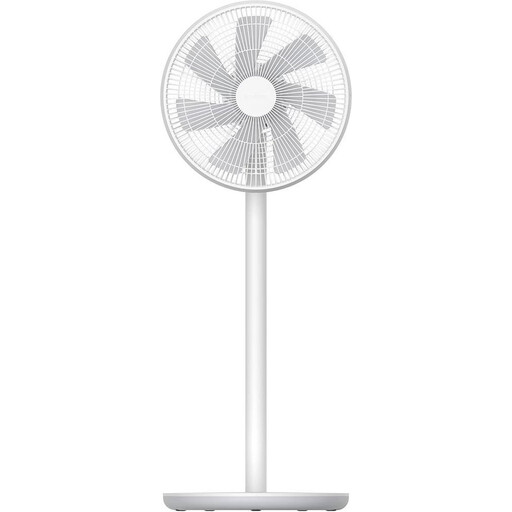 No image available
According to the product description, this model is designed for use on a table or on the floor, so you can choose the set-up that suits your available space.
The description lists automatic oscillation, height adjustment, 100 speeds, app control and a DC motor. The title mentions 7+5 dual blades.
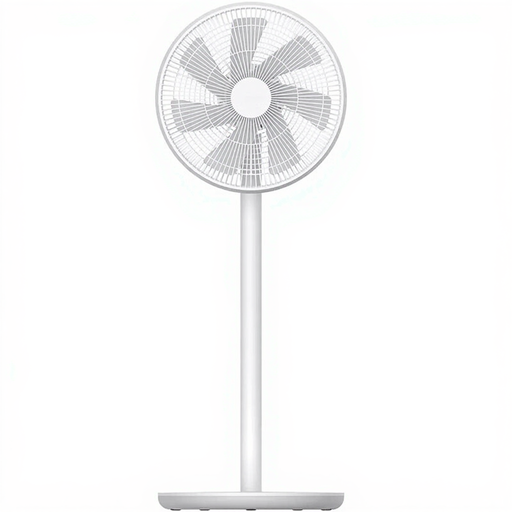 No image available
The height adjustment and 90° oscillation may suit you if you want to direct airflow at your chair and distribute it across several seats too.
The product title lists app control, 7 blades and an airflow distance of 12 m.
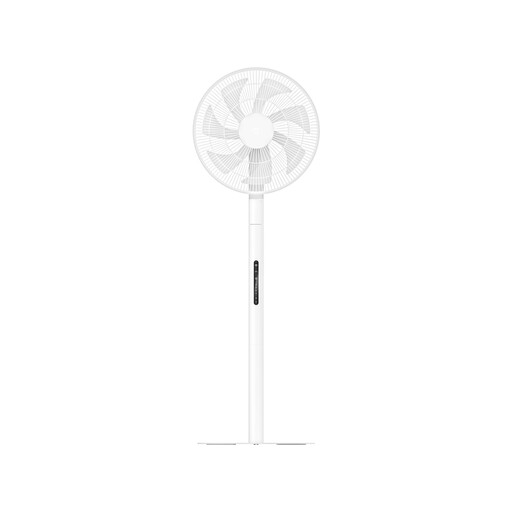 No image available
The pedestal design may suit you if you want to direct airflow at your chair and value remote control.
The product title lists control via app, remote control or touch, a DC inverter motor and an airflow distance of 14 m. According to the title, the model supports portable charging via Type-C.
 No image available
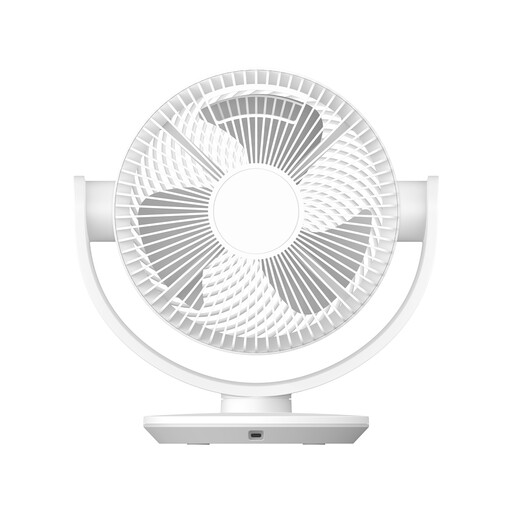
This desktop model may suit you if there’s a suitable raised surface beside your chair.
The product description lists 18 W, a noise level of ≤60 dB(A), a 1,8 m cable and dimensions of 324 × 200 × 334 mm.
No. A fan moves air around, but ventilation requires fresh air to be brought in and stale air to be removed. For shared spaces, the Dutch government recommends suitable building ventilation.
Place the appliance securely on a suitable raised surface and direct the airflow at seated height. The Consumentenbond notes that a desk fan placed on the floor may direct airflow too low. Remember to allow for the walkway and the cable too.
Multiply the power in kW at the setting you use by the number of hours it’s on to estimate consumption in kWh. Then multiply that figure by your own rate per kWh. Milieu Centraal points out that a fan doesn’t lower the air temperature, although the airflow can make you feel cooler.
CE marking is required for an electric air circulator marketed in the Netherlands as an electrical consumer product. Any additional technical rules depend on the model and its power supply, so check the marking on the exact model.
Your statutory guarantee lasts for as long as you can reasonably expect the product to last with normal use; any commercial warranty is separate. For an online purchase, you generally have 14 days from delivery to change your mind, subject to statutory exceptions. Check the terms for the specific purchase.