
Anyone who wants to work quietly at a shared desk
You want a gentle breeze while you work or read, without the noise dominating the shared space. Compare the noise at a usable setting, not just the lowest stated figure.


For airflow around a single desk, a tiltable tabletop model is a good fit. If you want air to circulate around several seats, a model with oscillation is the more logical choice. Compare the noise at the setting you’ll actually use, and make sure the airflow in a shared space doesn’t blow directly from one person to another. A fan moves air, but it doesn’t replace ventilation with outdoor air.
You want a gentle breeze while you work or read, without the noise dominating the shared space. Compare the noise at a usable setting, not just the lowest stated figure.
You want to direct the airflow with other people in mind. In a shared space, it’s important that the fan doesn’t blow directly from one person to another.
You want targeted airflow without sacrificing unnecessary desk or floor space. Compare the footprint of tabletop models with the space available next to your desk.
Choose this when: you mainly want airflow around one desk and can direct the head away from other people. Philips lists three speeds, a timer and a tiltable head for the CX2050/00.
Consider: a directional airflow won’t automatically circulate air around several seats.
Choose this when: you want air to circulate around several places by the desk and in the lounge. Eurom lists oscillation in both directions and eight speeds for the Vento 3D Silent Comfort.
Consider: the wider airflow may reach other people too; check that the 26 × 27 cm base will fit where you plan to put it.
Choose this when: you want to direct airflow across part of the seating area at intervals. Rowenta lists 120° of automatic oscillation for the VU2740.
Consider: according to Rowenta, the stated 32 dB(A) applies only at the lowest speed.
Choose this when: you want to keep your desk clear and circulate air across a larger part of the lounge. Duux describes the Whisper Essence as a pedestal model about 1 metre tall, with horizontal oscillation.
Consider: allow for the floor space it needs, and make sure the base and cord are safely positioned.
| Buying concern | What should you look for? | Who is this important to? |
|---|---|---|
| Noise at a usable airflow setting | Where possible, compare the noise level for each setting. A minimum figure doesn’t automatically apply to more powerful settings. | If I want to work or read quietly, I need to know how loud the fan is at the setting I need. Around 31% of consumers prioritise noise at a usable airflow setting. |
| Direction and airflow distribution | Decide whether a tiltable head will do, or whether you need horizontal and vertical oscillation. Choose a position where the airflow won’t blow directly from one person to another. | If I want to circulate air around several seats, the direction needs to take other people into account. Around 31% of consumers prioritise airflow distribution. |
| Footprint and safe positioning | Measure the available space and check the base dimensions, cord length and clearance for a swivelling head. | If there’s little space around my desk, I need to know where the base and cord can go without getting in the way of my workspace or a walkway. Around 25% of consumers focus mainly on the space required. |
| Power consumption and running time | Check the power rating of the exact model. To calculate running costs, you’ll also need the number of hours it’s used and your electricity tariff. | If I use the fan regularly, I want to take its power consumption into account when working out running costs. Around 13% of consumers prioritise these costs. |
A fan moves air, but it doesn’t replace indoor air with outdoor air. The RIVM makes the same distinction for fans and air conditioners.
Arrange ventilation separately, for example through a vent, window or mechanical system. In a shared space, don’t direct the airflow from one person towards another.
The setting you need to get the airflow you want may not be the lowest one. According to Rowenta, the stated 32 dB(A) for the VU2740 applies at the lowest speed.
Where possible, compare noise and airflow at the same usable setting.
According to the Consumentenbond, the number of settings says little about maximum airflow or the difference between the lowest and highest settings.
Consider the airflow and adjustability you need, and bear in mind where the fan will be positioned.
The CX2050/00 is a tabletop model that directs airflow around a desk.
The Vento 3D Silent Comfort Black is a compact option with horizontal and vertical airflow distribution.
The VU2740 is a tabletop model with automatic horizontal oscillation.
The Whisper Essence is a pedestal alternative if you want to keep your desk clear.
The Joybuy products below range from personal desk fans to pedestal models and a box fan. Check that each model’s intended use and space requirements suit your shared lounge.
 No image available
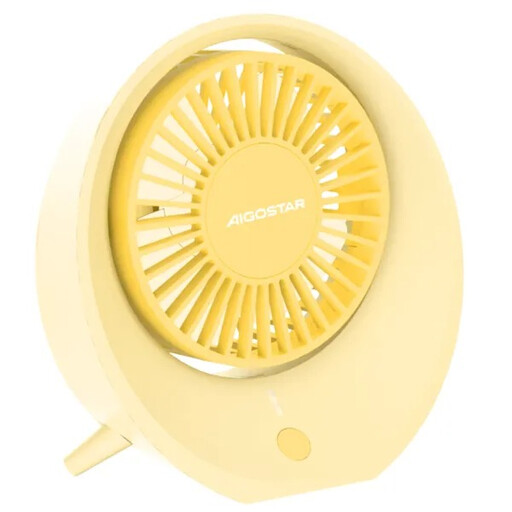
The clip is designed to provide airflow at a desk; the stated coverage area is 2 m².
The description lists three speeds and a built-in rechargeable battery.
 No image available
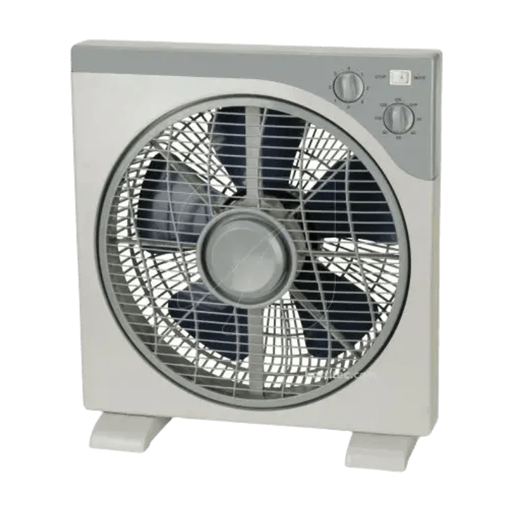
The stated uses include indoor gardening and greenhouse ventilation; consider whether these suit your space.
The product information lists a 30 cm fan blade, a digital thermostat and a 32 W motor. The description excludes commercial use.
 No image available
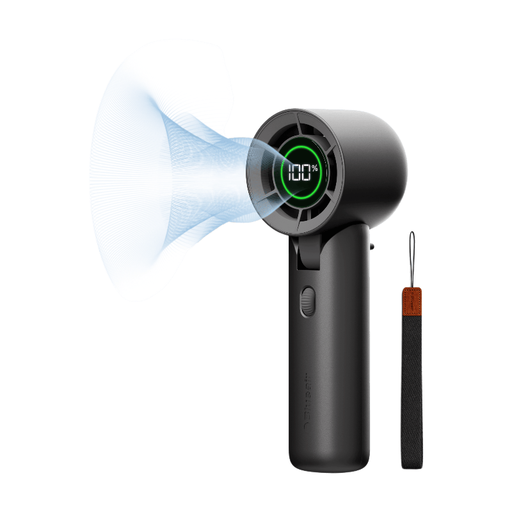
The title and description present this as a personal handheld fan for use at places such as a desk.
The stated dimensions are 19 × 7 × 6,5 cm and the weight is 0,3 kg. The description lists a head that tilts up to 75° and adjustable speeds.
 No image available
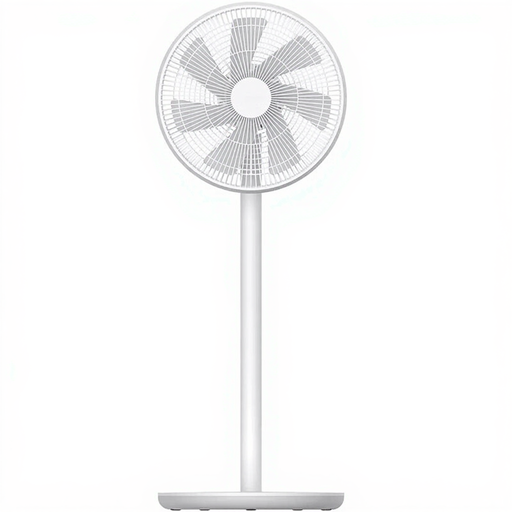
A pedestal model can keep your desk clear; check that the base fits in your chosen spot and that oscillation won’t create an unwanted airflow.
The title lists 90° oscillation, adjustable height, app control and seven blades. The stated airflow reaches up to 12 m.
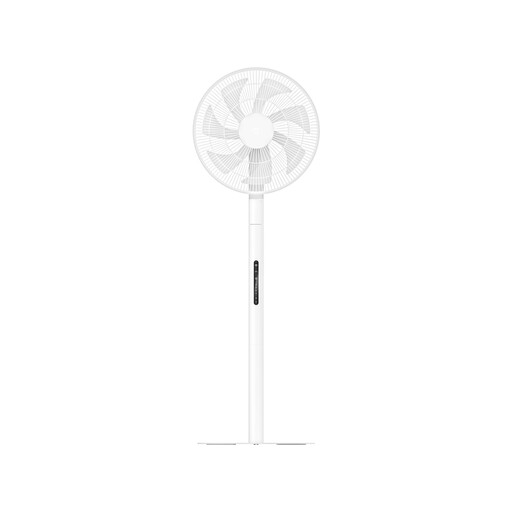 No image available
This pedestal model can keep your desk clear; allow for the available floor space and the direction of the airflow when positioning it.
The description lists airflow reaching up to 14 m and 100 speed levels. The title mentions a DC inverter motor, Type-C charging support and control via app, remote control and touch panel.
No. According to the RIVM, a fan moves air but doesn’t replace indoor air with outdoor air. Arrange ventilation separately, for example through a vent, window or mechanical system.
Choose a stable spot with enough room for the base, cord and any oscillation. The RIVM advises avoiding airflow from one person towards another when you have guests, so position the fan with everyone in mind.
Multiply the power used in kW by the number of hours it’s used, then multiply that figure by your tariff per kWh. Where possible, use the power rating for the setting you’ve chosen. Without the hours of use and your tariff, you can’t work out your personal running costs.
No. For electrical and electronic equipment covered by EU rules requiring CE marking, the manufacturer is responsible for compliance and the marking. According to the European Union, no central EU body issues a general CE certificate.
According to ACM ConsuWijzer, a product must do what you can reasonably expect of it under normal use. If a product is faulty, the seller must resolve the problem under the statutory guarantee rules; there isn’t one fixed guarantee period for every purchase.