
Vandaag of morgen in huis

Kwaliteit gegarandeerd

Welkomstaanbiedingen ontgrendelen: GRATIS bezorging | Tot 80% korting | Gratis 30 dagen JoyPlus-proefperiode
Download de app
Having a conversation in another language, following an international meeting, or asking for directions while travelling – AI translation earbuds can help. However, not every model is automatically suitable for real-time translation. Some products use the term “AI” mainly as a marketing label, while the translation function depends on a smartphone app, an internet connection, or a specific language selection.
So pay attention to the technology behind the product, not just the number of languages mentioned. Below, you’ll find out which features matter, which pitfalls are common, and which type of Bluetooth translation earbuds suits your needs.
A translation headset for 150 languages sounds versatile. In practice, support can vary from one language to another. Think about differences between spoken translation, text translation, offline use, and app-based translation. So check:
With models like the VoxorAI M76 and XH12, the product description mentions support for around 150 languages. That’s a specification from the supplier; before you buy, check in the accompanying app which features and languages are available on your phone.
Real-time translation earbuds usually process speech through a paired smartphone. A stable Bluetooth connection is therefore important, but Bluetooth itself doesn’t translate languages. The app and any online service carry out the translation.
Background noise, fast speech, dialects, and several people talking at once can affect clarity. So treat the earbuds as a communication aid, not as a replacement for a professional interpreter in legal, medical or other critical conversations.
A flat battery during a connection or meeting is inconvenient. Pay attention to the difference between the earbuds’ playtime and the total usage time with the charging case. VoxorAI M76 and XH12 models mention around 5 to 7 hours of playtime and a 300 mAh charging case. Other models may offer a longer total usage time, but don’t always have the same translation capabilities.
For wireless translation earbuds, a recent Bluetooth version is practical. According to the product specifications, the VoxorAI M76 and XH12 use Bluetooth 5.4. The HTC NE20 also uses Bluetooth 5.4, while the HTC NE40 mentions Bluetooth 6.0.
A higher Bluetooth version is no guarantee of better translation. Also check whether the model works with your Android or iOS device, and whether the translation app is available on your phone.
Earbuds with a built-in microphone are important for phone calls and voice recognition. For lessons, business and travel, a good fit is also relevant. In-ear models seal the ear canal more, while open-ear or bone-conduction models can let ambient sound through more clearly.
The Sanag S7S is an open-ear bone-conduction headset. According to the product description, this model supports Open AI Translation. The open design may suit cyclists, walkers, or users who want to stay aware of their surroundings. However, check in advance exactly how the translation function is activated.
An IPX5 rating, such as that mentioned for the MINISO MS106, offers protection against water jets under certain test conditions. This doesn’t mean you can submerge the earbuds. Only charge a wet device when it is completely dry, and always follow the instructions.
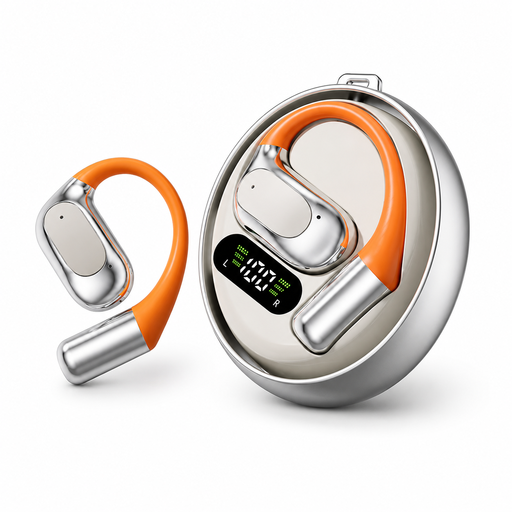
Why this fits the profile: This in-ear model is aimed at study, travel and business use. Touch controls and Bluetooth 5.4 make it suitable for anyone wanting to try out a compact system.
The description specifically mentions the app pairing, around 150 languages, a playtime of 5 to 7 hours, and a charging case. Do check your desired languages in the app.
Bluetooth 5.4, touch controls, in-ear design, around 150 languages mentioned, and a 300 mAh charging case.
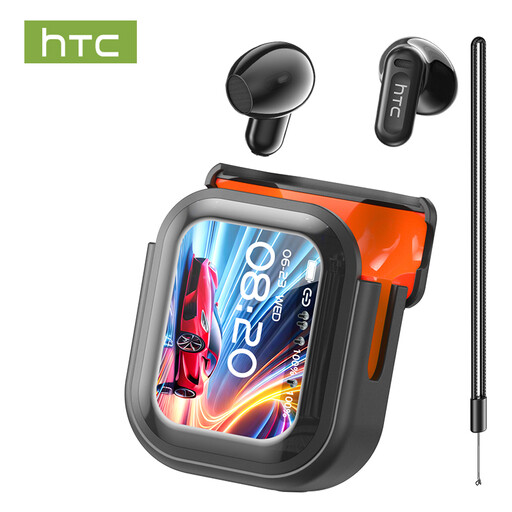
Why this fits the profile: This TWS model combines translation support with music, phone calls, and everyday use in the office or during study.
The product information states that translation is selected via a compatible mobile app. This makes it clear that the app is part of the setup.
Bluetooth 5.4, LED display on the charging case, touch controls, built-in microphone, and a water-resistant design according to the description.
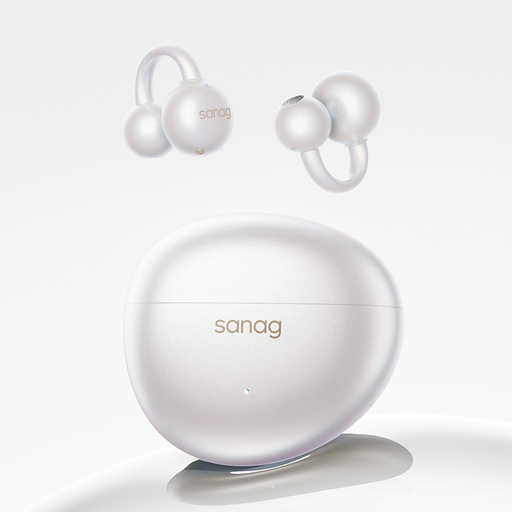
Why this fits the profile: The open-ear bone-conduction design is intended for sport, outdoor use, and situations where you want to stay aware of ambient sound.
The open construction means you don’t rely solely on sound isolation. For translation, you’ll need to check which app, languages and connection requirements are supported.
Open-ear bone-conduction design, Bluetooth connection, and a feature described in the product specifications as Open AI Translation.
We’ve put together a full, up-to-date list of products that fully meet these strict selection criteria and comply with current European safety regulations.
Use a normal volume level and clean the earbuds with a dry cloth. Avoid prolonged exposure to moisture, heat and extreme temperatures. For models with a water resistance rating, the manual remains the definitive guide.
That varies by product. Many Bluetooth translation earbuds use a smartphone app for language selection and processing. So check whether offline translation is explicitly mentioned. If it isn’t, assume app use and possibly an internet connection.
The usage time varies by model, volume and translation function. The VoxorAI M76 and XH12 mention around 5 to 7 hours of playtime. A charging case can provide extra charges, but the total duration depends on usage.
Yes, they can be practical for conversations, lessons and phone calls. Check the languages you need, the microphone function, app compatibility and privacy terms in advance. For important contracts or official communication, human review remains advisable.
