
Festival-goers who want to eat straight away
If you want to share bread without having to slice or bake it on the spot, look for individual rolls or flatbread that’s ready to eat. Check how many portions you can serve, too.


If you want to serve bread at a street festival straight away, choose rolls or shareable flatbread that’s ready to eat. A whole or half loaf works well when you have enough people to feed and can slice it. Whichever type you choose, compare the amount with what you’ll actually need, as leftovers can make a seemingly cheap purchase less worthwhile.
If you want to share bread without having to slice or bake it on the spot, look for individual rolls or flatbread that’s ready to eat. Check how many portions you can serve, too.
If you’re buying for several people, choose a size that matches how much you expect them to eat. Compare whole and half loaves on the same price basis, and check how many rolls are in each pack.
If wholegrain is one of your selection criteria, check the product description and ingredients. Check the allergens on the packaging or ask about them before buying unpackaged bread.
First, decide whether the bread needs to be ready to eat straight away. Then choose an amount that suits your group and check any product information that matters to them.
| What to consider | What to check when buying | Who it matters to |
|---|---|---|
| Cost for the group | Compare like for like, and check how much bread or how many rolls are in the pack. | When I’m buying for a group, I want to pay for bread that will actually be eaten. For around 29% of consumers, the total cost comes first. |
| Ready to serve | Check how many pieces are included and whether you’ll need to slice or bake them. | At the festival, I want to serve bread without needing a knife or oven. Being able to share and eat it straight away matters most to around 29% of consumers. |
| Cutting down on leftovers | Choose a size that matches how much you expect people to eat, and decide in advance what you’ll do with any leftover bread. | I don’t want to be left with more fresh bread than I can use after a day at the festival. Around 21% of consumers give reducing leftovers top priority. |
| Wholegrain and ingredients | Read the product description and ingredients, and check the allergens for each type of bread. | If wholegrain or a particular ingredient determines my choice, I want to be able to check before serving. For around 21% of consumers, this comes first. |
A half loaf, a whole loaf and a pack of rolls don’t contain the same amount. So the price per item tells you little about how much your group is getting for its money.
Compare whole loaves by price per kilo when the weight is available. For rolls, check how many you can serve, too.
A larger size won’t help your budget if some of it goes uneaten and dries out or spoils.
Buy for the group you’re expecting. The Netherlands Nutrition Centre recommends freezing bread in portions as soon as you buy it if you plan to use it later.
Bake-at-home rolls aren’t automatically ready to eat at the festival. For example, PLUS provides baking instructions for its wholegrain schnitt rolls.
If you want bread that’s ready to eat, choose a product made for that purpose, or arrange an oven and allow time to prepare it in advance.
Customers must be able to get information about allergens in unpackaged bread before buying it, according to the Netherlands Food and Consumer Product Safety Authority. The allergens present vary from product to product.
Keep the information available for each type of bread. For cereals containing gluten and nuts, specify which cereals or nuts are present.
These shops offer a range of bread types to compare. Look at the specific product and the current quantity, not just the shop’s name.
Albert Heijn lists products including wholegrain and sourdough bread online.
Jumbo lists whole and half loaves of its own-brand wholegrain bread in several varieties online.
Lidl describes its in-store range as including oven-fresh, pre-packed and bake-at-home bread.
Aldi’s bread range includes whole and half wholegrain loaves, as well as wholegrain rolls.
Plus sells products including wholegrain bread and bake-at-home rolls online.
Dirk lists products including whole and half loaves of Bakker van der Akker wholegrain bread, rolls and bake-at-home options.
These products suit different moments around the festival: bread that’s ready to share, individual rolls and a loaf that needs some preparation beforehand. Choose the type that suits how you plan to serve it, and check the latest product information.
 Image unavailable
This flatbread is ideal for sharing straight away, with no slicing needed. The product description says it’s ready to tear and eat.
The pack contains six pieces. Check the ingredients and allergens on the packaging before buying.
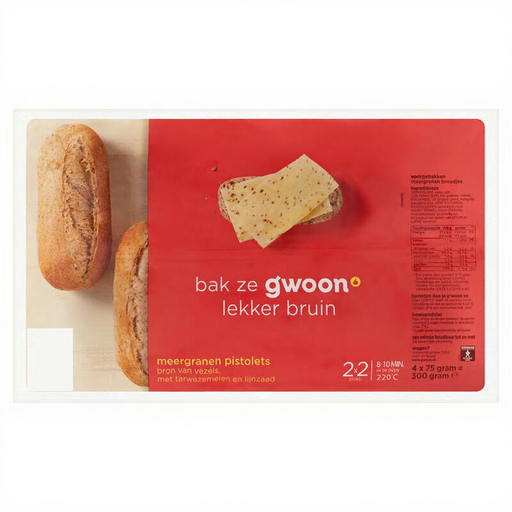 Image unavailable
Four individual rolls are handy when you want to serve out individual portions.
Multigrain doesn’t automatically mean wholegrain. Check the product description, ingredients, allergens and any preparation instructions if they matter to your choice.
 Image unavailable
Consider this product if you want to take rye bread with you and can plan the portions in advance.
The title refers to a bread roll, while the product description says it’s sliced rye bread. Check the type of bread and how many portions you can serve on the packaging, along with the allergen information.
 Image unavailable
This option suits a planned meal if you can prepare the bread in advance, rather than serving it straight away with no preparation.
The loaf weighs 550 g. You’ll need an oven to defrost and bake it; check the baking time and other instructions on the packaging.
Rolls are more practical if you want to serve bread straight away and don’t have anywhere to slice it. A whole or half loaf works well if you can slice it and expect enough people to eat it. Either way, consider how much will actually get eaten.
If you plan to use bread later, the Netherlands Nutrition Centre recommends freezing it in portions as soon as you buy it. The Storage Guide advises keeping opened wholegrain bread in a kitchen cupboard for 2 to 4 days, or in the freezer for 1 to 3 months. Freezing it for longer may make the bread drier.
Don’t assume that every type of bread does. The Commodities Act Decree on the Addition of Micronutrients to Foodstuffs defines baker’s salt as iodised table salt, but that doesn’t tell you which salt is used in a particular loaf. Check the ingredients list to find out.
Customers must be able to get information about allergens present before buying unpackaged bread in the Netherlands, according to the Netherlands Food and Consumer Product Safety Authority. For cereals containing gluten and nuts, it must also be clear which cereals or nuts are present. Check the information for each type of bread.
No. The term multigrain doesn’t tell you by itself whether a loaf is wholegrain. Check the product description and ingredients of the bread you want to buy.