
Shopping for a small top-up
You want to pick up one roll of rusk and avoid buying more than you need. Check the pack size and the number of pieces.


For a small top-up shop, one roll of plain rusk is a sensible starting point if you don’t have any specific ingredient requirements. Check the pack size and number of pieces too. If wholemeal, fibre or seeds matter to you, compare the nutritional information and check the allergens on the packaging.
You want to pick up one roll of rusk and avoid buying more than you need. Check the pack size and the number of pieces.
Wholemeal ingredients, fibre or seeds matter to you. Compare the ingredients and nutritional information per 100 g rather than relying on the variety name.
If you need to avoid certain ingredients, read the allergen information on the packaging of the variety you choose. Online product information can change.
First decide whether you simply want one suitable roll or have specific requirements for its ingredients. Then compare the pack sizes and, if needed, read the label.
| What to consider | What to check | Who it matters to |
|---|---|---|
| Picking up one roll | Check the number of pieces and whether the pack is right for the top-up you need. | I only need rusk for the next few days and don’t want to buy a larger quantity. Around 50% of consumers prioritise a small top-up like this. |
| Pack size and where you shop | Check the net weight, the number of pieces and whether the variety you want is available at your shop. | I want to pick up the roll during my usual shop and know how much it contains. For around 30% of consumers, this is the main consideration. |
| Ingredients and allergens | Compare the nutritional information per 100 g and read the ingredients and allergen information on the current label. | I’m specifically looking for a wholemeal or seeded variety, or need to avoid certain allergens. For around 20% of consumers, the ingredients come before other considerations. |
One roll may contain the same number of pieces as another but have a different net weight. So you may not be comparing the same quantity of rusk.
When choosing between packs, check both the number of pieces and the weight.
Ingredients and nutritional values vary from product to product. The variety name alone won’t tell you how much fibre it contains or which allergens apply.
Compare the nutritional information per 100 g and read the ingredients list for the specific roll.
Rusk may contain ingredients such as wheat and egg; other ingredients and ‘may contain’ warnings vary by variety. Product information can change.
If you have a relevant allergy, check the allergen information on the pack you buy.
Lidl lists its plain rusk as an in-store-only product. An online listing therefore won’t necessarily tell you what’s available at your local branch.
If you’re choosing a product for a specific shop, check whether your local branch has the variety you want.
Jumbo lists Bolletje Echte Beschuit and a wholemeal variety in its rusk range.
Its own-label range includes plain rusk and other varieties, including wholemeal rusk.
Jumbo stocks plain rusk and also lists wholemeal and multigrain varieties.
ALDI lists Goud Gebakken plain and wholemeal rusk in its range.
Its own-label range includes plain rusk and a wholemeal seeded variety.
Lidl lists a 125 g plain rusk that, according to the product page, is only available in store.
For a small top-up, you can browse a plain g'woon variety and three different Bolletje varieties here. Choose based on the type you want, the pack size and the ingredients.
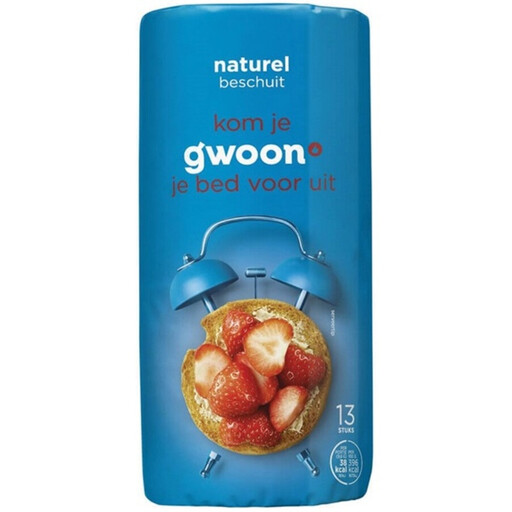 No image available
A plain variety for anyone adding one roll to their shopping. If ingredients and allergens matter to your choice, check the packaging.
 No image available
An option to consider if you’re looking for seeded rusk. Read the ingredients and allergen information on the packaging before choosing.
 No image available
A wholemeal variety for anyone who wants to consider the ingredients. Compare the nutritional information per 100 g and check the current label for allergens.
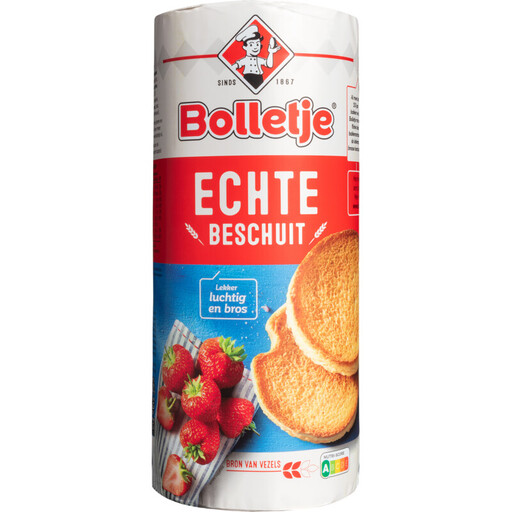 No image available
A classic Bolletje variety for anyone looking to top up with one roll of rusk. If you have an allergy, read the information on the packaging.
Check the number of pieces and the net weight to make sure the pack suits the top-up you need. If you’re comparing products in different pack sizes, the information per 100 g gives you a fairer basis for comparison.
The variety name doesn’t tell you everything about its ingredients. Read the ingredients and compare the nutritional information per 100 g if fibre or wholemeal ingredients matter to you; a Nutri-Score alone won’t tell you whether a product suits your needs.
It depends on the specific variety: the product examples mentioned include wheat, egg, rye and sesame. Read the current packaging, including any warnings about the possible presence of allergens. The Netherlands Food and Consumer Product Safety Authority explains which allergens must be listed on the label.
No, you can’t assume that all rusk does. Dutch food law defines baker’s salt as iodised salt used in bread and other baked goods; according to trade organisation Brood.net, its use is not a legal requirement. If iodine matters to you, check the ingredients information for the variety you choose.
Keep the rusk dry and in a tightly sealed container to protect it from moisture. Albert Heijn recommends storing its plain rusk in a sealed tin after opening; also follow the storage instructions on the packaging you buy.