
Fussy eaters switching to wholemeal
If coarsely textured bread is less popular at home, finely textured wholemeal is a good type to try first. This lets you take the texture into account without immediately limiting your choice to white bread.


Try finely textured wholemeal bread if your household prefers not to eat coarse bread, but you’d like to choose wholemeal more often. Brown or multigrain bread can be a stepping stone, but it isn’t automatically wholemeal; white bread is still an option when taste or acceptance comes first. Choose an amount you’ll use up, or that you can freeze according to the storage instructions, to avoid throwing bread away unnecessarily.
If coarsely textured bread is less popular at home, finely textured wholemeal is a good type to try first. This lets you take the texture into account without immediately limiting your choice to white bread.
If you buy bread for breakfast and lunch, it helps to choose a pack size that suits how much you use. Compare whole and half loaves, and check whether unused portions can be frozen according to the storage instructions.
If you want to know whether a loaf is wholemeal, which allergens it contains or whether baker’s salt has been used, check the label on that specific loaf. According to the Netherlands Nutrition Centre, using baker’s salt is not compulsory.
A good choice when: you want to try wholemeal bread but prefer a fine rather than coarse texture.
Consider: a fine crumb doesn’t guarantee that fussy eaters will accept the bread; start with an amount that suits your household.
A good choice when: your household wants to try a different bread before switching to wholemeal.
Consider: colour and multiple types of grain don’t, by themselves, mean a bread is wholemeal; check the description and ingredients.
A good choice when: familiar taste or texture is what determines which bread gets eaten.
Consider: according to the Netherlands Nutrition Centre, white bread contains fewer nutrients than wholemeal bread.
| What to consider | What to look for | Who this matters to |
|---|---|---|
| Taste and texture | Check whether the bread is described as finely textured wholemeal, and try an amount your household will use up. | If coarse bread gets left uneaten, I want to try a finer wholemeal option that people at home will eat. For around 42% of consumers, acceptance comes first. |
| Quantity and waste | Compare whole and half packs with how much you use; follow the storage instructions if you want to freeze your bread. | In a small household, I don’t want to throw bread away because the pack is too large. Reducing waste is the main concern for around 33% of consumers. |
| Label and ingredients | Check the wholemeal description, allergen information and whether baker’s salt is listed for the bread you choose. | If ingredients are the deciding factor for me, I don’t want to rely on the bread’s colour or name. For around 25% of consumers, checking the label is the top priority. |
A dark colour or the presence of several grains doesn’t prove that the bread is made entirely from wholemeal flour. You could end up taking home a different type of bread from the one you intended to buy.
Look for the wholemeal description, then read the ingredients list rather than judging by colour or seeds alone.
According to the Netherlands Nutrition Centre, bread is one of the foods that is often wasted. A whole loaf isn’t right for every household’s needs.
If needed, choose a half loaf or freeze portions according to the product’s storage instructions.
According to the Netherlands Nutrition Centre, using baker’s salt isn’t compulsory. You can’t tell whether it has been used from the colour or type of bread.
Check the ingredients list on packaged bread, or ask which type of salt was used for unpackaged bread.
Worth considering if you want to compare different wholemeal breads within one range, including simpler options and other varieties.
Worth considering if you want to compare finely textured wholemeal with other types of bread in the same range.
A shop to consider if you’re comparing bread types and pack sizes in person.
Worth considering if you want to compare Fijn Volkoren with a separate extra-fibre wholemeal option.
Worth considering if you want to check the ingredients, nutritional information and storage instructions for a farmhouse wholemeal loaf.
Worth considering if you want to compare white, wholemeal and multigrain bread in one range.
These bread options offer alternatives to the finely textured everyday loaf at the heart of this guide. Check each product’s type, pack size and any preparation requirements to see if it suits your household. Don’t assume that a mention of wholemeal ingredients proves that a loaf is entirely wholemeal.
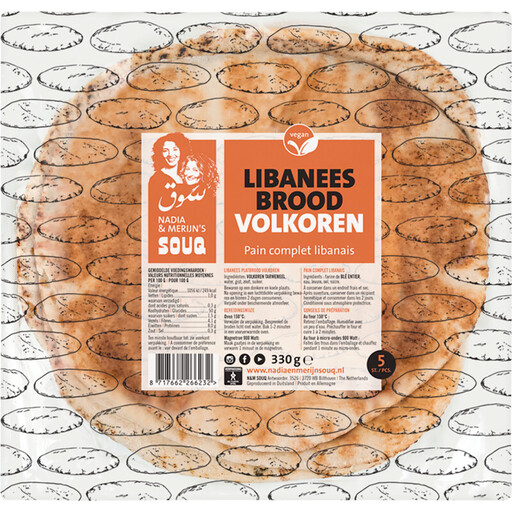 Image unavailable
An option if you’d rather serve Lebanese flatbread with a meal than make ordinary sandwiches.
The pack contains six pieces. Check the ingredients and allergen information on the packaging before use.
 Image unavailable
A rye bread option if you’d like to try this type of bread; don’t assume its texture will be the same as finely textured wholemeal wheat bread.
The title lists nine pieces. Check the preparation instructions on the packaging before use.
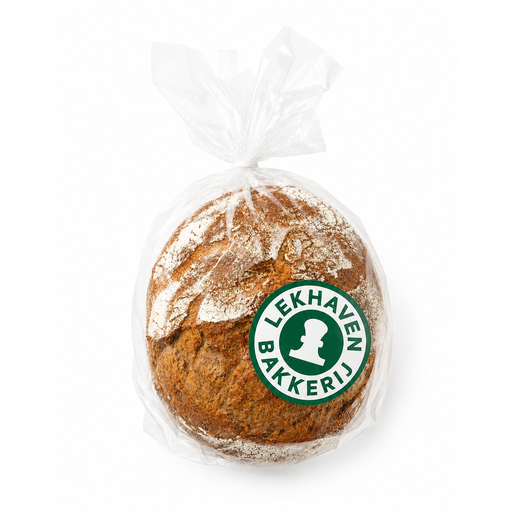 Image unavailable
A round wheat loaf for anyone who wants to bake bread at home, provided the preparation fits into your plans.
The loaf weighs 550 g. The ingredients include both wholemeal wheat flour and wheat flour, so don’t assume it’s entirely wholemeal based on the title alone. Follow the preparation instructions on the packaging.
 Image unavailable
A rye option to consider if you’d like to try a different type of bread alongside wheat bread.
The title lists 500 g. Check the product format on the packaging: the title refers to a bread roll, while the description mentions sliced rye bread.
No. Brown and multigrain don’t automatically mean wholemeal. Albert Heijn explains that bread labelled wholemeal must be made from 100% wholemeal flour, so check the ingredients list of the loaf you choose too.
Finely textured wholemeal bread is a sensible first option to try if the coarse texture is the main issue. Buy an amount you’ll use up and see whether your household eats this particular loaf; the name alone can’t guarantee that.
No. According to the Netherlands Nutrition Centre, using baker’s salt isn’t compulsory. Check the ingredients list on packaged bread, or ask which type of salt was used for unpackaged bread.
Choose a pack size that suits how much your household uses, and follow the storage instructions if you want to freeze portions. For example, PLUS says Boeren volkoren heel can be frozen at home on the day of purchase; check the storage advice for any other loaf.