
Hosting a group
You want to put enough bread on the table without buying more than the menu calls for. A whole loaf is a good starting point; compare the weight and the amount you actually want to serve.


For a dinner party, start with a whole loaf if you want a simple option for several guests. Add bake-at-home bread or flatbread if presentation matters and you have the time and oven space. Compare pack sizes on a like-for-like basis and choose an amount that suits the menu. If a guest has coeliac disease or a wheat allergy, check separately which ingredients are suitable for them and how to serve their bread without it coming into contact with other bread.
You want to put enough bread on the table without buying more than the menu calls for. A whole loaf is a good starting point; compare the weight and the amount you actually want to serve.
If you’re serving dips or a sharing dish, you may want to bake the bread just before the meal. Remember to factor in the time and oven space you’ll also need for the rest of dinner.
If a guest has coeliac disease, it’s important to choose clearly labelled gluten-free bread and prevent it from coming into contact with ordinary bread crumbs. If they have a wheat allergy, ask which ingredients they need to avoid; a gluten-free label alone won’t answer that question.
First, work out how much bread you’ll need alongside the other dishes. Then choose how you want to serve it and check any dietary requirements before comparing packs.
| What to consider | What to look for | Who this matters to |
|---|---|---|
| How much you need for the group | Compare loaves of the same type by pack size or weight, and take into account what else will be on the table. | When I’m feeding a group, I want enough bread without unnecessary leftovers. For around 38% of consumers, the amount needed for the group would be their first concern. |
| Serving and presentation | Check whether the bread needs baking and whether the oven will be free when you want to serve it. | If I’m serving dips or a sharing dish, I want to put warm bread on the table without getting in the way of the main course; around 31% of consumers would prioritise this. |
| Type of bread and fibre | Look specifically for ‘wholemeal’ if that’s the type of bread you want, and compare the fibre listed per 100 g. | When bread makes up a larger part of the meal, I choose carefully which type to serve. This would be the most important factor for around 23% of consumers. |
| Suitable for a guest | For coeliac disease, check for a gluten-free label and prevent contact with ordinary bread; for a wheat allergy, ask which ingredients need to be avoided. | If a guest can’t eat certain types of bread, there needs to be a suitable option just for them. For around 8% of consumers, this would be their first purchasing priority. |
A whole loaf and a pack of small rolls won’t necessarily provide the same amount of bread. Jumbo lists both the pack size and weight for some loaves, making it easier to compare pack sizes.
Check the weight and number of pieces, then work out how much bread you want to serve to the whole group.
Multigrain refers to different types of grain; it doesn’t automatically mean the bread is made entirely from wholegrain flour. This distinction matters if you specifically want to serve wholemeal bread.
Check the product name and ingredients rather than relying on the ‘multigrain’ label.
According to the Voedingscentrum, even a small amount of gluten can cause symptoms for someone with coeliac disease. A shared knife, a board with crumbs on it or the same bread basket could all be a problem.
Keep gluten-free bread separate and use clean, separate serving utensils.
If bread is only a side, you may end up with several extra types that go uneaten.
Choose an amount that suits the other dishes and check the storage or freezing instructions for the bread you buy.
If you want to keep leftover loaves, you’ll also need space for them in the freezer.
An online range where you can browse standard whole loaves and separate gluten-free options.
An online range that includes whole loaves, rolls and bake-at-home products.
A shop to visit for fresh bread and packaged loaves with a fibre indicator.
A range of whole loaves and bake-at-home products for different ways of serving bread.
An online ordering option with wholemeal loaves among its range.
An in-store range of whole loaves, rolls and bake-at-home baguettes.
These breads offer different ways to serve bread at the table: flatbread for sharing, a whole loaf as a starting point and baguettes as an accompaniment. Compare the pack size with the number of guests; the type of bread alone won’t tell you which option is right for your dinner.
 No image available
Flatbread is a handy option to serve alongside dips or sharing dishes. The product name lists six pieces; choose the number of packs to suit what else you’re serving.
 No image available
A whole loaf is a good option to slice and share with several guests. The product name lists 550 g; plan when to serve it around the other dishes and follow the preparation instructions on the pack.
 No image available
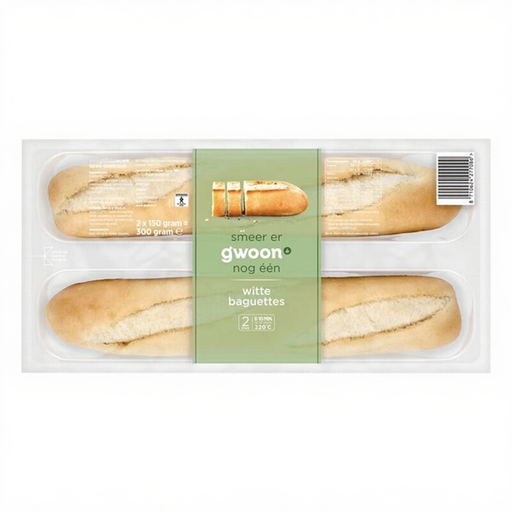
Two baguettes can make a handy addition when you’re already serving other dishes. The product name gives a total pack weight of 300 g; don’t assume ‘multigrain’ means wholemeal without checking the label.
 No image available
Four individual baguettes give you the option of serving one per person. Factor in the defrosting and baking time, and check the ingredients on the pack if you have an allergy.
 No image available
Serve this round loaf whole and slice it as needed. The product name lists 550 g; check the pack for preparation instructions and ingredients, even if ‘multigrain’ is one of the reasons you’re considering it.
Choose bread clearly labelled as gluten-free and keep it separate from ordinary bread. According to the Voedingscentrum, even a small amount of gluten can cause symptoms for someone with coeliac disease, so use separate, clean knives, boards and serving dishes. If a guest has a wheat allergy, also ask which ingredients they need to avoid.
Yes, as long as the storage instructions for your chosen bread work with your plans. PLUS says that the wholemeal loaves featured in its range can be frozen on the day of purchase. For other bread, follow the instructions on the pack, especially if it needs defrosting or baking before serving.
No. A multigrain label doesn’t in itself mean that the bread is made entirely from wholegrain flour. Check the product name and ingredients if you’re specifically looking for wholemeal bread.
Check the ingredients list for the specific bread rather than assuming every loaf contains iodised baker’s salt. Brood.net points out that the type of salt used can vary, particularly in imported and organic products.