
Regular price checkers
You often buy bread to go with your coffee and want to compare packs fairly. The type of bread, its weight and how much you’ll use are more important than the shelf price alone.


For a regular coffee break, a whole or half wholemeal loaf is a practical starting point if you’ll use it up or freeze it in portions. Individual rolls suit smaller amounts; bake-at-home bread is a good choice if you want to serve it warm and have time to prepare it. To find a budget-friendly option, compare the same type of bread and a similar weight, and check how much you’re likely to eat.
You often buy bread to go with your coffee and want to compare packs fairly. The type of bread, its weight and how much you’ll use are more important than the shelf price alone.
You’re looking for bread that fits your preference for wholemeal, so you check the product description, ingredients and nutritional information for the bread you choose.
You only need a small amount for a coffee break, or you want to bake the bread just before serving. The number of items, any leftovers and the preparation time needed can all influence your choice.
First, work out how much bread you need for your coffee breaks. Then compare like-for-like products by weight and price; if you have specific dietary or ingredient requirements, check the label on the bread you choose.
| What to consider | What should you check? | Who is this important for? |
|---|---|---|
| Comparable prices | Compare the same type of bread and a similar size; check the weight, price per kilo and any offers. | If I buy bread regularly, I want to know what an amount I’ll actually eat costs. Around 42% of consumers put this price comparison first. |
| Wholemeal and ingredients | Read the product description and current label; check the ingredients, allergens and, where relevant, whether baker’s salt is listed. | If I prefer wholemeal or have a specific ingredient requirement, I want to know what’s in my bread. For around 33% of consumers, checking this is the top priority. |
| Portions and freshness | Check the number of items or the loaf size and see whether you can store any leftovers; allow for preparation time with bake-at-home bread. | For a small coffee break, I don’t want to be left with more bread than I can use, or I may want to serve it warm. This is the top priority for around 25% of consumers. |
A whole loaf, a bag of rolls and bake-at-home bread can differ considerably in weight and number of portions. A lower price per pack doesn’t necessarily mean you’re getting a comparable amount.
First, compare products of the same type of bread and a similar size. Then check the weight, price per kilo and whether an offer is temporary.
The colour or a name such as multigrain or sourdough doesn’t, on its own, tell you whether the bread you’ve chosen is wholemeal.
Look for the word wholemeal on the pack, and read the ingredients and nutritional information if they matter to your choice.
According to the Netherlands Nutrition Centre, bakers aren’t required to use baker’s salt. So you can’t tell whether it’s present just from the type of bread.
For packaged bread, check the ingredients list for baker’s salt or iodised salt. For unpackaged bread, ask which ingredients have been used.
A good price per kilo doesn’t help if you end up throwing some of the bread away. According to the Netherlands Nutrition Centre, wholemeal bread generally keeps for 2 to 4 days in a kitchen cupboard and 1 to 3 months in the freezer.
Choose an amount you’ll use up, or divide a whole loaf into portions and freeze them in good time.
These retailers offer different types of bread. Before choosing between shops, compare a specific product and the information on its current packaging.
Albert Heijn lists a range of products online, including standard and wholemeal bread, so you can browse different types.
Jumbo offers a range online, including standard loaves, wholemeal loaves and rolls.
Lidl offers fresh-from-the-oven bread, packaged bread and bake-at-home options.
Aldi’s daily fresh range includes white, wholemeal and multigrain bread.
Plus offers a range including wholemeal loaves, wholemeal rolls and bake-at-home products.
Dirk offers standard loaves, floor-baked loaves and wholemeal options.
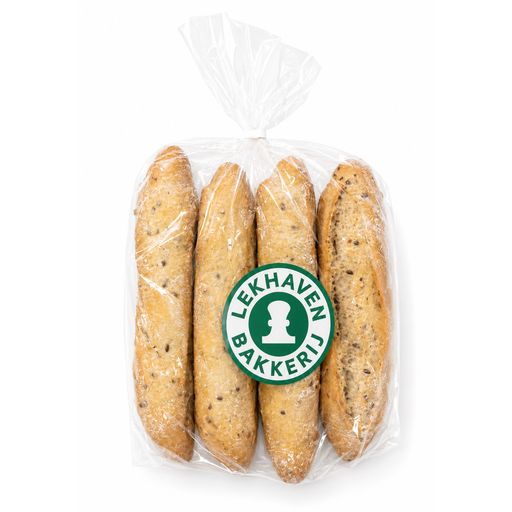
These products offer different options for coffee time: a whole loaf, flatbread, rye bread, baguettes to bake at home and rolls. First choose the amount and preparation method that suit your coffee break; then compare like-for-like bread by weight and price.
 No image available
A whole loaf for several coffee breaks, if you have time to defrost and bake it. Divide any leftovers into portions if needed, and check the ingredients and allergens on the current packaging.
 No image available
Individual flatbreads can be a good fit if you don’t want to cut into a whole loaf for a coffee break. Check the current packaging for the full ingredients and allergen information.
 No image available
A rye bread option for anyone looking for a different type of bread to enjoy with their coffee. Before buying, check the exact shape and number of portions on the packaging to see whether it suits the occasion.
 No image available
Four individual baguettes for a coffee break when you want to bake your bread at home. Allow time for defrosting and using the oven; the description ‘multigrain’ doesn’t, on its own, mean a product is wholemeal.
 No image available
Four rolls could be just right for a small coffee break. Carefully check the current packaging if allergens, whether the bread is wholemeal or the type of salt used are important to your choice.
First, compare the same type of bread and a similar size, such as a whole wholemeal loaf with another whole wholemeal loaf. Then check the weight, price per kilo and any offers. Also consider how much of the bread you’ll use.
No, it depends on the price of comparable bread and how much you eat. If you’re buying for a small coffee break, a half loaf or individual rolls may suit the portions you need better. If you can freeze leftovers, a whole loaf becomes a more practical choice.
No. According to the Netherlands Nutrition Centre, bakers aren’t required to use baker’s salt. For packaged bread, read the ingredients list; for unpackaged bread, ask which salt has been used.
Divide the bread into portions if needed and freeze them in good time. The Netherlands Nutrition Centre says wholemeal bread generally keeps for 2 to 4 days in a kitchen cupboard and 1 to 3 months in the freezer. Throw away mouldy bread.
Check the current packaging for the exact bread you want to buy. According to the Netherlands Nutrition Centre, common allergens must be clearly listed on the label; a general bread description such as wholemeal or sourdough is no substitute for checking.