
Vandaag of morgen in huis

Kwaliteit gegarandeerd

Welkomstaanbiedingen ontgrendelen: GRATIS bezorging | Tot 80% korting | Gratis 30 dagen JoyPlus-proefperiode
Download de app
An adult cycling helmet should do more than simply look good. It needs to suit your head size, how you cycle and the conditions you ride in. A commute into town calls for something different from a mountain bike ride on unpaved trails. Road cycling helmets, MIPS cycling helmets and cycling helmets with LED lights also have specific features that you should check in advance.
Many disappointing purchases come down to three recurring pitfalls:
Measure the circumference of your head with a tape measure, approximately two centimetres above your eyebrows. Compare the result with the manufacturer’s size chart. Do not just look at S, M or L: the measurements in centimetres may vary between models.
An adjustable cycling helmet should fit securely without creating pressure points. It should not move forwards or backwards when you move your head gently. Adjust the rear dial system first, then fasten the chin strap. The strap should sit beneath your jaw without hanging loose.
Also consider the shape of the inside of the helmet. A model designed for a particular head shape may feel less comfortable for another wearer, even if the size appears correct on paper.
Many models use an outer layer of polycarbonate (PC) and an inner layer of EPS foam. This construction is listed in the product information for several helmets in this selection. Also check whether the product page mentions a relevant European safety marking and standard, such as CE and EN 1078, which are important for cycling helmets in Europe.
A brand’s safety claim is not a guarantee of protection in every situation. According to OutdoorMaster’s product information, MIPS is designed to reduce certain rotational forces in angled impacts. This describes how the system works; it is not a promise that injuries will be prevented. A helmet must always fit correctly and be securely fastened.
Replace a helmet after a fall or serious impact, even if there is no visible damage. The inner structure may have been compromised. You should also avoid storing a helmet for long periods in high temperatures or direct sunlight.
For everyday commuting, a low weight, ventilation and visibility in low-light conditions are practical features. A cycling helmet with LED lighting can help make you more visible, but it does not replace a bicycle light. Check the following:
An adult mountain bike helmet often provides extra coverage at the sides and rear and has a removable visor. A road cycling helmet generally focuses on low weight and airflow. If you enjoy both types of riding, consider a versatile helmet with an adjustable fit and removable visor.
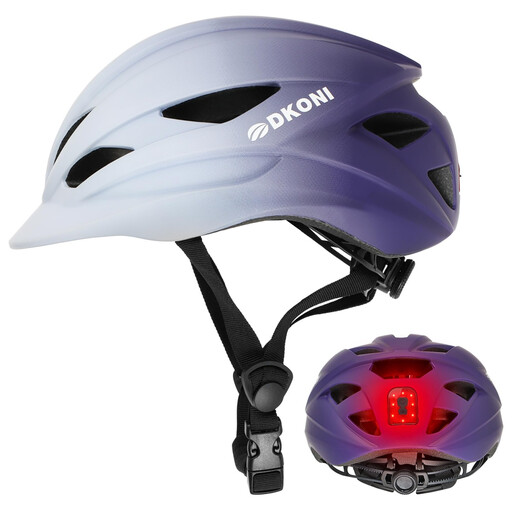
Why it suits this profile: A practical choice for city rides and commuting, with a size range of 55-58 cm and a removable USB-rechargeable rear light.
The size is clearly specified, and the light can be removed and charged separately. This means you do not have to rely on a vague universal size or a built-in battery.
PC and EPS construction, 15 vents and an LED light with two light modes according to the product description.

Why it suits this profile: Designed for adults who combine road cycling, longer leisure rides and commuting, and who consider MIPS and adjustability important.
The product description explicitly mentions a MIPS system, an adjustable fit and ventilation. This makes it possible to verify the selected features rather than relying solely on an image or slogan.
PC outer shell, EPS inner layer, integrated MIPS according to the product information and a multi-position adjustment system.
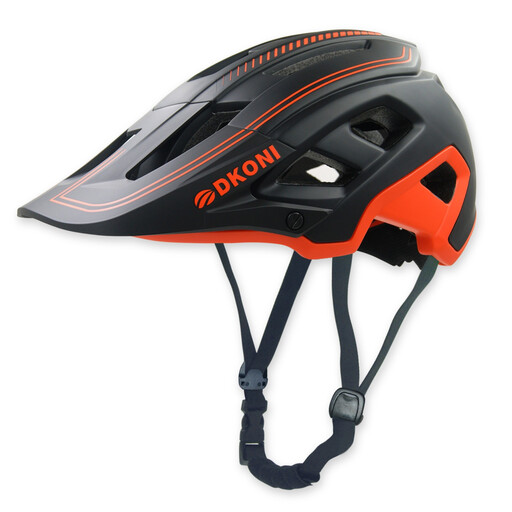
Why it suits this profile: This adult mountain bike helmet is designed for rides where a larger visor, extra coverage and plenty of vents are desirable.
The visor is removable according to the product description. You can therefore adapt the helmet for woodland rides, sunny trails or use without the visor.
380 grams according to the product information, 17 vents, PC/EPS in-mould construction and a one-handed adjustment system.
We have compiled a complete, up-to-date list of products that fully meet these strict selection criteria and the applicable European safety requirements.
Measure the circumference of your head and compare it with the size chart for the specific model. A size M may be 54-58 cm on one model and 55-58 cm on another. Then check that the rear adjustment system keeps the helmet stable.
There is no fixed lifespan that applies to every helmet. Check your helmet regularly for cracks, deformation, loose components and worn straps. You should replace it after an impact, even when the damage is not visible. Also follow the manufacturer’s care and replacement recommendations.
According to brands’ product information, MIPS is an additional technology designed to reduce certain rotational forces during angled impacts. It is not a substitute for a good fit, a correctly fastened chin strap or safe behaviour in traffic. For everyday cycling, you can consider MIPS alongside size, standard information, ventilation and wearing comfort.
