
Vandaag of morgen in huis

Kwaliteit gegarandeerd

Welkomstaanbiedingen ontgrendelen: GRATIS bezorging | Tot 80% korting | Gratis 30 dagen JoyPlus-proefperiode
Download de app
Buying an adult cycling helmet seems straightforward, until you have to choose between a road cycling helmet, urban cycling helmet, MIPS cycling helmet or a model with lights. Marketing often focuses on one eye-catching feature, while the practical details determine whether you will enjoy wearing the helmet every day.
A helmet may look good but still feel uncomfortable. Head circumference is only the starting point. The shape of the helmet, the adjustment system and the position of the chin strap are just as important. A helmet that is too loose may shift during a ride; a model that is too tight can become uncomfortable after a short time.
Measure your head circumference with a tape measure approximately 2 centimetres above your eyebrows. Always compare the result with the size chart for the specific product. A size M from one brand may not have the same fit as a size M from another brand.
A cycling helmet with LED lighting can help you remain visible at dusk or in the dark. However, the rear light does not replace the legally required lighting on your bicycle. Also check how the light is charged, how long the stated operating time is and whether the light can be removed.
With a USB-rechargeable cycling helmet, it is useful if you can easily detach the light. This allows you to clean the helmet and prevents the electronic components from getting unnecessarily wet.
According to the product description, MIPS is a system designed to potentially reduce the transmission of rotational forces during certain angled impacts. This does not mean that a MIPS cycling helmet protects against every type of accident. A certified helmet must also fit properly and be fastened correctly.
When buying, look for a clearly visible CE marking and check whether the product is intended for cycling. In Europe, cycling helmets often refer to EN 1078. Look for this information on the packaging, label or product details. A brand’s safety claim is not a substitute for checking these details.
An adjustable cycling helmet usually has a dial at the back and adjustable straps around the ears and under the chin. The helmet should sit securely without creating pressure points. The front generally sits low on the forehead without obstructing your vision.
Use this check before cycling:
A ventilated cycling helmet dissipates warm air more effectively, particularly on longer rides, climbs or when cycling in mild weather. The number of vents is a useful specification, but their position and shape also influence airflow.
An adult road cycling helmet is often lightweight and designed primarily for air circulation. An adult MTB helmet may instead offer greater coverage, a visor or additional stability. For commuting, an urban cycling helmet is often practical if you are looking for a understated design, simple adjustment and everyday comfort.
Many models combine a polycarbonate outer shell with an EPS inner layer. The outer shell helps give the construction its shape, while EPS is designed to absorb energy during an impact. In-mould construction means that the shell and foam are integrated during manufacturing.
Also check:
A cycling helmet with LED lighting is worth considering for commuters who regularly cycle early in the morning or in the evening. Pay attention to the number of light modes and the stated battery life. For example, the DKONI HS-086 is listed with a removable, USB-rechargeable rear light with two modes and a stated operating time of approximately 3 to 5 hours.
A cycling helmet with a visor and goggles can be useful for protection against wind, rain and splashes of dirt. According to the OutdoorMaster RhinoUrban product description, the magnetic goggles and sun visor are removable. Before use, check that these components are attached correctly and do not restrict your vision.

Why it suits this profile: A practical choice for adults who mainly cycle in town, commute to work or enjoy relaxed rides. Size L is listed for head circumferences of 57 to 61 cm.
The rear dial and adjustable straps allow precise fitting. According to the product information, the inner lining is removable and washable.
One-piece construction, multiple vents and a removable lining for everyday maintenance.
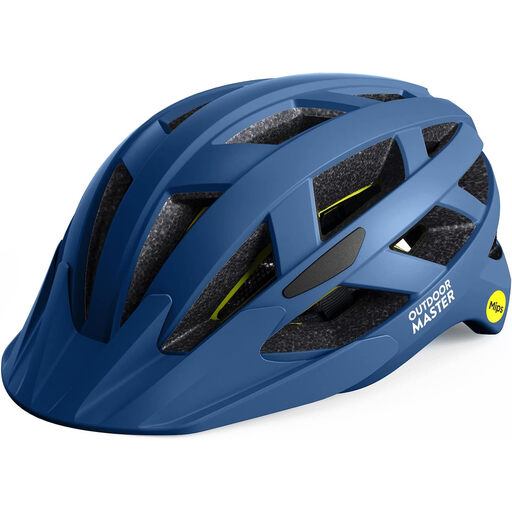
Why it suits this profile: Suitable for adults who want to use one helmet for road cycling, MTB, BMX or recreational rides.
The product description mentions a MIPS system, dial adjustment, two interchangeable liners and 25 vents. This allows you to adjust the fit and airflow independently.
MIPS, 25 vents, removable visor and two liners with different thicknesses.
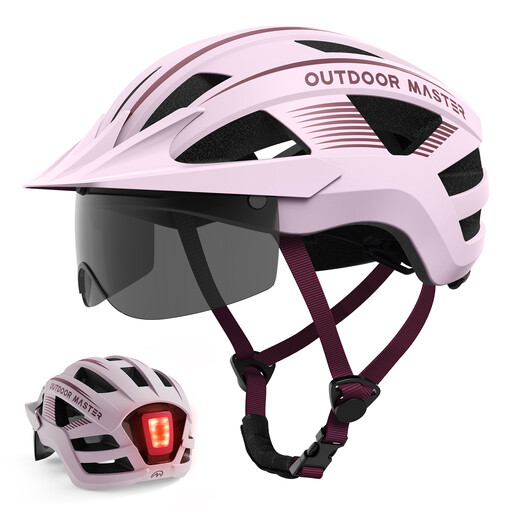
Why it suits this profile: Designed for adults who cycle in changing conditions, such as commuting, e-bike use, road cycling or MTB rides.
The product description mentions 17 vents, an adjustable fit, a USB-rechargeable Type-C rear light, and removable goggles and sun visor.
Size L for 58–61 cm, magnetically removable goggles, visor and Type-C-rechargeable rear light with multiple modes.
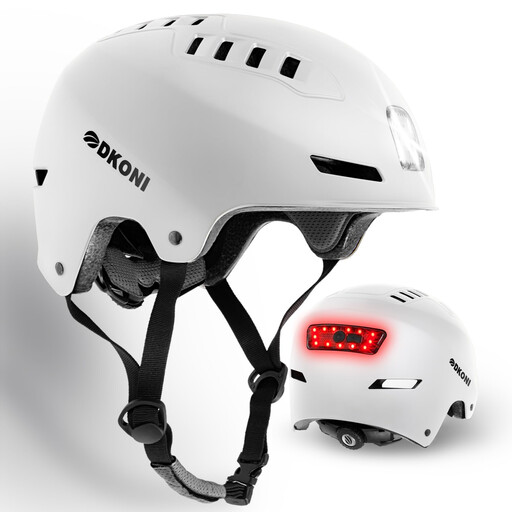
Why it suits this profile: A good option for everyday cyclists who want additional front and rear lighting for rides in the morning or evening.
The lighting is USB-rechargeable and the fit can be adjusted with one hand. The inner lining is removable and washable, which is practical for everyday use.
Front and rear LEDs, four rear-light modes, 20 vents and sizes from 48–55 cm to 58–61 cm.
We have put together a complete, up-to-date list of products that fully meet these strict selection criteria and the applicable European safety regulations.
Clean the outer shell with a soft, damp cloth. Wash removable pads according to the product instructions and allow them to air-dry completely. Do not use harsh cleaning products, as they may damage materials and adhesive bonds.
Replace an adult cycling helmet after a significant fall or impact, even if there is no visible damage. Check the shell, straps, buckle, adjustment system and accessories before every ride. Store the helmet in a dry place away from strong heat. The exact service life depends on use, storage and the condition of the materials, so follow the manufacturer’s instructions.
The helmet should sit securely and horizontally on your head without painful pressure points. Once the chin strap is fastened, the helmet should not move easily forwards, backwards or from side to side. Readjust the rear system and straps if you need to make adjustments while cycling.
MIPS is not a general requirement for cyclists. The system may be an additional preference for some buyers, particularly those who pay extra attention to the helmet’s construction. Always check the fit, CE marking, suitability for cycling and information about EN 1078 first.
There is no fixed period that applies to every helmet and every type of use. Replace the helmet immediately after a hard impact. With daily use, regularly check for cracks, deformation, loose components, worn straps and an adjustment system that is no longer working properly. If in doubt, consult the manufacturer or choose a new model.
