
Vandaag of morgen in huis

Kwaliteit gegarandeerd

Welkomstaanbiedingen ontgrendelen: GRATIS bezorging | Tot 80% korting | Gratis 30 dagen JoyPlus-proefperiode
Download de app
A bag or box of cat food can seem like an easy choice. Yet many cat owners in the Netherlands buy based on attractive packaging, a flavour name or a special offer. This can leave you with food your cat turns their nose up at, that goes off quickly or that doesn’t suit their daily portion.
When choosing cat food for adult cats aged 1 year and over, there are three common pitfalls to watch out for:
For everyday feeding, look for the words complete pet food for adult cats. This means the product information says it’s intended to be fed as a complete meal. A complementary food, treat or topping isn’t automatically suitable for this purpose.
Also check:
Nutritional needs vary from cat to cat. An indoor cat that gets little exercise will often need a different portion from an active outdoor cat. Use the packaging as a starting point, then adjust the amount according to your cat’s weight, activity level and body condition.
Dry cat food is practical, easy to measure and simple to store. A 2 to 10 kg bag can be handy for households with several cats. Make sure you seal the bag properly and store it in a cool, dry place. If your cat doesn’t drink much, you may need to pay extra attention to their water supply if they eat only dry food.
Wet cat food contains plenty of moisture and is often sold in 85-gram trays, tins or pouches. A multipack, such as Felix or Whiskas cat food, offers a choice of varieties. This is handy if your cat quickly tires of one flavour. Once opened, store leftovers in the fridge as directed on the label and use them within the stated period.
Mixed feeding can be practical, but don’t simply swap portions like for like. Some packaging, for example, may say that one pouch of wet food can be replaced with a specific amount of dry food. Follow the feeding guide for the particular product.
When choosing cat food with fish or cat food with chicken, the percentage of the named ingredient matters. For example, according to the product information, each variety in Felix Original Mix Selection in Jelly contains 4% of the featured ingredient, such as chicken, tuna or salmon. That’s different from a recipe made mainly with fish or chicken.
Read claims about coat, urinary tract, digestion or immune support carefully, too. If a brand mentions benefits, these are the manufacturer’s claims. For example, Whiskas lists vitamins, minerals and fibre in some recipes; this is a product claim, not an assessment of your individual cat’s health. If your cat has allergies, is overweight or has other dietary needs, it’s better to speak to a vet rather than rely only on the front of the pack.
The choices below are based on verifiable information such as packaging, food type, flavour, intended age group and nutritional details. They won’t all be equally suitable for every cat.
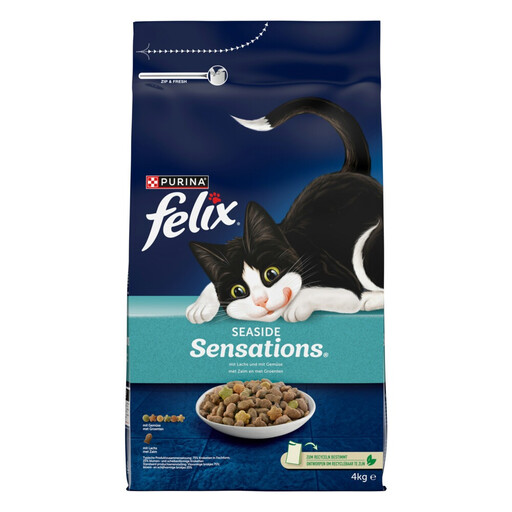
Why it suits this profile: A 4 kg bag is practical for everyday dry feeding, and according to the product information, this variety contains fish such as salmon and mackerel.
The packaging states that this is a complete and balanced food for adult cats. The ingredients also make clear that the named fish species don’t mean it’s a fish-based recipe.
4 kg pack, dry biscuits in different shapes and, according to the product information, no added artificial colourings.
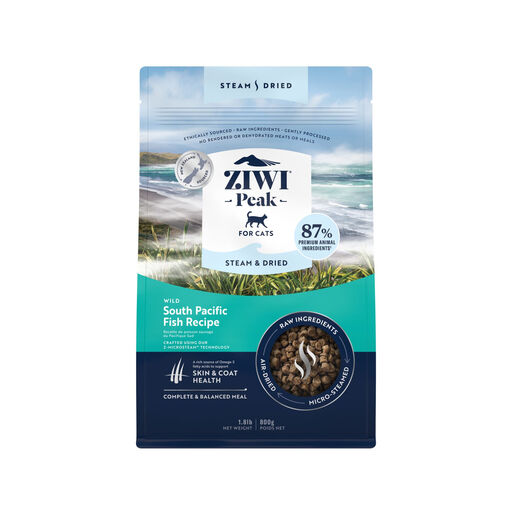
Why it suits this profile: The product information describes a fish-rich recipe and gives analytical values for protein, fat, fibre, ash and moisture.
Rather than judging it by the flavour claim alone, you can check the listed ingredients and analytical composition. According to the manufacturer, the product contains 87% meat ingredients; always check the current packaging.
800 g pack, at least 40% crude protein according to the product information, and a recipe with several fish ingredients.
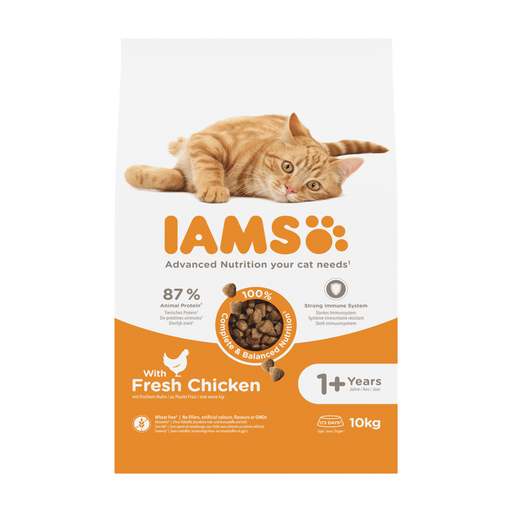
Why it suits this profile: The large pack is aimed at households that use dry food regularly or feed several adult cats.
The pack size and intended age group are clearly stated. Only buy 10 kg if you’ll get through it at a suitable rate, and keep the bag tightly sealed.
10 kg pack, chicken variety and, according to the manufacturer, a fibre blend with prebiotics and beet pulp.
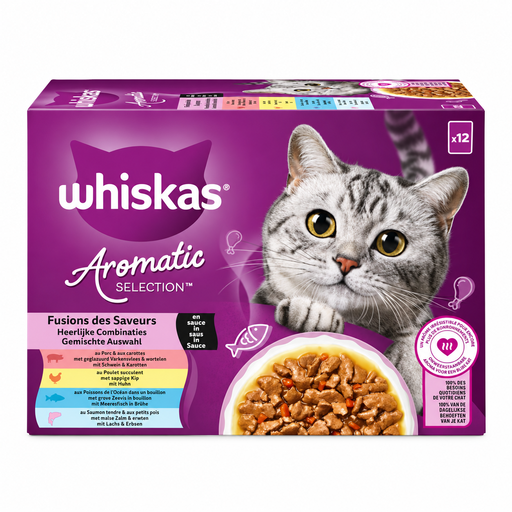
Why it suits this profile: The multipack contains four varieties, including chicken, pork, ocean fish and salmon, in 85-gram portions.
The varieties and portion size are listed, so you can work out in advance whether your cat will like the flavours and how much opened food you’ll need to store.
Four flavour varieties, 85g pouches and, according to the product information, complete wet food for adult cats.
We’ve put together a complete, up-to-date list of products that meet these strict selection criteria and the applicable European safety regulations.
Choose food labelled as suitable for adult cats or cats aged 1 year and over. Also check that it’s a complete pet food. The right amount depends on your cat’s weight, activity level and type of food. A laid-back indoor cat may need less than the amount recommended on the packaging.
Not necessarily. Dry food is easy to store and measure, while wet food provides more moisture per portion and is often appealing because of its smell and texture. The right choice depends on what your cat eats, how much they drink and how practical the packaging is for you. If you combine the two, keep an eye on the total daily portion.
Keep dry food sealed in a cool, dry place. According to the product information, opened wet food usually needs to be kept in the fridge. Use leftovers within the period stated on the label; for some products, this is 24 to 48 hours. Don’t store food again if it’s been left at room temperature for a long time.
