
Vandaag of morgen in huis

Kwaliteit gegarandeerd

Welkomstaanbiedingen ontgrendelen: GRATIS bezorging | Tot 80% korting | Gratis 30 dagen JoyPlus-proefperiode
Download de app
Buying a bike helmet for adults seems straightforward until you start looking at product pages. Ventilation, MIPS, LED lights, visors and adjustment systems are often highlighted, but not every feature suits every cyclist. A road cyclist has different requirements from someone who cycles to work every day.
The biggest purchasing mistakes usually come from three common pitfalls:
Use a tape measure horizontally around your head, approximately above your eyebrows. Always compare the result with the size chart for the specific model. A size M bike helmet does not cover the same range for every brand.
Examples from the range:
Place the helmet straight on your head, rather than tilted backwards. The chin strap should fit securely without feeling uncomfortably tight. Once adjusted, check that the helmet does not move easily forwards, backwards or from side to side.
Many bike helmets combine a polycarbonate or PC outer shell with an EPS inner layer. The outer shell helps give the construction its shape, while EPS is designed to absorb energy in the event of an impact. No helmet can protect against every type of accident. Replace a helmet after a hard impact, even if there is no visible damage on the outside.
A MIPS bike helmet also contains a layer which, according to the product information, is designed to limit the transfer of rotational forces during certain angled impacts. This is a product specification, not a guarantee of a particular outcome. Also check the conformity marking and the corresponding EU information on the product page. For bike helmets sold in the Netherlands, information about the applicable European requirements and usage restrictions is relevant.
A lightweight bike helmet with sufficient ventilation is comfortable on longer rides or in warm weather. The number of ventilation openings is an objective detail, but it does not tell you on its own how cool a helmet will feel. The shape, inner lining and fit also play a part.
For commuting, a bike helmet with a rear light or reflective details can be useful for visibility. According to the DKONI HS-086 product description, its removable USB rear light has two modes and an advertised battery life of approximately three to five hours. Charge the light in good time and do not treat it as a replacement for bike lights or reflectors on the bicycle.
A bike helmet with a visor or detachable glasses can help reduce the effects of wind, rain and bright light. Check that the visor is securely attached and does not obstruct your vision. For straightforward everyday use in town, a simpler model may be more practical.
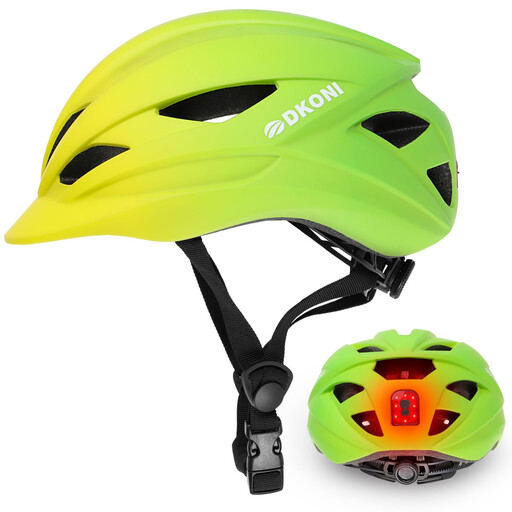
Why it suits this profile: This adjustable bike helmet is designed for city cycling and commuting, combining a common size L with a removable USB rear light.
The 58–61 cm size range and adjustable fit make the choice more specific than simply relying on a general designation such as L.
PC shell with EPS foam, 15 ventilation openings and a removable rear light with two modes.
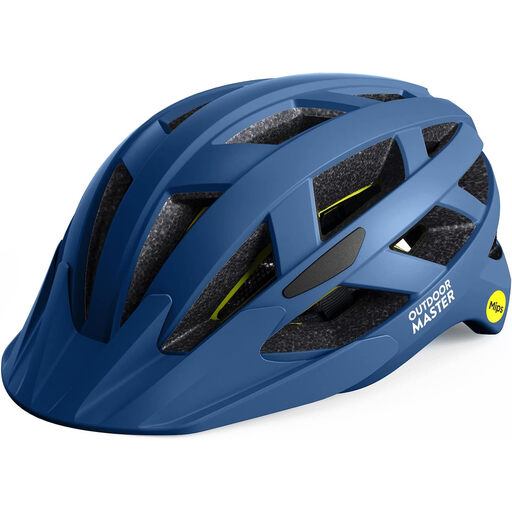
Why it suits this profile: For recreational cyclists who value MIPS, plenty of ventilation and an adjustable inner fit.
The specifications list 25 ventilation openings, a dial and two interchangeable liners. This allows you to fine-tune the fit more precisely.
MIPS system according to the product description, 25 vents, detachable visor and two liners of different thicknesses.
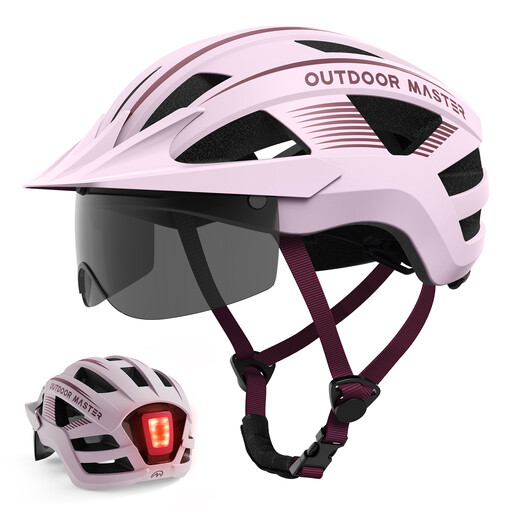
Why it suits this profile: An option for cyclists who regularly switch between city riding, road cycling and e-bike use, and want to carry extra accessories.
The glasses and visor are detachable, so you do not have to use the same configuration for every ride.
17 ventilation openings, adjustable dial, magnetic detachable glasses and USB-C rear light with multiple modes.
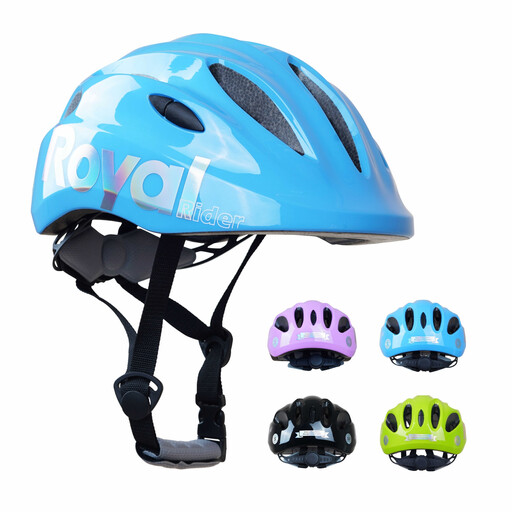
Why it suits this profile: This children’s bike helmet is designed for children aged approximately 5 to 13 and can be used for cycling, scooting and various outdoor sports.
The 52.05–55.88 cm range, dial and adjustable strap help parents set the fit precisely.
PC outer shell, EPS inner layer, 10 ventilation openings and a removable, washable inner lining.
We have put together a complete, up-to-date list of products that fully meet these strict selection criteria and the applicable European safety regulations.
The helmet should sit straight and securely on your head. The chin strap should fit snugly without being tight. With a good fit, the helmet will not move significantly when you gently move your head from side to side. Measure your head circumference first, then use the size chart for the model you have chosen.
There is no universal service life that applies to every helmet. Materials, use, storage and any impacts all play a part. Replace the helmet immediately after a hard impact. Also check regularly that the EPS layer, shell, straps and fastening are still intact. Follow the manufacturer’s maintenance and replacement information as well.
MIPS is an additional construction feature which, according to the product information, is designed for certain angled impacts. Whether you choose it depends on your preferences, budget and how you use the helmet. For commuting, a correct fit, a properly fastened chin strap and good visibility remain at least as important.
