
Vandaag of morgen in huis

Kwaliteit gegarandeerd

Welkomstaanbiedingen ontgrendelen: GRATIS bezorging | Tot 80% korting | Gratis 30 dagen JoyPlus-proefperiode
Download de app
Finding a good bike helmet for adults can sometimes feel like navigating a maze. One helmet promises aerodynamics, another boasts bright colours, and yet another flaunts technologies with names that sound complicated on their own. It's easy to get lost in the marketing and buy a helmet that doesn't suit you. Before you make a choice, it's helpful to know a few common pitfalls.
By keeping these points in mind, you can search more effectively for a helmet that truly suits you.
To avoid making a bad purchase, it's best to focus on a few objective specifications. These factors determine the safety and comfort of a helmet, regardless of marketing claims.
A safe bike helmet is the foundation. In Europe, every bike helmet must comply with the EN 1078 standard. This certification guarantees that the helmet has passed a standard impact test. This is the absolute minimum.
Additionally, you'll often see the term bike helmet with MIPS. MIPS stands for Multi-directional Impact Protection System. It is a thin, low-friction layer on the inside of the helmet. According to the developers of MIPS, this system is designed to reduce the rotational forces that can be transferred to the brain from angled impacts. This can be a relevant extra consideration, especially for those looking for a road bike helmet or mountain bike helmet, where the chance of an angled fall is greater.
A helmet only works if it fits properly. You can find the right size by measuring the circumference of your head, about 2 centimetres above your eyebrows. Most adult helmets come in sizes like S, M, or L, with a corresponding centimetre range (e.g., 58-61 cm).
Always look for a helmet with an adjustment system, usually a dial on the back. This allows you to fine-tune the fit. Both a men's bike helmet and a women's bike helmet should be snug enough not to shift, but comfortable enough for long rides.
Think about how you will use the helmet.
Based on objective product features, we have selected several models from OutdoorMaster that suit different user profiles.
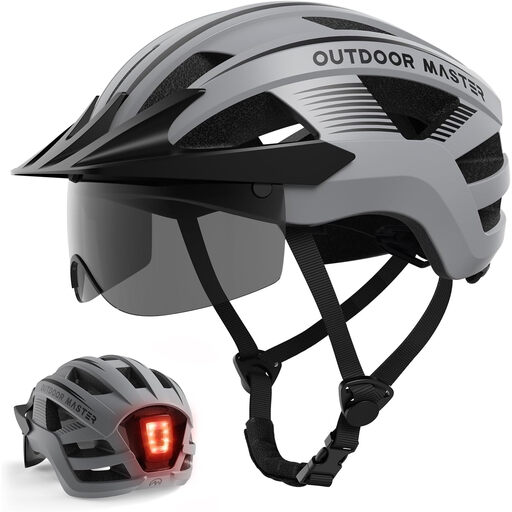
Why This Fits Their Persona: Ideal for daily cyclists, especially on an e-bike. The combination of lighting and eye protection offers practical benefits for city rides and in changeable weather.
This helmet is specifically designed for the urban cyclist, avoiding the 'wrong helmet for the wrong ride' pitfall. Its features are focused on practical utility, not racing performance.
Includes a rechargeable rear light for better visibility and a magnetically detachable goggle that protects against wind and rain.

Why This Fits Their Persona: Suitable for road cyclists and performance riders who value low weight, good ventilation, and an extra margin of safety.
This helmet focuses on a verifiable safety technology (MIPS) instead of vague marketing claims. You pay for a concrete feature, not just for looks.
Equipped with the MIPS system. The multi-vent design helps keep your head cool during intense rides.
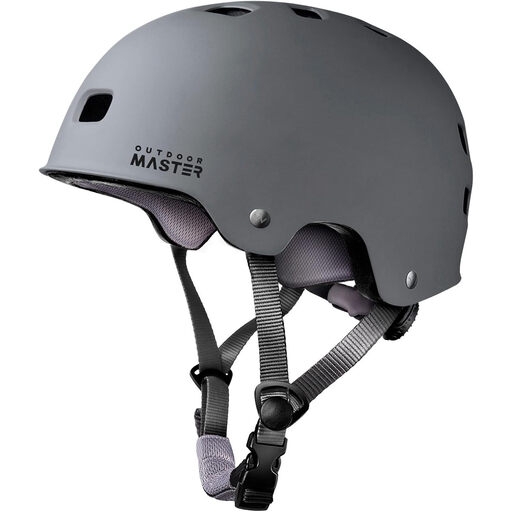
Why This Fits Their Persona: For those who also enjoy skating, rollerblading, or riding a BMX in addition to cycling. This helmet is built for durability and can take a beating, which suits sports where contact with obstacles is more common.
This model bypasses the "one-size-fits-all" myth by including two different liners, allowing you to customise the fit. The robust shell is a deliberate choice for versatility.
The reinforced ABS outer shell provides durable protection. The helmet comes with two removable liners for a customisable fit and easy maintenance.
We have compiled a complete, real-time list of products that fully satisfy these strict selection criteria and UK safety regulations.
Take a flexible measuring tape and measure the circumference of your head at its widest point, about 2 centimetres above your eyebrows and ears. Compare this number (in centimetres) with the size chart of the helmet you are considering. A well-fitting helmet sits level on your head, and the straps form a 'V' just below your ears.
Replace your helmet immediately after a hard fall or impact, even if you don't see any visible damage. The internal structure of the shock-absorbing foam may be compromised. Additionally, it is recommended to replace a helmet every 3 to 5 years. Materials like the EPS foam and plastic can degrade over time due to exposure to sunlight and sweat.
A helmet with MIPS is designed to provide extra protection against rotational forces, a factor that can play a role in certain types of falls. Whether it's worth the extra cost depends on your personal judgment. For daily, leisurely rides in the city, a helmet with an EN 1078 certification may suffice. For more performance-oriented cyclists who reach higher speeds or ride on unpaved terrain, the additional technology can be a worthwhile consideration.
