
Vandaag of morgen in huis

Kwaliteit gegarandeerd

Welkomstaanbiedingen ontgrendelen: GRATIS bezorging | Tot 80% korting | Gratis 30 dagen JoyPlus-proefperiode
Download de app
Whether you're a daily commuter, a weekend recreational rider, or a mountain biker hitting the trails, a quality helmet is essential. But the vast selection can be overwhelming. Which helmet is right for you? And what should you look for? As a Joybuy Product Recommendation Officer, I'm here to help you cut through the marketing noise. This article offers practical tips and a curated selection of helmets that stand out for their specifications and functionality.
Before we dive into the products, here are a few key points to help you make an informed decision.
A helmet that doesn't fit properly won't offer optimal protection and will be uncomfortable. That's why an adjustable bicycle helmet is a smart choice. Look for systems with a dial on the back, which allows you to precisely adjust the fit to your head's circumference. Adjustable chin straps ensure the helmet stays securely in place without pinching.
In Europe, an approved bicycle helmet must meet the EN 1078 standard. This means the helmet has been tested for shock absorption and construction. Some helmets offer additional technology, such as MIPS. A helmet with MIPS (Multi-directional Impact Protection System) includes an inner low-friction layer that allows for slight movement during an impact. According to its developers, this system is designed to reduce the rotational forces that can affect the head during certain types of collisions.
Consider how you'll be using the helmet. A lightweight helmet with plenty of vents is ideal for long bike tours or intense rides. An MTB helmet (mountain bike helmet) often has a larger visor and provides more coverage at the back of the head. Looking for a helmet for both cycling and skating? A versatile skate helmet with a robust outer shell is a great option. For e-bike helmet users, good ventilation and a comfortable fit are also crucial.
Based on the criteria above, we've highlighted a few interesting models for you.

Why it stands out This helmet is a true all-rounder. The combination of a reinforced ABS outer shell and a shock-absorbing EPS core makes it suitable for various sports. What sets it apart is the inclusion of two removable liners of different thicknesses, allowing you to personalise the fit.
Key Features
Best for: The multi-sport athlete looking for a single helmet for both city cycling and afternoons at the skatepark.
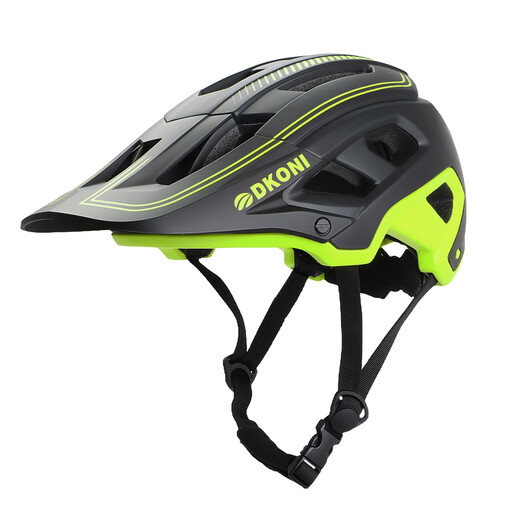
Why it stands out This mountain bike helmet is specifically designed for off-road adventures. Its large, removable visor offers significantly more protection from sun, rain, and mud than a standard helmet. Weighing just 380 grams and featuring 17 vents, it's engineered for comfort on long, strenuous rides.
Key Features
Best for: Ideal for mountain bikers, but also for commuters who appreciate a helmet with a good visor to arrive at their destination dry and with clear vision.
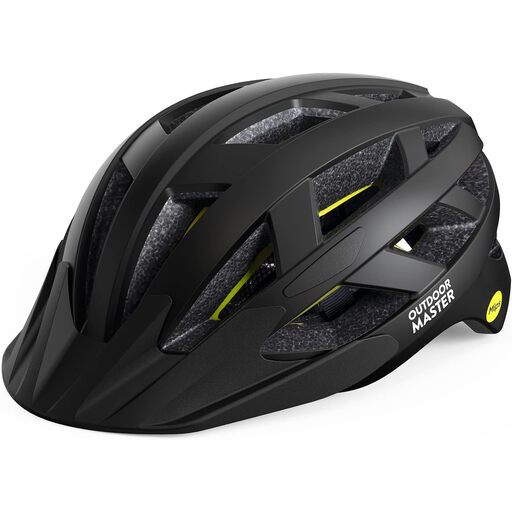
Why it stands out The key feature of this helmet is the integration of the MIPS system. This safety feature is designed to offer extra protection during angled impacts. Combined with 25 vents and a dual adjustment system, this helmet is aimed at the safety-conscious cyclist who doesn't want to compromise on comfort.
Key Features
Best for: The daily cyclist, commuter, or recreational rider who prioritises safety and seeks the added protection of the MIPS system.
These recommendations are a starting point. The perfect helmet is a personal choice and depends on your head, your riding style, and your taste. For example, are you specifically looking for a helmet in a different colour or model?
See more helmets in the Black Helmet category
No, for a standard bicycle or e-bike (with pedal assist up to 25 km/h), a helmet is not currently mandatory for adults. However, for riders of a speed pedelec (which can reach up to 45 km/h), an approved helmet (NTA 8776 standard) is required. Nevertheless, wearing a helmet is recommended for all cyclists for safety.
MIPS stands for Multi-directional Impact Protection System. It is a thin, low-friction layer inside the helmet. In the event of an angled impact, this layer can move a few millimetres relative to the helmet shell. According to the creators of MIPS, this helps to reduce the rotational energy that would otherwise be transferred to the brain.
Measure the circumference of your head with a flexible measuring tape. Place the tape about 2 cm above your eyebrows and across the most prominent point at the back of your head. The number of centimetres you measure corresponds to the helmet size. Most helmets have a size range (e.g., 56-61 cm). Make sure your head circumference falls within this range. You then use the adjustment system for fine-tuning.
