
Vandaag of morgen in huis

Kwaliteit gegarandeerd

Welkomstaanbiedingen ontgrendelen: GRATIS bezorging | Tot 80% korting | Gratis 30 dagen JoyPlus-proefperiode
Download de app
Buying a bicycle helmet for adults seems straightforward, until you discover how similar many models look. A low price says little about fit, ventilation or visibility. Terms such as “extra safe”, “aerodynamic” and “MIPS” are also sometimes used without making it clear what they actually offer during your rides.
The three most common pitfalls:
Use a flexible tape measure to measure horizontally around your head, approximately one to two centimetres above your eyebrows. Then compare the result with the size chart for the specific model. Sizes vary between brands and models.
Many models in this selection, for example, use:
An adjustable bicycle helmet with a dial helps you fine-tune the fit, but it cannot fully compensate for choosing the wrong basic size. The helmet should sit securely without creating pressure points. The chin strap should fit snugly without digging in.
Many bicycle helmets combine a polycarbonate or PC outer shell with an EPS inner layer. EPS is designed to absorb energy during an impact. An in-mould construction bonds the outer shell and inner layer together during production.
Also check what safety information is provided for the product. According to the product description, the DKONI HS-062 complies with American and European safety standards. The product information for the DKONI HS-158 mentions CPSC, CE and ASTM, among others. These are product listings; always check the latest compliance information on the product page.
A MIPS bicycle helmet also contains a layer that, according to the product description, is designed to reduce rotational forces in certain angled impacts. According to OutdoorMaster’s own information, this is what the MIPS system is intended to do. This does not mean that a helmet offers protection against every possible type of impact.
A lightweight bicycle helmet can feel more comfortable on longer rides, but “light” does not automatically mean more comfortable. Also consider the number of ventilation openings, the inner padding and the adjustment options.
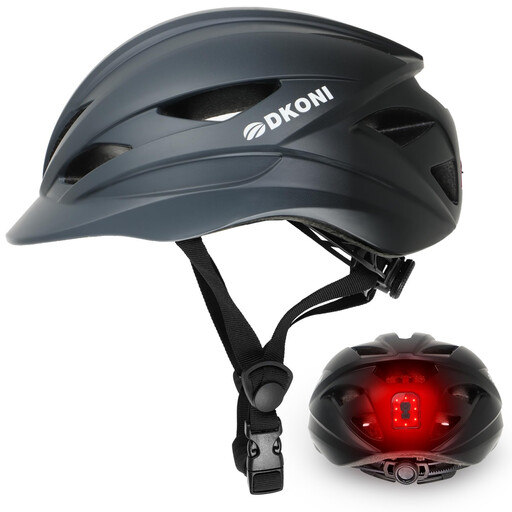
Why it suits this profile: This adult bicycle helmet combines basic protection with a USB-rechargeable rear light and is designed for urban rides and everyday use.
The 58-61 cm size and adjustment mechanism make it easier to check the fit. The rear light means visibility does not depend solely on a bright colour.
15 ventilation openings, a removable USB rear light and two light modes according to the product description.
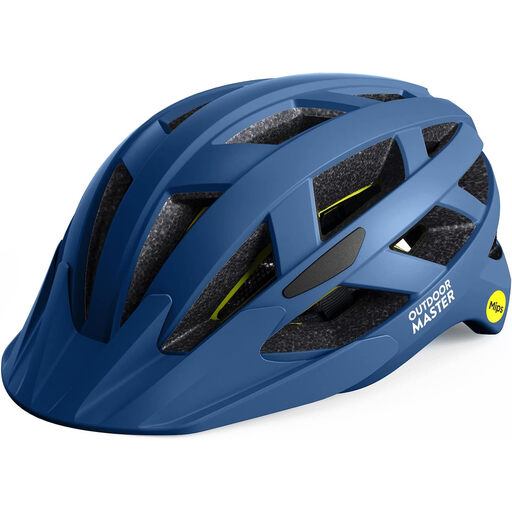
Why it suits this profile: Suitable for cyclists looking for a MIPS system, plenty of ventilation and flexible adjustment for recreational cycling, mountain biking or commuting.
The fit does not depend solely on the stated size: a dial and two removable liners provide additional adjustment options.
MIPS system, 25 ventilation openings, removable visor and two liners according to the product information.
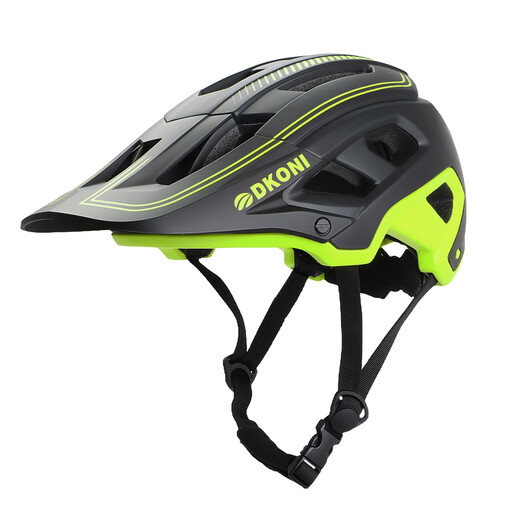
Why it suits this profile: A practical mountain bike helmet for cyclists on unpaved paths or longer recreational rides who value a visor, extra ventilation and broader coverage.
This model has an adjustable 56-61 cm size, a one-handed dial and a removable visor. This allows you to adapt the helmet to your route and head circumference.
380 grams, 17 ventilation openings and an ABS visor according to the product description.
Replace a bicycle helmet after a significant impact, even when you cannot see any damage on the outside. The inner layer may be damaged without any obvious cracks. Before every ride, check the shell, straps, fastening and dial.
Wash removable pads with mild soap and allow them to air-dry completely. Do not use solvents and do not store the helmet in extreme heat for long periods. The precise replacement interval depends on use, wear and the manufacturer’s recommendations. There is therefore no universal lifespan that applies to every adult bicycle helmet.
We have put together a complete, up-to-date list of products that fully meet these strict selection criteria and the applicable European safety regulations.
The helmet should sit level on your head and should not wobble when you gently move your head. Adjust the dial first, then fasten the chin strap. There should be limited space under your chin, without the strap pressing uncomfortably.
This depends on use, storage and wear. Replace the helmet immediately after an accident or heavy impact. Also check the EPS layer, shell, straps and fastening regularly. If in doubt, follow the manufacturer’s instructions.
MIPS is an additional construction feature that, according to the product information, is designed to address certain rotational forces in angled impacts. It is not a substitute for the correct size, proper adjustment or safe cycling behaviour. For commuting, you can compare MIPS with other relevant features, such as fit, ventilation and visibility.
