Who is this option suitable for?

Someone with a large living room

You want to reduce condensation without choosing a dehumidifier whose stated coverage is smaller than your living room. Measure the space and compare it with the manufacturer’s figures. Consumentenbond also highlights the importance of the conditions used when measuring capacity.

Someone with a cool living room

You heat the room sparingly and are looking for a technology that works at lower temperatures. Bear in mind that Consumentenbond recommends adsorption for cold conditions, but also notes that this type uses more electricity than a refrigerant dehumidifier.

Someone who runs the dehumidifier frequently

You want noise, water drainage and energy consumption to remain manageable during everyday use. So look beyond capacity and consider the operating mode, tank and whether continuous drainage is available.

What should you look for when choosing?

Adsorption

Most suitable when: the living room stays cool or unheated, and you’ve already dealt with the source of the moisture and ventilation.

Trade-off: according to Consumentenbond, this type uses more electricity than a refrigerant dehumidifier; Consumentenbond did not test this type in the comparison mentioned.

Refrigerant

Most suitable when: the living room is usually warmer than 15 °C; Consumentenbond describes this technology as most effective above that temperature.

Trade-off: check that the exact model is suitable for the temperature and moisture levels in your living room.

Addressing the source of moisture, ventilation or glazing

Most suitable when: a source of moisture, poor ventilation or cold glazing may be contributing to the condensation.

Trade-off: a dehumidifier is no substitute for ventilation or fixing the underlying cause. Upgrading the glazing is a separate measure.

What to consider What should you check? Who is this most relevant to?
Coverage and capacity Measure the floor area. For a high-ceilinged or open-plan space, consider the volume too. Compare the stated room coverage and the temperature and humidity conditions used to determine the capacity in litres per 24 hours. If my living room is large or open-plan, I want to know whether the stated coverage includes the whole room. Around 33% of consumers making this choice prioritise adequate coverage.
Performance at room temperature Measure the indoor temperature at times when condensation occurs. Check the stated performance of the exact model at that temperature. If my living room stays cool, I want to choose a technology suited to the indoor temperature, not just the weather outside. Around 27% of consumers making this choice prioritise performance in cold conditions.
Noise in the living room Check the noise figures for each fan setting and make sure the setting you want to use is suitable for the room. If I talk or watch television in the same room, I want to know how noticeable the dehumidifier will be while it’s running. Around 20% of consumers making this choice prioritise a quiet, comfortable living environment.
Energy use and collected water Compare energy use under the same conditions. Check the tank capacity, whether the appliance switches off automatically when the tank is full, and whether continuous drainage is possible where you need it. If I use the appliance regularly, I want to be able to manage its energy use and emptying the tank easily. Around 20% of consumers making this choice prioritise these ongoing practical considerations.

Common buying mistakes

  • Looking only at litres per day

    A capacity figure in litres per 24 hours doesn’t, on its own, tell you whether the appliance is suitable for your whole living room. The measurement also depends on temperature and humidity, and the stated room coverage matters too.

    Measure the space and compare both the coverage and the conditions used for the capacity figure. Don’t treat the manufacturer’s figures as an independent measurement taken in your home.

    A model with lower stated coverage may need to run for longer without being suitable for the whole living room.

  • Assuming adsorption is automatically more energy-efficient because it works in cold conditions

    Consumentenbond describes adsorption as suitable for cold or unheated rooms, but also notes that it uses more electricity than refrigerant dehumidifiers.

    Choose the technology based on the temperature you’ve measured in your living room, and compare energy use under suitable, like-for-like conditions.

    With regular use, the higher electricity consumption can add to running costs.

  • Assuming a dehumidifier will solve every cause of condensation on windows

    An appliance is no substitute for ventilation or fixing the source of moisture. Cold glazing may also need to be addressed separately.

    Check for sources of moisture, assess ventilation and consider the type of glazing before relying on an appliance alone.

    A persistent source of moisture or cold glazing may need to be dealt with separately.

Brands and models to consider

Qlima

Qlima offers the DD 808 adsorption dehumidifier, which the manufacturer positions, among other uses, for cooler spaces.

  • Qlima lists a capacity of 8 l/24 u for the DD 808, along with a hygrometer and timer.
  • The manufacturer’s figures do not confirm that its room coverage is suitable for a large living room.

Trotec

The TTR 57 E is an adsorption dehumidifier that Trotec lists as suitable for smaller rooms.

  • Trotec gives a capacity of 9 l/24 u and maximum coverage of 20 m² / 50 m³.
  • That stated coverage may be too small for a large living room. It is the manufacturer’s figure, not an independent test in a living room.

EcoAir

The DD1 Classic MK6 is an adsorption model with coverage of up to 60 m², according to EcoAir.

  • EcoAir lists a maximum of 7,5 l per day at 20 °C and 60% relative humidity, and mentions continuous drainage.
  • The product page consulted is for the UK. It does not confirm the Dutch version, plug or terms of sale for this exact model.

Meaco

Meaco lists coverage of up to 40 m² for its DD8L adsorption dehumidifier.

  • The room coverage is the manufacturer’s figure for this model.
  • Coverage of up to 40 m² doesn’t automatically make it suitable for a larger living room. The European page consulted does not confirm a Dutch version or availability in the Netherlands.

Wood’s

Wood’s describes the WDD80 and WDD90 as adsorption models for cold rooms.

  • For the WDD80, Wood’s lists a maximum of 8 l per day and an airflow of 120 m³/u.
  • Wood’s describes the WDD80, among other things, as suitable for small, cold rooms. This does not necessarily confirm that it is suitable for a large living room.

Dehumidifiers on Joybuy

These Joybuy models are dehumidifiers with different stated room coverage. For your chosen model, check that the technology suits the temperature in your living room and that its stated coverage includes the whole space.
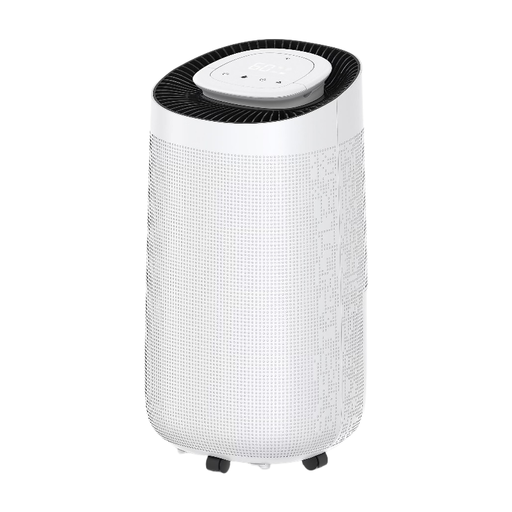
Komodo Humi+ dehumidifier, 16 L/day

Komodo Humi+ dehumidifier 16 L/day

May be worth considering if your living room falls within the stated coverage of around 40 m² / 100 m³.

The product information lists 16 L/day, a 3,2 L tank and a hose for continuous drainage. The appliance switches off automatically when the tank is full.

Joybuy
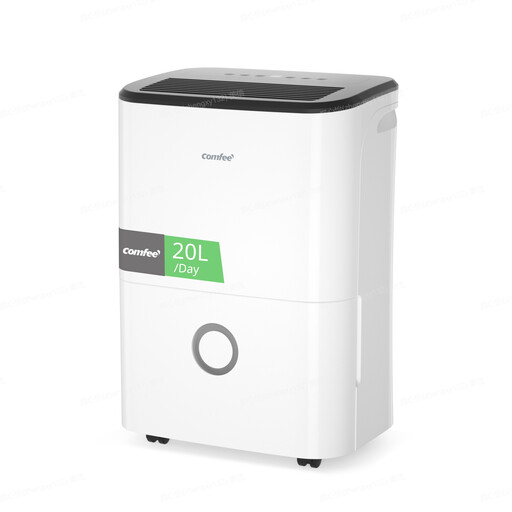
Comfee MDDF-20DEN7 dehumidifier, 20 L/day

Comfee' MDDF-20DEN7 dehumidifier 20 L/day

Before choosing this model, compare its stated coverage with the size of your living room.

The product name lists 20 L/day, a 3 L tank and room coverage of around 100 m³ (40 m²).

Joybuy
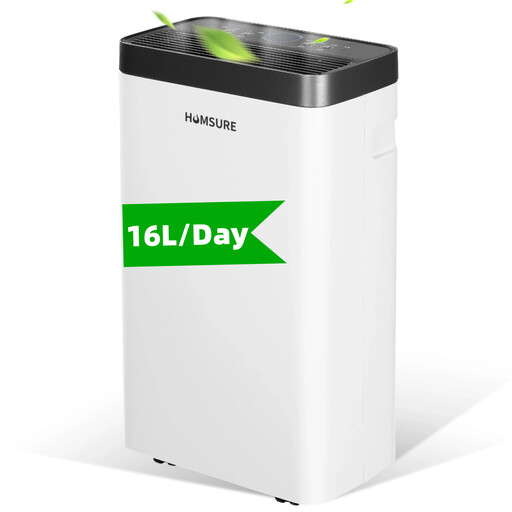
HUMSURE dehumidifier, 16 L/day, for rooms up to 25 m²

HUMSURE dehumidifier 16 L/day

Its stated coverage is up to 25 m². Compare this with your living room, which may be larger.

The product name lists a 1,4 L tank, a timer, automatic defrost and shut-off, and three modes.

Joybuy

Frequently asked questions

When can a dehumidifier help with condensation on the inside of windows?

A dehumidifier may help as an additional measure if you’ve addressed sources of moisture and poor ventilation, but condensation keeps coming back. According to Consumentenbond, a dehumidifier may help if humidity remains consistently high afterwards. Cold glazing may also need to be addressed separately.

How do I know whether a model is powerful enough?

Measure your living room and compare its floor area or volume with the stated coverage of the exact model. For capacity in litres per 24 hours, also check the temperature and relative humidity on which the figure is based. A manufacturer’s figure is not a measurement taken in your home.

Can an adsorption dehumidifier replace ventilation?

No, an adsorption dehumidifier cannot replace ventilation. Milieu Centraal describes ventilation as bringing in fresh air and removing polluted air, so make sure you address ventilation separately.

Are dehumidifiers required to have an EU energy label?

The European Commission states that no EU energy class has been defined for dehumidifiers. So compare energy use and moisture removal under similar conditions.

Which product rules and purchase rights apply in the Netherlands?

An electrical appliance placed on the market in the Netherlands must meet the applicable European product requirements. The manufacturer must provide the required declaration of conformity and CE marking. According to the Dutch government, online purchases from a business usually come with a 14-day cooling-off period. You’re also entitled to a legal guarantee if a product breaks sooner than you could reasonably expect with normal use, as ACM ConsuWijzer explains. The manufacturer’s warranty period does not automatically set the limit.
